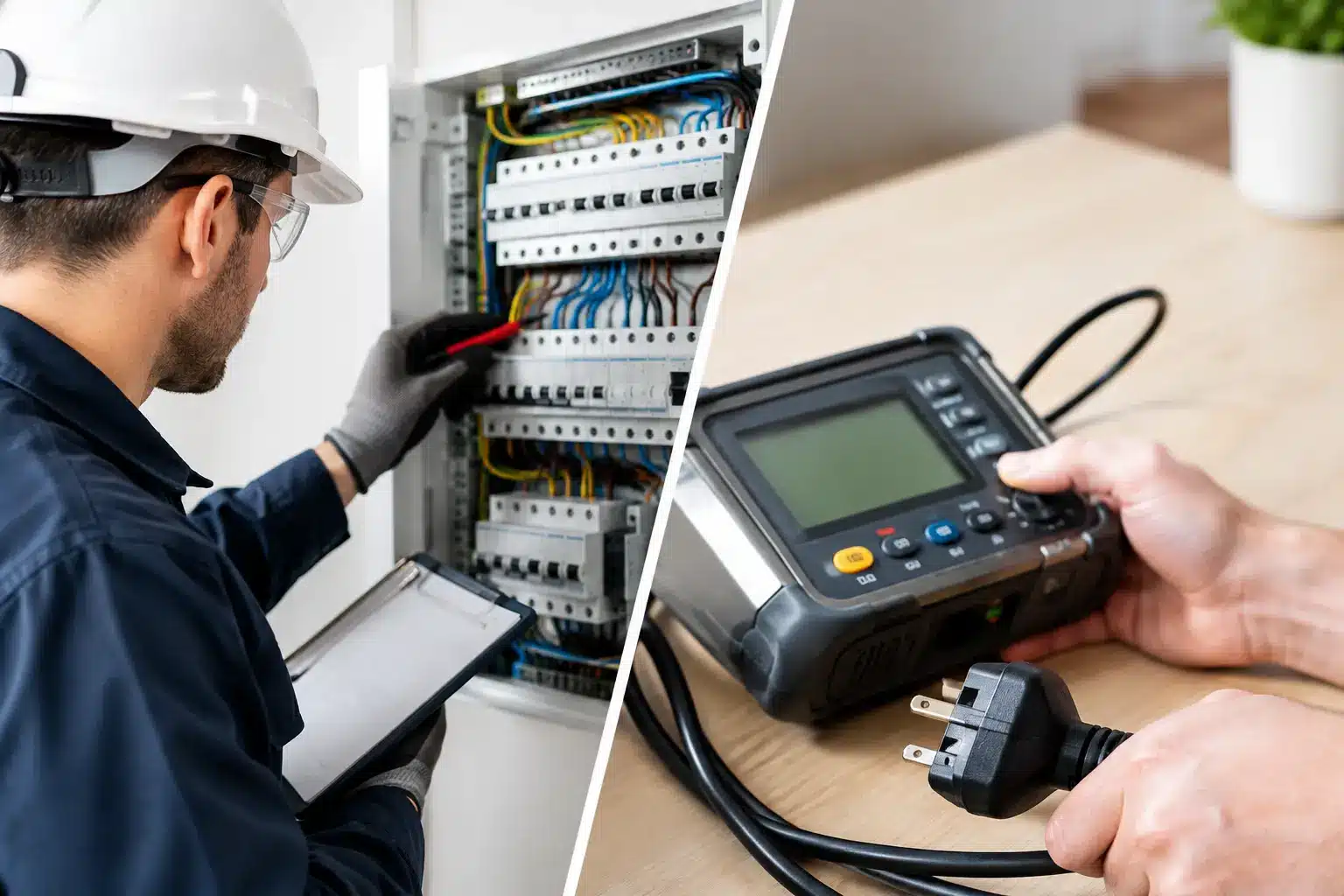
A tripped circuit during a busy working day is more than an inconvenience. It can stop computers, lighting, heating controls and essential equipment at once, while an overlooked fault may create a serious fire or electric shock risk. A practical office electrical maintenance checklist helps business owners and facilities managers spot problems early, plan professional inspections and keep their workplace safe without unnecessary disruption.
Electrical maintenance is not simply a compliance exercise to be filed away. It protects people, equipment and continuity of service. For offices in Stevenage and across Hertfordshire, a sensible routine also makes it easier to budget for repairs and upgrades before an urgent callout becomes the only option.
What an office electrical maintenance checklist should cover
A useful checklist separates simple user checks from work that must be completed by a competent electrician. Staff can report visible damage and changes in how equipment performs. They should not remove socket covers, open distribution boards or attempt repairs themselves.
The right frequency depends on the age and condition of the installation, how heavily the office is used, the type of equipment in service and whether the building has recently been altered. A small, low-use office will not have the same maintenance needs as a busy shared workspace, call centre or industrial office attached to a warehouse.
1. Check sockets, switches and visible wiring
Walk through the office regularly and look for cracked faceplates, loose sockets, scorch marks, buzzing sounds or switches that feel unusually warm. These signs should be reported promptly and isolated from use where safe to do so. Do not assume a socket is harmless because it still supplies power.
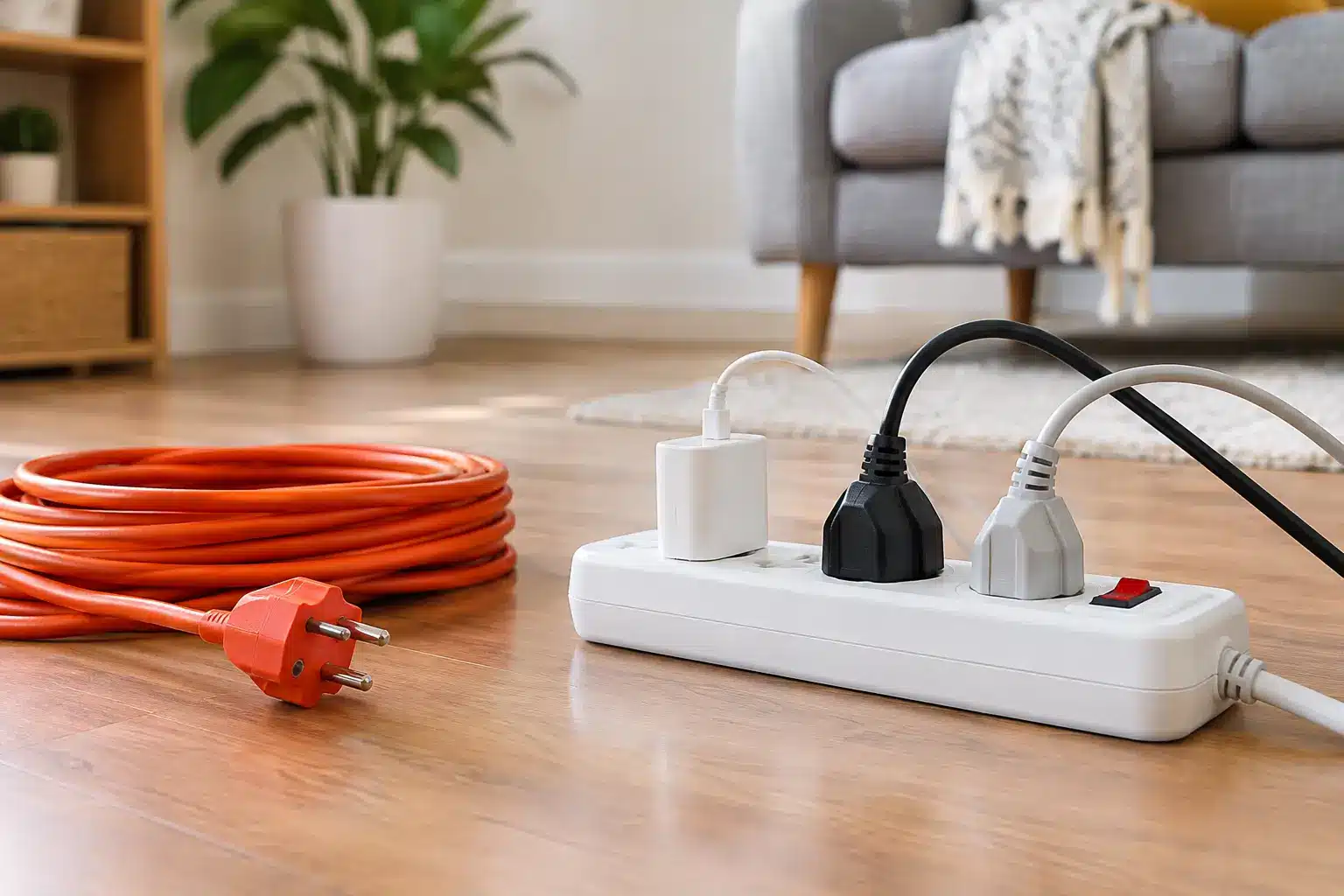
Pay attention to extension leads under desks, behind printers and in meeting rooms. Cables should not be trapped beneath furniture, run across walkways or pinched in doors. Damaged insulation, exposed wiring and loose plugs require replacement, not a temporary tape repair.
2. Control extension leads and adaptor use
Overloaded adaptors are a common and avoidable office risk. One extension lead may appear to solve a shortage of sockets, but connecting several adaptors or additional extension leads can overload the circuit and create excess heat.
Check that each extension lead is suitable for its intended load, fully uncoiled when supplying higher-load equipment and used only where necessary. Printers, heaters, kettles and other high-demand appliances deserve particular attention. Portable heaters should be approved by management and never plugged into an overloaded lead beneath a desk.
If extensions have become a permanent feature of the workspace, the practical answer is usually additional fixed sockets installed by a qualified electrician. It is safer, neater and more reliable than relying on a growing collection of temporary leads.
3. Review portable appliances and their leads
Portable appliance testing, often called PAT testing, can form part of an effective maintenance programme, but a sticker alone does not make an appliance safe. Regular visual checks remain essential between formal tests.
Inspect office appliances such as monitors, docking stations, chargers, desk fans, kitchen equipment and cleaning equipment. Look for damaged leads, loose plugs, casing cracks, liquid damage and signs of overheating. Remove faulty items from service, label them clearly and arrange repair or replacement.
Testing intervals should be based on risk rather than a one-size-fits-all annual rule. A rarely moved monitor in a well-managed office may need a different approach from a frequently handled kettle, vacuum cleaner or extension lead. Keeping a clear inventory and inspection record helps show that the approach is considered and proportionate.
4. Test emergency lighting and check escape routes
Emergency lighting is easy to overlook because it is designed to operate when normal lighting fails. Yet it is vital for allowing people to leave safely during a power cut or emergency.
Carry out routine functional checks in line with the system design and record the results. Check that emergency fittings illuminate, indicator lights show normal charging where applicable, and nothing blocks escape routes, fire exits or illuminated signs. Full-duration testing and any repairs should be planned carefully so that the building is not left without adequate emergency cover.
5. Monitor lighting, heating and ventilation circuits
Flickering lights, repeatedly failed lamps, humming fittings and circuit breakers that trip when lighting is switched on can point to a fault rather than a simple lamp replacement issue. Record where and when it happens, as this helps an electrician investigate efficiently.
The same applies to electrically supplied heating, air conditioning and ventilation controls. If equipment loses power intermittently, trips a circuit or has been affected by water ingress, arrange a professional inspection. Employees should not repeatedly reset a breaker to keep equipment running. Repeated tripping is a warning that needs a cause, not a workaround.
6. Keep the distribution board accessible and correctly labelled
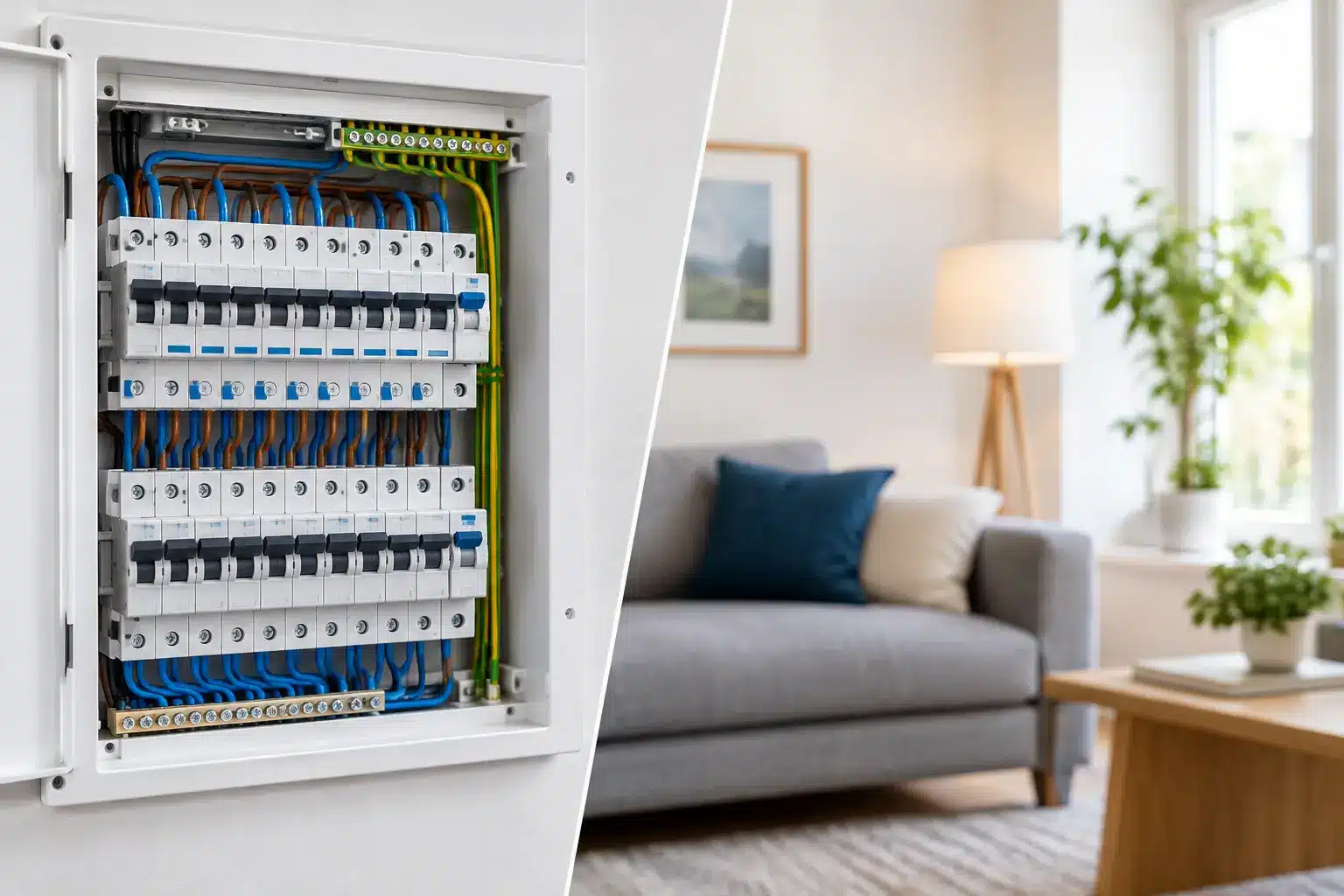
The distribution board, sometimes called the fuse board, should remain accessible to authorised people and free from stored boxes, cleaning materials or furniture. Circuit labels should be legible and reflect the current layout of the office. When partitions, extra sockets, kitchen areas or new equipment have been added, old labelling can become misleading.
A qualified electrician should inspect the board for signs of heat damage, loose connections, unsuitable alterations and correct protective devices. This is also the point to consider whether an older board offers the level of protection required for the present use of the premises. Any work inside the board must be left to a competent professional.
7. Record faults, changes and completed work
A maintenance log gives recurring issues the attention they deserve. Note the date, location, equipment affected, symptoms, action taken and the person who reported it. This record is useful when a fault appears intermittently and can support decisions about replacement, remedial works or further testing.
Include changes to the office too. New workstations, a refurbished kitchen, EV charging, server equipment, air conditioning or machinery can alter electrical demand. Before expanding a circuit or adding high-load equipment, have the capacity of the installation assessed. Planning this work properly is far less disruptive than dealing with overloaded circuits after the fact.
Formal inspection, testing and compliance
Routine checks do not replace an Electrical Installation Condition Report, or EICR. An EICR is a detailed inspection and test of the fixed electrical installation, carried out by a competent electrician. It identifies deterioration, defects, non-compliance and potential dangers, then provides observations that allow responsible action to be taken.
Commercial premises have duties under the Electricity at Work Regulations 1989 to ensure electrical systems are maintained so far as reasonably practicable to prevent danger. The precise interval for an EICR depends on the type of premises, its use and the condition of the installation. Your previous report may recommend a date, but changes in use, flooding, damage, recurring faults or major alterations can justify an earlier inspection.
Where an EICR identifies urgent observations, do not delay remedial work. A professional electrician can explain the finding in plain terms, isolate unsafe equipment or circuits where necessary, and provide a clear scope for the repairs required. Once remedial works are complete, keep the relevant certificates and records with the building’s compliance documents.
A simple maintenance rhythm for busy offices
For day-to-day management, staff should report visible damage, overheating, flickering lights and tripping circuits as soon as they notice them. A monthly walk-through can cover sockets, leads, extension use, emergency-light indicators and clear access to the distribution board.
Every few months, review appliance records, recurring fault reports and changes in how the office is being used. Arrange professional testing and inspection at intervals suited to your risk assessment and the recommendations on existing electrical documentation. This balance prevents maintenance from becoming either a forgotten task or an unnecessary burden on the business.
When to call an electrician straight away
Some faults should never wait for the next scheduled check. Arrange urgent professional help if you notice burning smells, scorch marks, electric shocks or tingling, sparking, smoke, water near electrical equipment, exposed live parts or a circuit that will not remain on.
If it is safe to do so, switch off and isolate the affected circuit or equipment, keep people away and avoid touching anything that may be live or wet. Do not investigate by removing covers. For businesses that need a rapid response, C.K Electrical Contractors can assess faults, complete remedial works and help restore safe operation with minimum disruption.
A well-run office does not need to live with unreliable sockets, tangled leads or unexplained trips. Give staff a clear reporting route, keep accurate records and act on warning signs early. That practical discipline is what keeps electrical safety working quietly in the background, where it belongs.