A circuit that keeps tripping is not simply an inconvenience when you are trying to cook dinner, run a business or charge essential equipment. It is a warning that the circuit is protecting itself from excessive demand or a possible fault. The best ways to prevent overloads begin with understanding what your electrical installation can safely handle, rather than repeatedly resetting a breaker and hoping the problem disappears.
An overloaded circuit can lead to damaged appliances, loss of power and, in more serious cases, overheating in cables or connections. Modern consumer units are designed to disconnect the supply when they detect a problem, but safe electrical use and timely professional checks remain the first line of defence.
What causes an electrical overload?
An overload happens when a circuit is asked to supply more current than it was designed to carry. This is common in older properties where a small number of socket circuits are expected to power modern households full of high-demand appliances.
Kettles, microwaves, air fryers, washing machines, tumble dryers, portable heaters and electric showers all use significant power. A single appliance may be acceptable on its own, but several running from the same circuit at once can push demand too far. Extension leads and multi-way adaptors can make the issue less obvious by allowing more devices to be connected at one point.
It is also worth separating an overload from a fault. If a breaker trips as soon as one particular appliance is used, or it will not reset even with everything unplugged, there may be a faulty appliance, damaged cable, loose connection or issue within the installation. That calls for investigation by a qualified electrician, not repeated attempts to reset the consumer unit.
8 best ways to prevent overloads
1. Know which appliances draw the most power
Start with the items that heat, cool, dry or contain motors. Portable electric heaters, tumble dryers, kettles and ovens can place a heavy demand on a circuit, particularly in kitchens, utility rooms and workshops.
Avoid running several high-load appliances from the same socket circuit at the same time where possible. For example, delaying the tumble dryer while an air fryer and kettle are in use may be enough to stop nuisance tripping. This is a practical short-term habit, but it is not a substitute for improving an installation that is regularly struggling with normal use.
2. Treat extension leads as temporary solutions
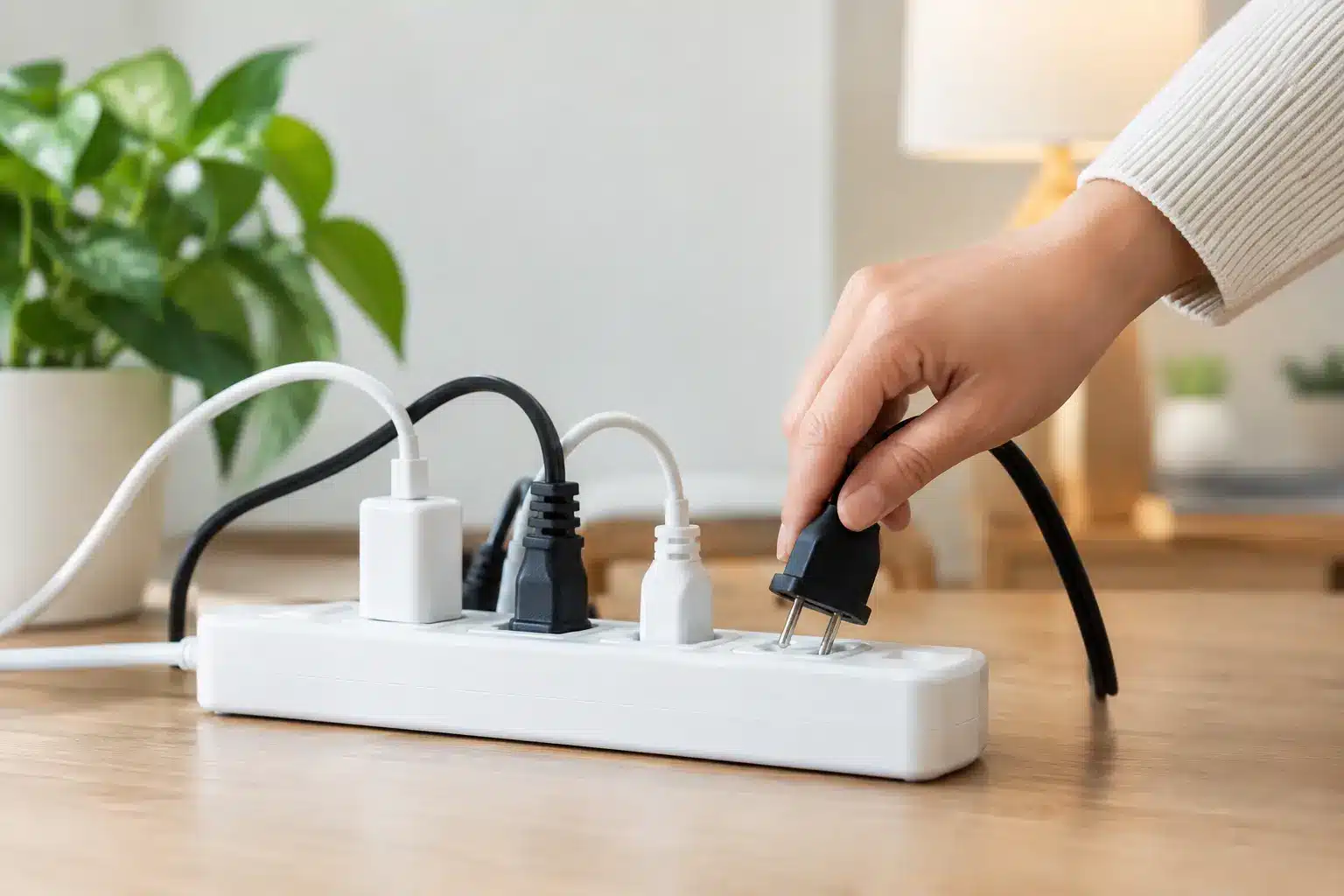
Extension leads are useful for occasional, low-demand equipment. They are not intended to turn one wall socket into a permanent supply point for televisions, games consoles, heaters, chargers, lamps and office equipment.
Never plug one extension lead into another or overload a multi-way adaptor. Cables hidden under rugs, trapped behind furniture or coiled tightly can also overheat, especially when powering high-wattage appliances. If you regularly rely on extensions because sockets are in the wrong place or there are too few of them, additional fixed sockets installed by an electrician are the safer option.
3. Give fixed high-demand equipment the right circuit
Some equipment needs more than a convenient socket. Electric showers, hobs, ovens, heat pumps and certain commercial machinery may require dedicated circuits, correct cable sizing and suitable protective devices.
This is particularly relevant after a kitchen refurbishment, garage conversion or office fit-out. Adding equipment without reviewing the capacity of the existing installation can create a problem that only becomes apparent when the premises are busy. A proper electrical design considers demand, circuit loading, cable routes and the rating of the consumer unit from the outset.
4. Do not ignore a tripping breaker
A circuit breaker trips for a reason. Resetting it once after you have identified and unplugged an overloaded appliance may be reasonable. Resetting it again and again, particularly if it trips immediately, can mask a developing fault.
Switch off and unplug items on the affected circuit, then try resetting the breaker once. If it holds, reconnect appliances one at a time to help identify a possible culprit. If it trips again, smells of burning, feels warm, makes buzzing noises or shows discolouration, leave it switched off and arrange professional help. Do not remove the consumer unit cover or attempt repairs yourself.
5. Check older fuse boards and consumer units
Older fuse boards may not offer the same level of protection as a modern consumer unit with appropriately selected circuit breakers and RCD protection. Age alone does not automatically mean a replacement is required, but damaged, outdated or poorly altered equipment should be assessed.
A consumer unit upgrade is not a quick cosmetic change. It should follow a full inspection of the installation, because new protective devices can reveal existing faults that older equipment did not detect. Where an upgrade is justified, it can improve safety, fault protection and the ability to manage modern electrical demand.
6. Keep an eye on warning signs at sockets
Loose sockets, cracked faceplates, scorch marks, flickering lights and plugs that feel unusually hot are all signs that should be taken seriously. They do not always mean the circuit is overloaded, but they can point to worn components or poor connections that become dangerous under load.
Unplug the item if it is safe to do so and avoid using the affected socket until it has been checked. Do not cover the evidence with a new faceplate or assume that a plug is the only issue. Heat can develop behind the socket where it is not immediately visible.
7. Plan electrical capacity during alterations
Extensions, loft conversions, garden offices and new kitchens often increase demand substantially. The electrical work should be planned alongside the building work, not added at the end once walls have been closed and rooms are furnished.
Consider how the space will actually be used. A home office may need more than one double socket if it includes monitors, printers, chargers and heating. A landlord improving a rental property may need circuits that are safe, clearly labelled and appropriate for expected tenant use. For businesses, the calculation can be more complex: equipment start-up loads, future expansion and downtime all matter.
8. Arrange regular inspection and testing
Electrical installations deteriorate through age, use, alterations and accidental damage. An Electrical Installation Condition Report, commonly called an EICR, helps identify defects, overloaded circuits and areas where the installation no longer meets an acceptable safety standard.
For landlords, periodic electrical safety checks are a legal responsibility in rented homes. For commercial premises, routine inspection supports compliance, reduces disruption and can identify issues before they interrupt trading. The appropriate frequency depends on the property type, how it is used and the condition of the installation.
When changing habits is not enough
There is a difference between occasional high demand and an installation that is no longer suitable for the property. If the lights dim when appliances start, circuits trip during normal daily use, sockets are scarce, or an extension lead has become permanent equipment, the supply arrangement needs a closer look.
In some homes, a few additional sockets or a dedicated circuit will resolve the issue. In others, particularly properties with old wiring, previous DIY alterations or major renovations, partial rewiring or a full rewire may be the sensible long-term answer. The right solution depends on the test results, the age and condition of the wiring, and how the building is used.
For shops, offices, warehouses and industrial premises, guessing is even less advisable. Overloads can stop equipment, affect staff safety and create costly operational disruption. A qualified electrician can assess loads properly and recommend work that suits the site rather than applying a one-size-fits-all fix.
Get help before a small problem becomes urgent
If your consumer unit is repeatedly tripping, do not assume it is just being temperamental. A prompt inspection can identify whether the cause is too much demand, a defective appliance or a fault requiring repair. C.K Electrical Contractors provides electrical inspections, remedial work, consumer unit replacements and emergency support for customers across Stevenage and nearby Hertfordshire areas.
The safest approach is simple: use circuits within their limits, avoid makeshift extensions, and act early when your electrical system gives you a warning. That protects your property, your equipment and the people using them.