If you have ever been told your property needs a new fuse box, there is a fair chance the electrician was really talking about a consumer unit. That consumer unit vs fuse box confusion is common, especially in older homes where the original terminology has stuck long after the equipment changed.
For homeowners, landlords and business owners, the wording matters less than the safety behind it. What does matter is knowing whether your electrical board is an older-style fuse box, a modern consumer unit, or something in between – and whether it is still fit for purpose.
Consumer unit vs fuse box – what is the difference?
In simple terms, a fuse box is the older name for the main point that distributes electricity around a building and protects circuits from faults. A consumer unit is the modern version used in UK properties today.
Older fuse boxes usually contain rewireable fuses or cartridge fuses. If a fault occurs, the fuse wire melts and cuts off the power to that circuit. The system does work, but it is dated by current standards and less convenient to reset.
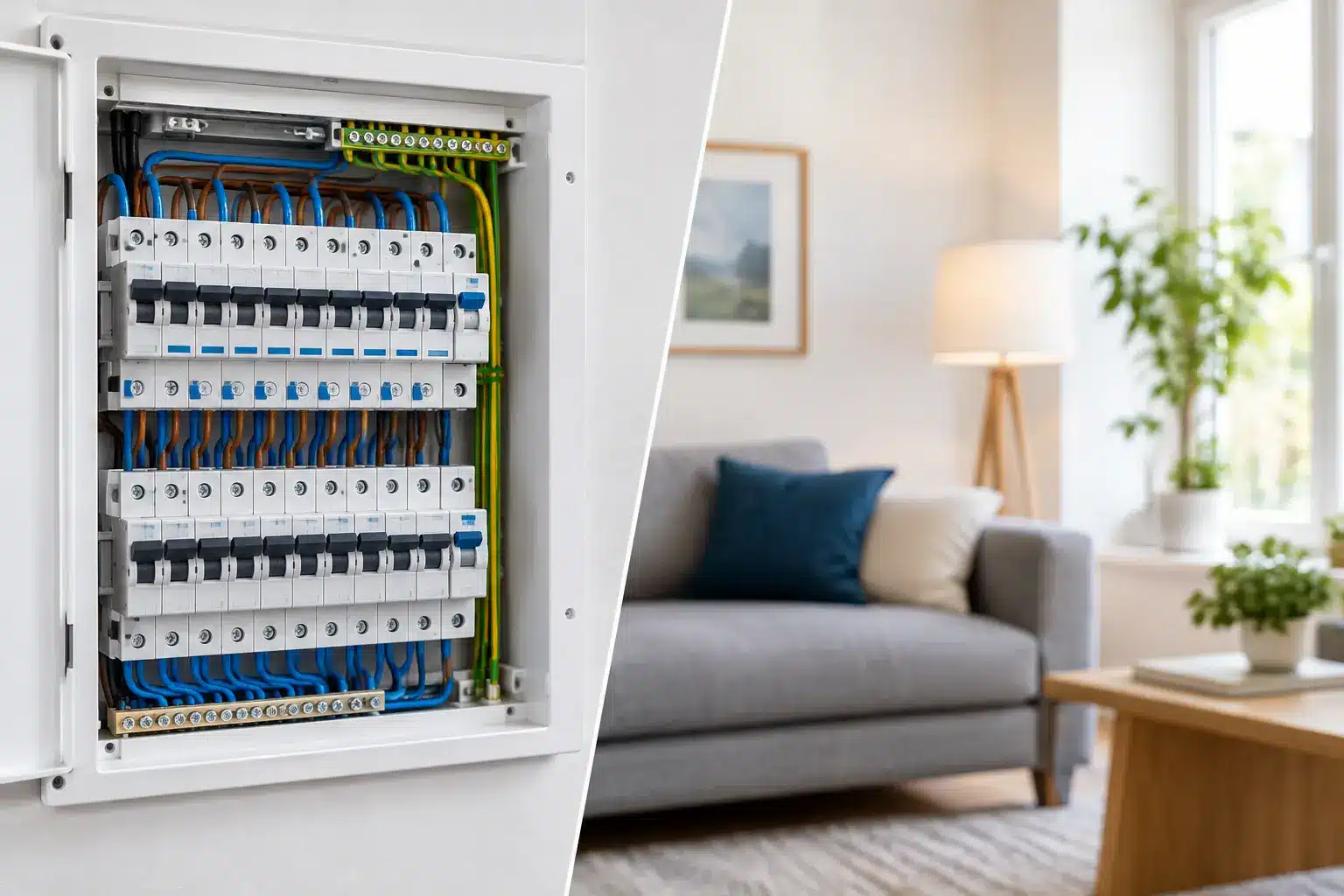
A modern consumer unit does the same core job, but it uses switches and protective devices such as MCBs, RCDs and, in many cases, RCBOs. These devices are designed to disconnect power quickly if there is an overload, short circuit or earth fault. In practical terms, they offer faster fault protection, easier resetting and stronger overall safety performance.
So when people ask about consumer unit vs fuse box, the short answer is this: they serve the same purpose, but a consumer unit is the safer, more up-to-date system.
Why older fuse boxes can be a concern
Not every old fuse box is automatically dangerous, and that is an important distinction. Age alone does not always mean failure. Some older installations can still operate, but many no longer meet modern expectations for electrical safety.
One of the main issues is the lack of additional protection. Many older fuse boxes do not have RCD protection. An RCD is designed to cut power rapidly if it detects electricity flowing where it should not, which can help reduce the risk of electric shock and fire.
There is also the issue of wear and tear. Electrical equipment does not last forever. Connections can loosen over time, components can deteriorate, and previous alterations may not have been carried out to a good standard. In older properties, it is not unusual to find a fuse box that has had multiple additions over the years, sometimes by different people and with varying levels of workmanship.
Another practical problem is inconvenience. Rewireable fuses are not as straightforward as modern breakers. If a fuse blows, replacing fuse wire is not something most property owners should be attempting. A modern consumer unit makes fault isolation and resetting much simpler.
What you will usually find in a modern consumer unit
A current consumer unit is built around protective devices that give clearer control over each circuit. Rather than relying on a fuse wire to burn out, the board will typically contain circuit breakers that trip automatically.
MCBs protect against overloads and short circuits. RCDs add protection against electric shock. RCBOs combine both functions on individual circuits, which can be a better option because one fault is less likely to shut down multiple areas of the property.
You may also hear about surge protection devices and metal-clad consumer units. These are now common considerations in many installations. A metal enclosure offers improved fire containment, while surge protection can help protect sensitive electronics and equipment from voltage spikes. Whether every property needs every available upgrade depends on the installation, the use of the building and the risk level involved.
Consumer unit vs fuse box in everyday use
The difference becomes clearer when you look at day-to-day life. In a house with an older fuse box, a fault might leave you dealing with blown fuse wire, limited circuit labelling and no modern residual current protection. In a property with a consumer unit, faults are usually easier to identify and circuits are easier to isolate safely.
That matters for more than convenience. Modern homes and businesses put far greater demand on electrical systems than they did years ago. More appliances, more sockets, more chargers, more lighting and more specialist equipment all place pressure on installations that may never have been designed for that level of use.
For landlords, the issue is even more practical. If you are responsible for a rented property, an older fuse box can be flagged during an EICR if it lacks appropriate protection or shows signs of deterioration. That does not always mean immediate replacement is legally required on the spot, but it can point to remedial work that should not be ignored.
When should you replace a fuse box?
There is no single answer that fits every property. A fuse box should not be replaced just because it looks old, but there are clear situations where an upgrade is sensible or necessary.
If your board still uses rewireable fuses, replacement is often worth considering. If your installation has no RCD protection, that is another strong reason to look at an upgrade. Signs of overheating, buzzing, scorching, damaged components or recurring tripping all need proper investigation by a qualified electrician.
Replacement also makes sense during larger electrical work. If you are planning a rewire, extension, kitchen refit, loft conversion or major commercial fit-out, the existing board may no longer be suitable for the altered installation. In many cases, trying to keep an outdated fuse box while adding new circuits is false economy.
For businesses, downtime matters as much as compliance. An older board may still function until the day it does not. If a fault disrupts trading, lighting, refrigeration, IT or essential equipment, the cost of delay can quickly outweigh the cost of upgrading.
Is a consumer unit replacement a straightforward job?
It is a common job, but it is not a casual one. Replacing a fuse box with a consumer unit should only be carried out by a properly qualified electrician. The work involves more than swapping one board for another.
Before a replacement, the existing installation needs to be assessed. That is because a new consumer unit may expose faults elsewhere in the system that an old fuse box did not pick up. Earthing and bonding arrangements must be checked. Circuit condition needs to be considered. Testing is essential before and after the new unit is fitted.
That is why a professional will usually explain that a consumer unit change can sometimes uncover additional remedial work. It is not upselling for the sake of it. It is part of making sure the whole installation is safe, not just the board on the wall.
Does every old fuse box need replacing immediately?
Not always. There are properties with older equipment that may still remain in service for the moment, particularly if the installation tests acceptably and the risks are managed. But there is a difference between technically still working and being a sensible long-term standard.
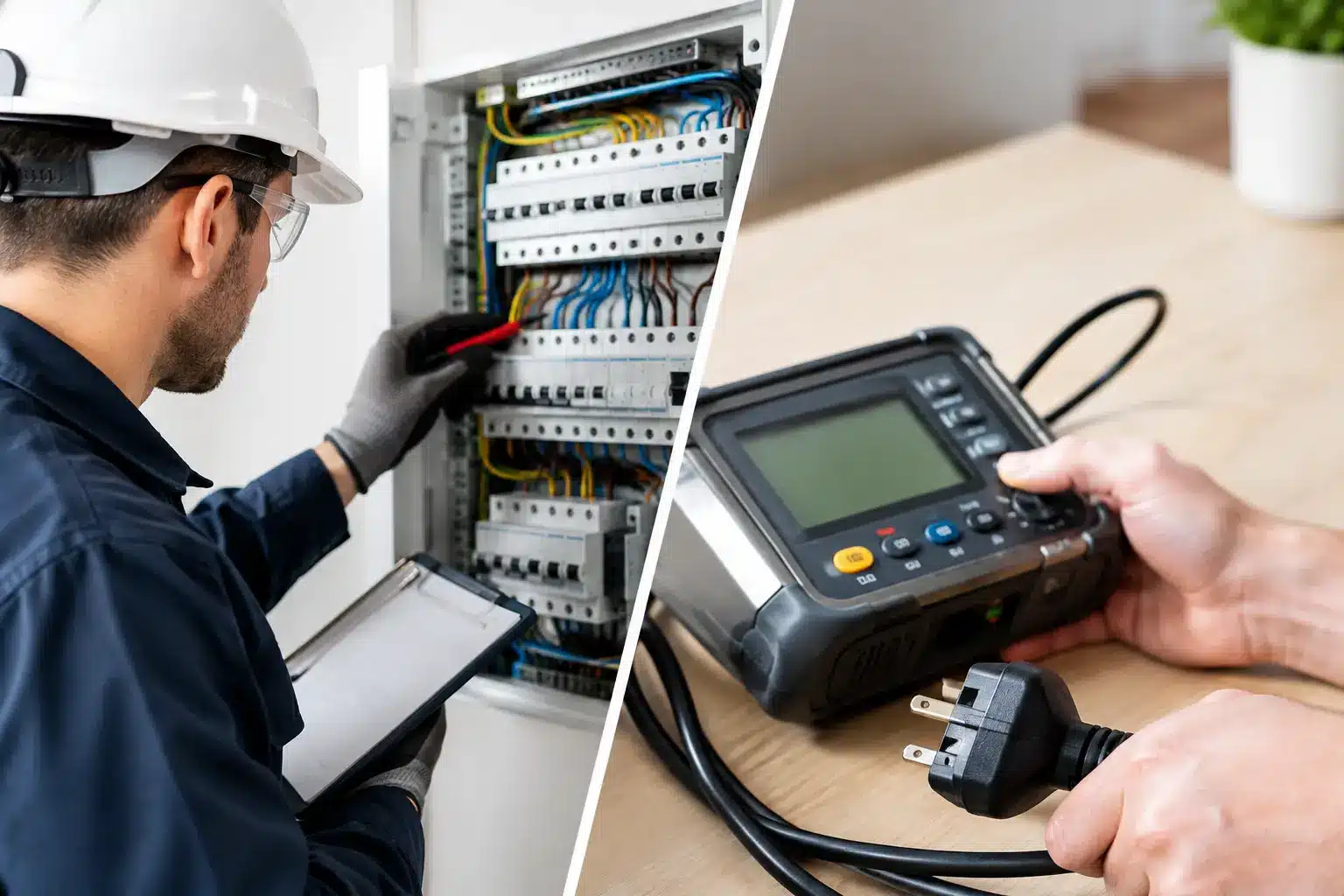
If you have concerns, the best starting point is an inspection rather than guesswork. An EICR can identify whether the fuse box itself is a problem, whether there is missing RCD protection, and whether other parts of the installation need attention.
For property owners in places such as Stevenage, Hitchin and the wider local area, this is often the most practical route. You get a clear picture of the condition of the installation and can make a decision based on evidence rather than age alone.
Making the right call for your property
The consumer unit vs fuse box question is really a safety and suitability question. If your property still has an older fuse box, it may be time to ask whether it matches the way the building is used today. A modern consumer unit offers better protection, clearer circuit control and stronger compliance with current standards, but the right decision depends on the condition of the wider installation as well.
If you are unsure what you have, do not rely on appearances or online photos. Have it checked properly, understand the risks, and make the decision from there. Electrical safety is one of those areas where a clear answer from an experienced electrician is worth far more than a quick guess.