A room briefly going darker when the kettle boils or the washing machine starts can be unsettling. If you are asking, why do lights dim, the answer may be as simple as a high-demand appliance starting up. But repeated, severe or unexplained dimming can also point to an overloaded circuit, a poor connection or a developing fault that needs professional attention.
The key is to notice the pattern. A single light that dims behaves differently from every light in the property dimming at once. The timing, the appliances in use and any accompanying signs – such as buzzing, heat or a burning smell – all help to show whether this is a minor issue or a safety concern.
Why do lights dim when appliances start?
Many household appliances draw a larger amount of power for a short period when they first start. This is known as inrush current. Motors in fridges, freezers, washing machines, tumble dryers, pumps and extractor fans can cause a brief dip in voltage as they begin to run. Electric showers, kettles, ovens and hobs also place a high demand on the electrical installation.
In a modern, correctly designed installation, the effect should be small and short-lived. You may notice a slight dip in brightness for a moment, particularly with older lighting, but the lights should return to normal straight away.
If the lights dim noticeably every time a particular appliance runs, stay dim, or the issue is becoming more frequent, do not assume it is normal. The appliance may be faulty, the circuit may be carrying too much load, or a connection may be deteriorating.
The most common causes of dimming lights
Too much demand on one circuit
Older homes are not always arranged around the way modern households use electricity. A circuit may now supply far more equipment than it was originally intended to handle: televisions, computers, chargers, kitchen appliances, heaters and lighting all add up.
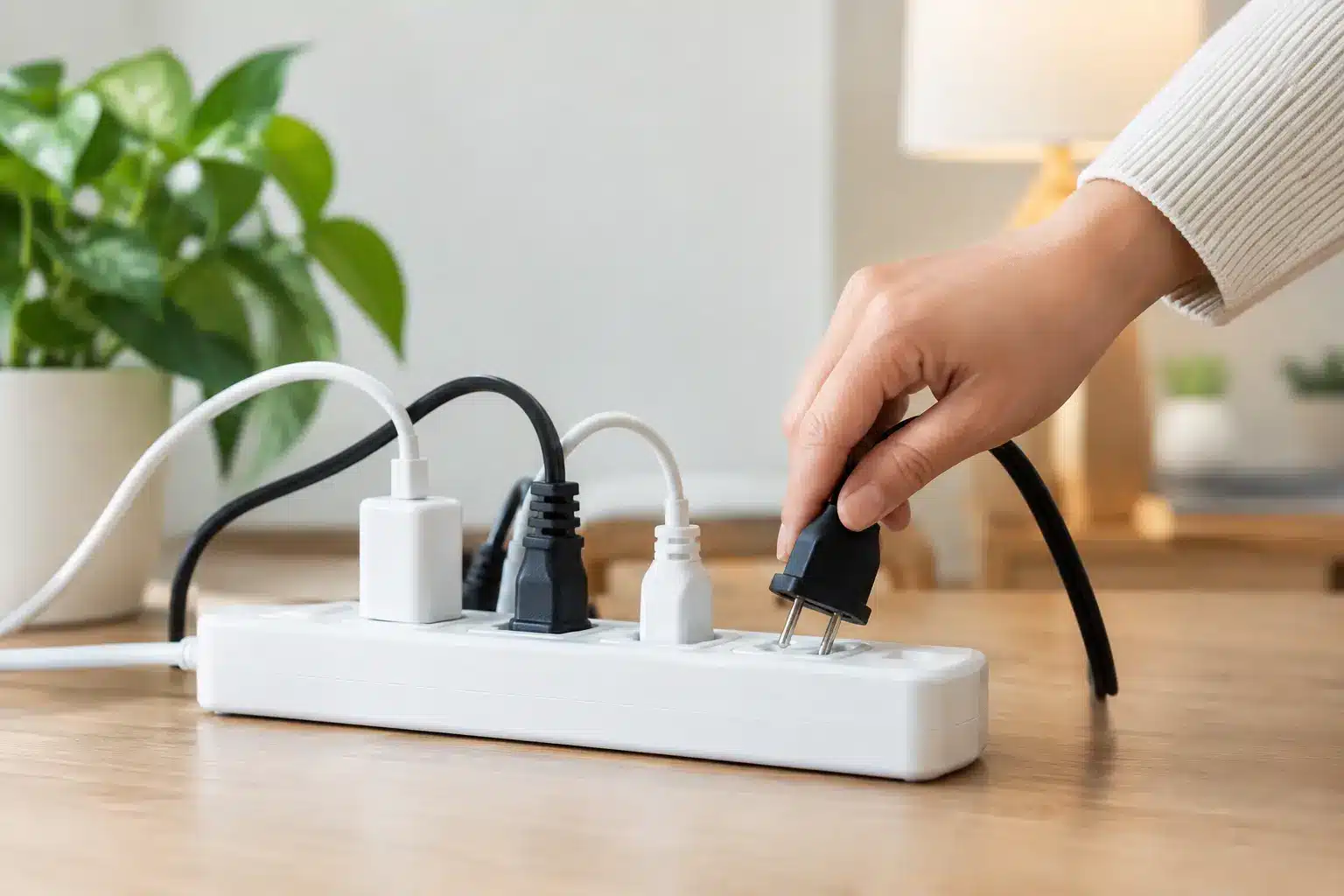
Overloading does not always trip a breaker immediately. It can first show itself as lights dimming when another item is switched on. Plugging several high-wattage appliances into extension leads or multiway adaptors can make the problem worse, especially in kitchens, garages and home offices.
A qualified electrician can assess how circuits are being used, check the protective devices in the consumer unit and advise whether separating loads or adding circuits is appropriate. Simply replacing a breaker with a larger one is not a safe solution. Protection must match the cable size, circuit design and intended use.
Loose or damaged electrical connections
A loose connection creates resistance. Resistance produces heat, and heat can damage cable insulation, accessories and terminals over time. This is one of the more serious possible reasons for lights dimming, particularly where the change in brightness is irregular or affects more than one room.
Connections can loosen in light fittings, switches, ceiling roses, sockets, junction boxes, the consumer unit or the incoming supply equipment. Movement, age, poor previous work and repeated heating and cooling can all contribute.
Warning signs include lights that brighten and dim without any appliance being used, crackling or buzzing from an accessory, discolouration around a socket or switch, a warm faceplate, tripping circuits or a burning smell. Turn off the affected circuit if it is safe to do so and arrange an urgent inspection. Do not remove covers or attempt to tighten electrical terminals yourself.
A faulty appliance
If dimming happens only when one appliance is used, that appliance deserves attention. A failing motor, compressor, heating element or internal connection can draw power erratically. The issue may be most obvious when the appliance starts, but it can also occur while it is running.
Try to identify the pattern without taking risks. If the lights dim whenever the tumble dryer starts, for example, stop using it until it has been checked. Never continue using an appliance that gives an electric shock, smells hot, has a damaged lead or repeatedly trips the circuit.
Problems with LED lamps or dimmer switches
Not every dimming issue is a fault in the fixed wiring. LED lamps are sensitive to compatibility problems. An LED lamp connected to an older dimmer switch may flicker, pulse, fail to dim smoothly or appear dimmer than expected. Using non-dimmable LED lamps on a dimmer circuit can cause similar behaviour.
The quality and specification of the lamps matter too. Mixing different lamp types or wattages on one dimmer can lead to uneven performance. In these cases, the remedy may be as straightforward as fitting compatible, good-quality dimmable LEDs and an LED-rated dimmer. It is still worth checking the circuit where symptoms are persistent, as a lighting fault and a compatibility issue can look alike at first.
A supply issue outside the property
When lights dim throughout the property, especially at the same time of day or when neighbours report similar problems, the cause could sit outside your installation. A fault on the local electricity network or an issue with the incoming supply can affect voltage stability.
Do not interfere with the electricity meter, service head or supply cables. These belong to the relevant network or supplier arrangements and require the correct team to investigate. An electrician can help establish whether the fault appears to be within your installation before it is reported onward.
When dimming lights become a safety issue
Brief, mild dimming during the start-up of a powerful appliance is often manageable. The risk increases when the behaviour changes, is severe or comes with other warning signs. Treat the following as reasons to seek prompt professional help:
- lights suddenly becoming much brighter as well as dimmer;
- repeated tripping of an RCD, RCBO or circuit breaker;
- a buzzing consumer unit, switch, socket or light fitting;
- hot accessories, scorch marks, smoke or a burning smell;
- flickering or dimming affecting several circuits or the whole property;
- signs of damage after water ingress, building work or rodent activity.
Lights becoming brighter can be particularly concerning because it may indicate a loose neutral connection. This can cause unstable voltages and damage sensitive equipment. Switch off power at the main switch only if it is safe and accessible, keep clear of anything hot or damaged, and contact a qualified electrician urgently.
For landlords and business owners, recurring dimming should not be left for the next routine visit. Electrical faults can disrupt tenants, staff and customers, while a poor connection can develop into a fire risk. An Electrical Installation Condition Report can identify defects and deterioration across the installation, but an active fault should be investigated sooner.
What you can safely check before calling an electrician
You do not need to diagnose the fault yourself, but a few observations can make the visit more efficient. Note which lights dim, how long it lasts and what was switched on at the time. Check whether the effect occurs on one circuit or throughout the property.
You can also look for obvious non-electrical causes, such as a loose bulb that can be safely tightened only after the fitting is switched off and cool. If the problem is confined to a dimmable LED fitting, note the lamp type and whether a dimmer is fitted.
Avoid opening the consumer unit, removing socket or switch fronts, changing fuses beyond normal plug-fuse replacement, or repeatedly resetting a device that trips. These actions can hide useful evidence or expose you to live parts. If a breaker trips once after a clear overload, reduce the load before resetting it. If it trips again, leave it off and arrange a test.
Professional testing finds the cause, not just the symptom
An electrician will assess the installation methodically rather than guessing from the light level alone. This can include checking the consumer unit, circuit loading, protective devices, earthing and bonding, accessories, connections and the condition of relevant appliances. Electrical testing can reveal loose or high-resistance connections, insulation problems and faults that are not visible from the outside.
The right repair depends on what is found. It may involve replacing a faulty light fitting or dimmer, repairing a damaged connection, providing a dedicated circuit for a high-load appliance, upgrading an ageing consumer unit or carrying out remedial work identified during inspection. A proper repair should address the reason for the dimming, not merely make it less noticeable.
For homeowners and businesses in Stevenage and nearby Hertfordshire areas, C.K Electrical Contractors can investigate dimming lights, carry out repairs and advise on safe upgrades. With electrical faults, acting early is usually simpler and less disruptive than waiting for a small change in brightness to become a loss of power or a damaged circuit.