A consumer unit can look tidy, sockets can work and the lights can come on as normal, while a hidden problem remains in the wiring behind the walls. That is why people ask, what does an EICR check? It is not a quick look around. An Electrical Installation Condition Report is a structured inspection and test of your property’s fixed electrical installation, designed to identify deterioration, defects and safety concerns before they lead to electric shock, fire or disruption.
For homeowners, landlords and business owners, an EICR provides a clear picture of the condition of an installation at a particular point in time. It is especially valuable in older properties, rental homes, premises that have changed use, and buildings where electrics have been altered over the years.
What does an EICR check in a property?
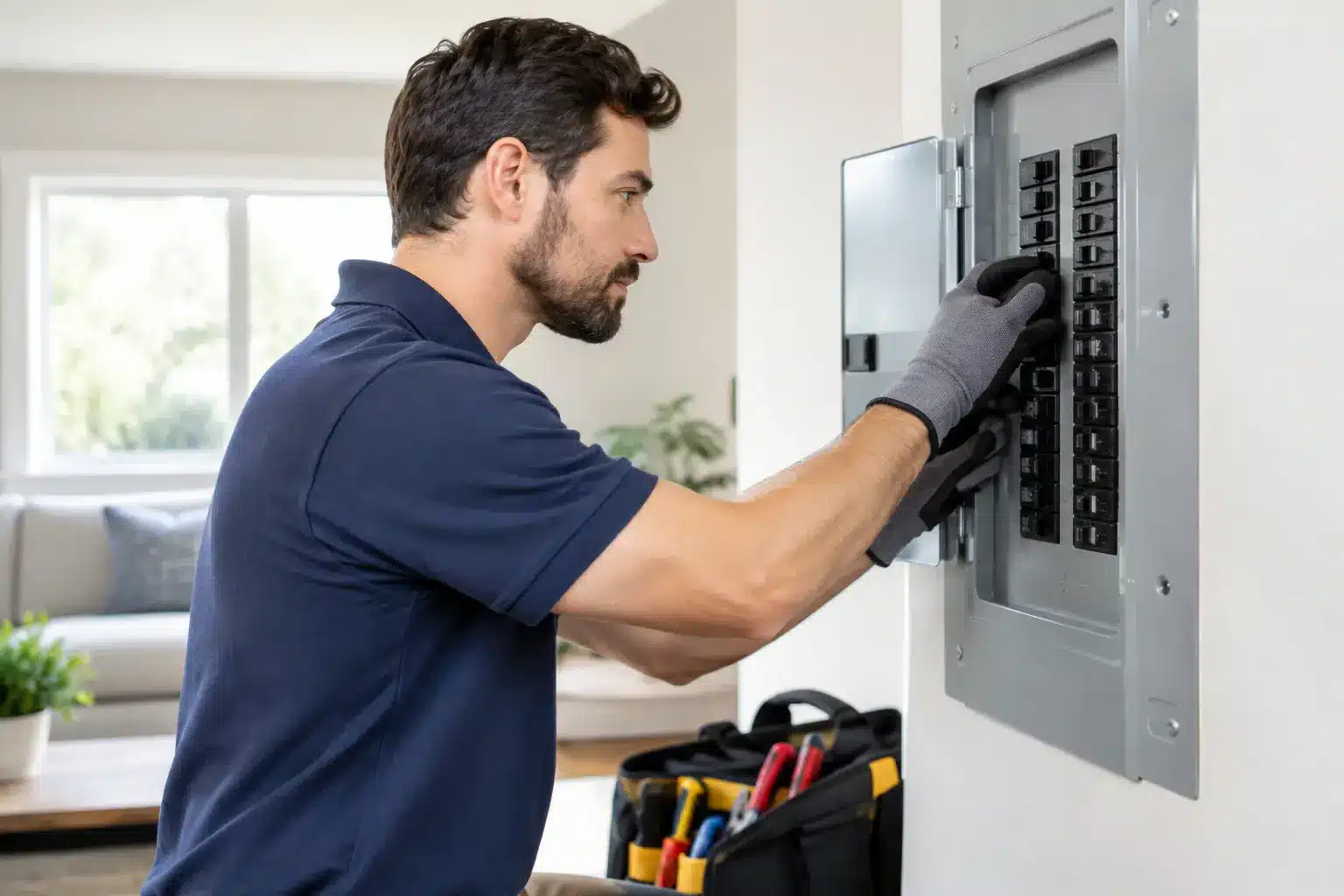
An EICR checks the parts of the electrical system that are fixed in place. This includes the consumer unit or fuse board, the wiring circuits supplying the building, sockets, switches, light fittings, isolators, fixed appliances and relevant earthing and bonding arrangements.
The electrician will assess whether the installation is safe for continued use and whether it is in satisfactory condition when measured against the requirements of BS 7671, the IET Wiring Regulations. It is not simply about whether an installation meets the very latest standard in every respect. Older installations are not automatically unsafe because regulations have changed. The key question is whether there is a danger, a defect or an issue that needs attention.
An EICR normally considers:
- the condition of cables, connections and accessories
- whether the consumer unit has suitable protective devices
- earthing and main protective bonding to reduce shock risk
- the operation of RCDs or RCBOs, where fitted
- signs of overheating, damage, poor workmanship or unauthorised alterations
- circuit loading and whether protective devices are correctly selected
- the presence of safety measures appropriate to the property and its use
The exact scope depends on the building. A landlord EICR in a two-bedroom flat will be very different from an inspection at a workshop, office, shop or warehouse. In commercial and industrial premises, the electrician also needs to consider how the installation is being used, what equipment is connected and whether the work can be completed with minimal impact on trading or operations.
Inspection and testing are both part of the job
A proper EICR combines visual inspection with electrical testing. The visual element can reveal obvious concerns such as cracked sockets, exposed cables, missing blanking plates at the consumer unit, scorch marks, unsuitable DIY alterations or signs of water ingress.
Testing goes further. It allows the electrician to measure whether circuits and protective devices are operating as they should. Depending on the installation and agreed scope, this may include continuity testing, insulation resistance testing, polarity checks, earth fault loop impedance tests and RCD testing.
Some tests need circuits to be isolated. Others are carried out with the supply energised. A competent electrician will explain any required interruption before work starts, particularly in occupied homes and live business premises. There can be practical trade-offs: a full inspection is most thorough when circuits can be safely isolated, but a business may need testing planned around its operating hours.
What faults can an EICR find?
The report can uncover faults that are not visible during day-to-day use. Common examples include loose connections that can overheat, damaged cable insulation, ineffective earthing, incorrectly rated protective devices and circuits with no RCD protection where one would materially improve safety.
It may also identify issues caused by age or previous alterations. For example, an extension may have been added to an existing circuit without suitable protection, a shower circuit may be incorrectly connected, or a consumer unit may contain older equipment that requires closer attention.
An EICR is not intended to create unnecessary work. Good reporting is specific. It records the observation, explains its location where possible and gives it a recognised classification code so you can understand the level of risk.
Understanding EICR observation codes
Observations are generally coded as C1, C2, C3 or FI:
- C1 – Danger present. There is an immediate risk of injury and urgent action is required. The electrician may recommend making the issue safe straight away.
- C2 – Potentially dangerous. The installation is not immediately dangerous, but remedial work is needed without delay.
- C3 – Improvement recommended. This does not make the report unsatisfactory on its own, but it highlights a worthwhile safety or compliance improvement.
- FI – Further investigation required. The electrician cannot confirm the safety of a particular issue without more detailed work or access.
A report with C1, C2 or FI observations is usually recorded as unsatisfactory. That does not necessarily mean the entire installation needs a rewire. The right remedial work may be relatively contained, such as replacing a damaged accessory, correcting a circuit connection or upgrading protection at the consumer unit. The report should guide a proportionate response rather than cause alarm.
What an EICR does not check
An EICR is focused on the fixed installation, not every electrical item in the building. Portable appliances such as kettles, computers, extension leads and power tools are outside its normal scope. Portable Appliance Testing, often called PAT testing, is a separate process.
It also cannot guarantee the condition of wiring that is inaccessible or concealed without destructive work. Electricians inspect and test as much of the installation as is reasonably accessible, but a locked cupboard, boxed-in cable route or built-in fitting may limit what can be examined. Any limitations should be clearly stated on the report.
Similarly, an EICR is not a certificate for recent installation work. New circuits, consumer unit replacements and certain alterations should be supported by the appropriate Electrical Installation Certificate or Minor Electrical Installation Works Certificate. An EICR assesses condition, rather than certifying new work.
How often should you have an EICR?
The right interval depends on the property and how it is used. For privately rented homes in England, landlords must have the electrical installation inspected and tested at least every five years, or sooner if the report recommends a shorter period. A copy of the report must also be provided to tenants within the required timescales.
For owner-occupied homes, a common recommendation is every ten years, or when buying a property, after a flood, following major alterations, or if there are recurring electrical faults. If the consumer unit is older, the property has had several extensions, or you do not know when it was last checked, arranging an inspection is sensible.
Commercial properties often need more frequent testing, commonly around every five years, though the recommended period can be shorter for higher-risk environments. A busy kitchen, school, rental property, workshop or industrial setting may require closer monitoring than a quiet office. The previous report and a qualified electrician’s assessment should determine the schedule.
Preparing for an EICR appointment
A little preparation helps the inspection run efficiently. Make sure the electrician can reach the consumer unit, meters, sockets and areas where electrical equipment is fixed. Let them know about any known faults, recent alterations, solar panels, electric vehicle chargers, outbuildings or circuits serving external areas.
For landlords and property managers, arranging access to all rooms is essential. For businesses, identify any critical equipment or periods when power cannot be interrupted. This allows the inspection to be planned safely and reduces avoidable downtime.
If remedial work is identified, ask for it to be explained in plain language and quoted separately where appropriate. Once C1 or C2 issues have been corrected, you should receive suitable confirmation of the work completed. In some cases, further testing or a replacement report may be needed to show that the installation is now satisfactory.
A report that gives you a practical next step
The purpose of an EICR is not paperwork for its own sake. It gives you evidence of the installation’s condition and a clear route to deal with anything that could put people or property at risk. For customers across Stevenage and the surrounding area, C.K Electrical Contractors approaches inspections with the same practical focus as any other electrical job: test properly, explain clearly and make safe recommendations that fit the property.
If your report is overdue, you are taking on a rental property, or you have concerns about an older installation, arranging an EICR is a straightforward way to replace uncertainty with a professional assessment.