A light fitting that flickers once may be a loose bulb. A socket that crackles, smells hot or leaves a plug unusually warm is different. Knowing how to spot unsafe wiring gives homeowners, landlords and business owners a chance to act before a minor fault becomes a shock risk, electrical fire or costly disruption.
Electrical problems are not always visible, particularly in older properties where cables may be buried in walls, floors and ceilings. You do not need to diagnose the fault yourself. The practical aim is to recognise warning signs, make the area safe and arrange a qualified inspection at the right time.
How to spot unsafe wiring before it becomes an emergency
Unsafe wiring often shows itself through changes in how your electrical installation behaves. Pay attention to patterns rather than dismissing repeated faults as an inconvenience. If the same circuit trips regularly, the same light flickers, or a particular socket feels loose every time it is used, there is a reason to investigate.
Burning smells, heat and discolouration
A burning, fishy or acrid smell near a socket, switch, consumer unit or appliance should never be ignored. It can indicate overheating insulation, loose connections or damaged components. You may also notice brown marks around a socket or switch, melted plastic, scorching, or a buzzing sound.
Stop using the affected point immediately. If it is safe to do so, unplug the appliance without touching damaged or hot parts. Do not remove socket covers or attempt to tighten terminals yourself. If there is smoke, visible sparking or fire, leave the area and contact the emergency services. For a non-fire electrical emergency, switch off the relevant circuit only if you can do so safely, then call an electrician.
Sockets and switches that feel loose or damaged
A socket faceplate should sit firmly against the wall, and a plug should fit securely. Cracked faceplates, exposed wiring, damaged switches and sockets that move when a plug is inserted all need attention. The danger is not simply cosmetic. Movement can loosen connections behind the faceplate, creating heat and arcing.
Be especially cautious where damage is within reach of children, near sinks, or in garages, sheds and outdoor areas where moisture and wear are more likely. Temporary covers and tape are not a repair. The circuit needs to be assessed and the damaged accessory replaced properly.
Frequent tripping at the consumer unit
Modern consumer units are designed to disconnect a circuit when they detect a fault. A tripped breaker or RCD is doing a useful job, but repeatedly resetting it without finding the cause can be unsafe.
One trip after using a faulty appliance may point to that appliance. Repeated tripping on the same circuit, tripping when nothing obvious is plugged in, or a main RCD that will not stay on can suggest a wiring fault, moisture ingress or an issue with fixed equipment. Make a note of what was running when it happened and leave the circuit off if it continues to trip.
Older fuse boards deserve particular care. Rewireable fuses, damaged fuse carriers, missing blanks or a board without modern RCD protection do not automatically mean an immediate rewire is required, but they are good reasons for a professional assessment. The right solution depends on the condition and design of the installation, not the age of the property alone.
Flickering lights and unreliable power
A single flickering lamp can be caused by a failing bulb. When several lights dim or brighten together, however, or lights flicker after new appliances are used, the issue may lie within the circuit or a connection. Lights that fail when a switch is touched, fittings that buzz, and switches that feel warm are also warning signs.
In a business premises, intermittent power can affect more than lighting. It may disrupt tills, IT equipment, refrigeration, machinery or emergency lighting. Do not work around the problem with extension leads from other areas. That can overload another circuit and mask the fault rather than resolving it.
Warning signs hidden in everyday use
Some unsafe installations appear normal until demand increases. This is why recurring nuisance issues matter, particularly in kitchens, home offices, rental properties and workplaces where the electrical load has changed over time.
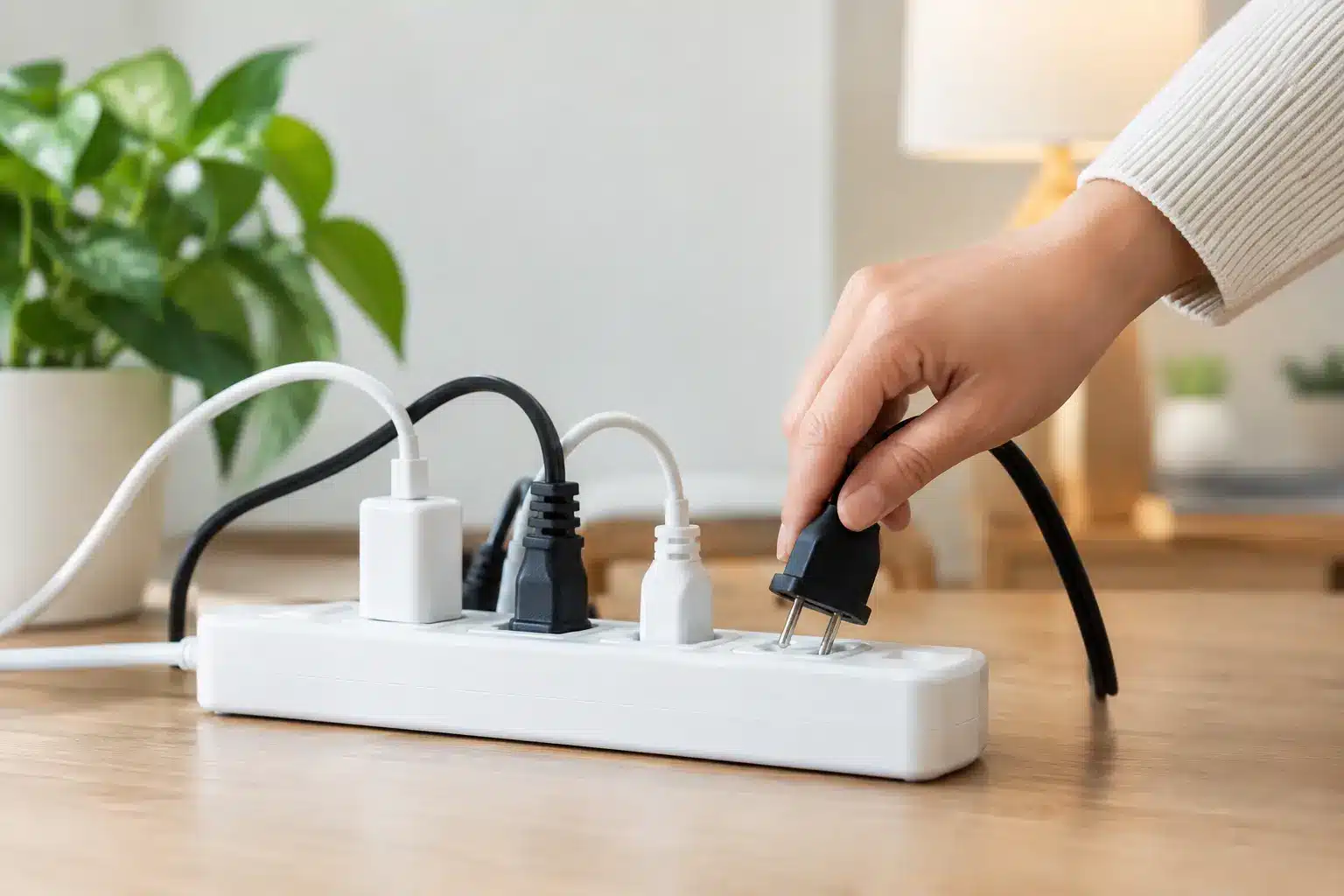
Extension leads and adaptors should be occasional solutions, not permanent infrastructure. A cluster of adaptors behind a television, under a desk or in a shop back room may indicate there are too few sockets for the way the space is used. Overloading can lead to overheated plugs, damaged leads and overloaded circuits.
Look out for frayed flexes, crushed cables under furniture, leads running through doorways, and makeshift repairs to appliance cables. Flexible leads are more vulnerable than fixed wiring, but they still form part of the electrical safety picture. Replace damaged leads or have the appliance repaired rather than wrapping the damage in insulating tape.
Water and electricity are another serious combination. A socket, light fitting or extractor fan affected by a leak needs checking before use, even after the area appears dry. Water can enter connections and cause corrosion or faults later. In bathrooms, kitchens and external areas, suitable equipment, correct zones and effective protection are essential.
When old wiring needs professional attention
Age alone does not prove wiring is unsafe. A well-maintained installation may remain serviceable for many years, while a newer installation can become unsafe after poor alterations or damage. Still, certain signs are common in properties that may need closer inspection.
Older cables may have rubber, fabric or ageing PVC insulation. You may find dated accessories, insufficient sockets, no earthing at some lighting points, or circuits added over decades without a clear plan. DIY alterations, old junction boxes hidden in lofts and walls, and mixed types of fittings can all create uncertainty.
If you have recently bought a property and do not know when it was last inspected, an Electrical Installation Condition Report, commonly called an EICR, provides a clear professional view of its condition. For landlords, regular electrical safety checks are a legal requirement in most rented homes in England. Commercial and industrial premises also need planned inspection and testing suited to the installation and how it is used.
An EICR is not a sales exercise or an automatic recommendation for a full rewire. It identifies observed damage, deterioration, defects and non-compliance that may affect safety. Some findings may need urgent remedial work, while others can be planned sensibly around budgets and operational needs.
What to do if you suspect unsafe wiring
Your next step should match the severity of the warning sign. If there is heat, smoke, burning smell, sparking, electric shocks or a damaged live part, stop using the affected equipment and seek urgent help. Do not touch exposed conductors, investigate inside the consumer unit or continue resetting a tripping device.
For less immediate concerns, such as a loose socket, recurring flicker or an ageing installation, arrange an inspection before the fault worsens. Take simple notes on where and when the issue happens, which circuit is involved if known, and whether particular appliances trigger it. This helps an electrician test efficiently, but it does not replace testing.
A qualified electrician will inspect the visible condition, test circuits and protective devices, identify the cause where possible, and explain the repair options in plain terms. For homes and businesses across Stevenage and the surrounding area, C.K Electrical Contractors can provide responsive fault finding, remedial work and formal electrical condition reports.
Do not rely on a visual check alone
Many dangerous faults are concealed. A cable can be damaged by a nail, overloaded at a connection, or deteriorating within a wall with no obvious mark on the surface. Equally, a consumer unit can look tidy while test results reveal a protective issue that needs attention.
Visual checks are valuable because they help you notice changes early. They are not permission to remove covers, test live circuits or carry out electrical repairs. UK electrical work must be completed safely and, for certain work in homes, in line with Building Regulations requirements.
If something feels wrong, trust that instinct. Turning off a suspect circuit and arranging a proper inspection is a small interruption compared with the risk of waiting for a fault to announce itself more dramatically.