A consumer unit safety review is one of the most worthwhile checks you can arrange for a home, rental property or business premises. The consumer unit – often called a fuse board – is where electricity is distributed and protected across the building. If it is outdated, damaged or incorrectly altered, a fault elsewhere in the installation may not be dealt with as safely as it should be.
For many property owners, the first sign of a problem is a circuit that keeps tripping. That is not always a fault with the consumer unit itself, but it is a signal worth taking seriously. A qualified electrician can identify whether the issue lies with an appliance, wiring, a circuit or the protective devices in the board, then recommend the right repair rather than guessing.
What a Consumer Unit Safety Review Covers
A professional review looks beyond the front cover of the unit. It considers the condition of the enclosure, the protective devices fitted, the quality of the wiring connections and whether the installation is suitable for the way the property is used now.
Modern consumer units normally use circuit breakers and residual current devices, known as RCDs. These devices are designed to reduce the risk of electric shock and fire by disconnecting power when they detect certain faults. Newer boards may use RCBOs, which provide individual protection to each circuit. The best arrangement depends on the property, the existing installation and the work required – there is no one-size-fits-all upgrade.
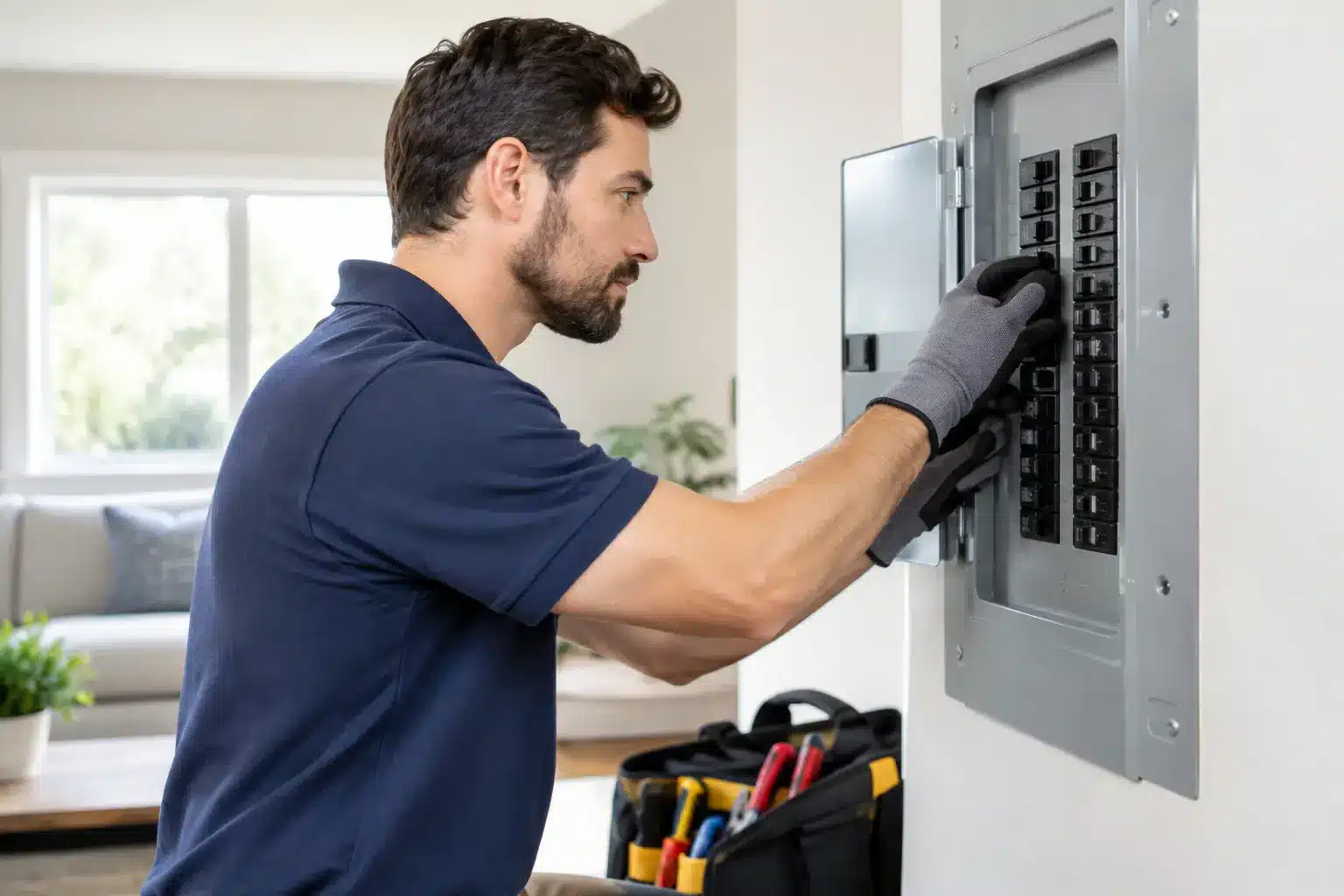
During a consumer unit safety review, an electrician may check for signs of overheating, loose connections, damaged cables, unsuitable modifications and missing circuit labels. They will also assess whether the board has appropriate protection for its circuits and whether there is safe access for testing and maintenance.
The unit should not be opened by anyone without the knowledge, test equipment and competence to work safely around live electrical parts. A board can appear tidy from the outside while concealing issues that need professional attention.
Warning Signs That Need Attention
A burning smell, scorch marks, buzzing, crackling or a consumer unit that feels unusually warm should never be ignored. Switch off power if it is safe to do so and contact an electrician promptly. If there is visible smoke, fire or an immediate danger, call the emergency services first.
Repeated tripping also needs investigation, especially when it occurs without an obvious cause. Resetting a breaker may restore power temporarily, but repeatedly doing so can mask an underlying fault. It could be a failing appliance, moisture affecting an outdoor circuit, damaged cable insulation or an overloaded circuit.
Other signs are less dramatic but still matter. These include a very old rewireable fuse board, broken switches, blank spaces in the cover, labels that do not match the circuits, or sockets and lighting added over the years without clear evidence of testing. Older equipment is not automatically unsafe, but its condition and the level of protection it provides must be assessed properly.
For landlords and business owners, changes in occupancy or equipment use can create new demands on an existing board. A former spare room becoming an office, additional kitchen appliances, electric heating, workshop equipment or electric vehicle charging can all affect whether the installation remains suitable.
Why RCD Protection Makes a Difference
RCD protection is a key part of electrical safety in many modern installations. It monitors the flow of electricity and can disconnect a circuit quickly when it detects an imbalance that may indicate current flowing to earth. This can help reduce the severity of an electric shock and lower the risk of an electrical fire.
However, an RCD is not a substitute for safe wiring, sound appliances or careful use of electricity. It will not correct loose sockets, damaged extension leads or circuits that have been poorly installed. It must also be correctly selected, installed and tested as part of the wider electrical system.
Most RCDs have a test button, often marked “T” or “Test”. Property owners can use it only in line with the manufacturer’s instructions and any guidance displayed on the unit. Testing may switch off circuits, so it is sensible to save computer work and check that no essential equipment will be affected beforehand. If the device does not operate as expected, do not continue to rely on it – arrange an electrician’s visit.
Safety Review, EICR or Consumer Unit Replacement?
These services are related, but they are not the same thing. A consumer unit safety review focuses on the board and the protection it provides. It is useful where there are visible concerns, nuisance tripping, plans to add circuits or uncertainty about the age and condition of the equipment.
An Electrical Installation Condition Report, or EICR, is a more detailed inspection and test of the fixed wiring installation. It assesses the installation against the requirements of BS 7671 and identifies observations that may require improvement or remedial work. Landlords have particular legal duties around electrical safety, while homeowners and businesses also benefit from regular, condition-based inspection.
A full consumer unit replacement may be recommended where the existing board is obsolete, damaged, lacks suitable protection or cannot be adapted safely for planned work. Replacing a fuse board is not simply a matter of fitting a newer-looking box. The circuits connected to it need inspection and testing, and the new unit must be correctly designed for the installation.
There are occasions where replacement is not immediately necessary. If the board is in good condition and the concern is confined to a single circuit or device, a targeted repair may be more proportionate. A dependable electrician should explain the findings clearly, set out the options and give you a quotation before non-urgent work begins.
Common Problems Found Around Consumer Units
Consumer units are often affected by changes made gradually over many years. An extension may have been added, a garage converted, an outdoor supply installed or a new shower fitted, with circuits altered along the way. The result can be poor labelling, overloaded ways, unsuitable cable connections or equipment that no longer matches the use of the property.
Workmanship issues can also develop without being obvious. Connections may loosen through heat cycling, cables can be poorly routed, and unused openings can leave gaps in the enclosure. Water ingress near an external meter position or cable entry point is another issue that requires swift attention.
At commercial premises, a consumer unit review should also consider downtime. A shop, office, warehouse or hospitality venue may need testing planned around opening hours or production activity. Isolating power safely takes preparation, but delaying known faults can create greater disruption later.
What You Can Do Before the Electrician Arrives
You do not need to diagnose the fault yourself. Useful information includes which circuits are affected, what was running when the problem occurred, how often it happens and whether recent electrical work or water damage may be relevant. If a breaker has tripped, leave it in the off position if it will not reset normally or trips again immediately.
Keep the area around the consumer unit clear so it can be accessed safely. Avoid storing coats, boxes or household items in a cupboard that blocks the board. Do not remove the cover, tighten connections or replace breakers yourself.
If you are arranging an EICR or considering a fuse board upgrade, make a note of additions such as outbuildings, garden power, electric showers, induction hobs, solar equipment or vehicle chargers. This gives the electrician a clearer picture of how the installation is being used.
A Safer Standard for Your Property
Electrical safety is rarely about one dramatic moment. More often, it comes down to finding small defects before they become urgent, ensuring protective devices work as intended and keeping the installation appropriate for the building’s needs.
For homeowners, landlords and businesses in Stevenage and nearby Hertfordshire areas, C.K Electrical Contractors can assess consumer units, carry out EICRs and complete remedial work with clear advice and professional testing. If something does not look, sound or smell right at your consumer unit, acting early is the practical way to protect people, property and day-to-day continuity.