A failed consumer unit, overheating socket or unexpected lighting fault can stop a business day far faster than most owners expect. This commercial electrical maintenance guide explains how to manage electrical systems before small defects become disruption, safety risks or expensive emergency repairs.
For offices, shops, schools, hospitality venues, warehouses and industrial premises, electrical maintenance is not simply a box-ticking exercise. It protects staff and visitors, supports business continuity and helps the responsible person meet their duties under UK electrical safety regulations. The right plan will look different for a small retail unit than it will for a busy warehouse, but the aim is the same: keep the installation safe, reliable and suitable for the way the building is used.
Start with a clear picture of your electrical installation
A maintenance plan is only useful when it reflects the actual condition and demands of the site. Begin by identifying the key parts of the installation: consumer units or distribution boards, circuits, emergency lighting, fixed equipment, sockets, switches, cable routes and any specialist systems such as three-phase supplies, machinery connections or commercial kitchen equipment.
Keep up-to-date electrical records in one place. This should include previous Electrical Installation Condition Reports (EICRs), certificates for recent alterations, records of remedial works, emergency lighting tests and details of recurring faults. When a new contractor attends site, accurate information means they can investigate efficiently rather than making assumptions about hidden circuits or past alterations.
It is also worth considering how your premises have changed. A once-quiet office may now have more workstations, chargers, air conditioning units and kitchen appliances on the same circuits. A warehouse may have added racking, equipment or electric vehicle charging. Electrical systems can become overloaded gradually, so a circuit that was adequate several years ago may no longer be appropriate.
Build commercial electrical maintenance around risk
There is no single maintenance schedule that suits every business. The frequency and depth of checks should reflect the environment, the age and condition of the installation, the type of equipment in use and the consequences of a failure.
A clean, low-traffic office normally faces different risks from a workshop with portable tools, dust, vibration and heavy machinery. Likewise, a hospitality venue may need closer attention to kitchen equipment, customer areas and emergency lighting, while a school must consider high use, vulnerable users and the need to arrange work around term time.
A practical programme usually combines regular in-house visual checks with planned professional inspection and testing. Staff should know how to report damage or faults promptly, but they should not attempt electrical repairs unless trained and authorised to do so. A qualified electrician can then carry out testing, diagnose underlying causes and complete remedial work safely.
Daily and weekly observations
Routine observations do not require anyone to remove covers or interfere with electrical equipment. They are simply a sensible way to spot problems early. Look for cracked socket faces, loose switches, damaged plugs and leads, scorch marks, persistent buzzing, flickering lights, water near electrical points or equipment that trips a circuit repeatedly.
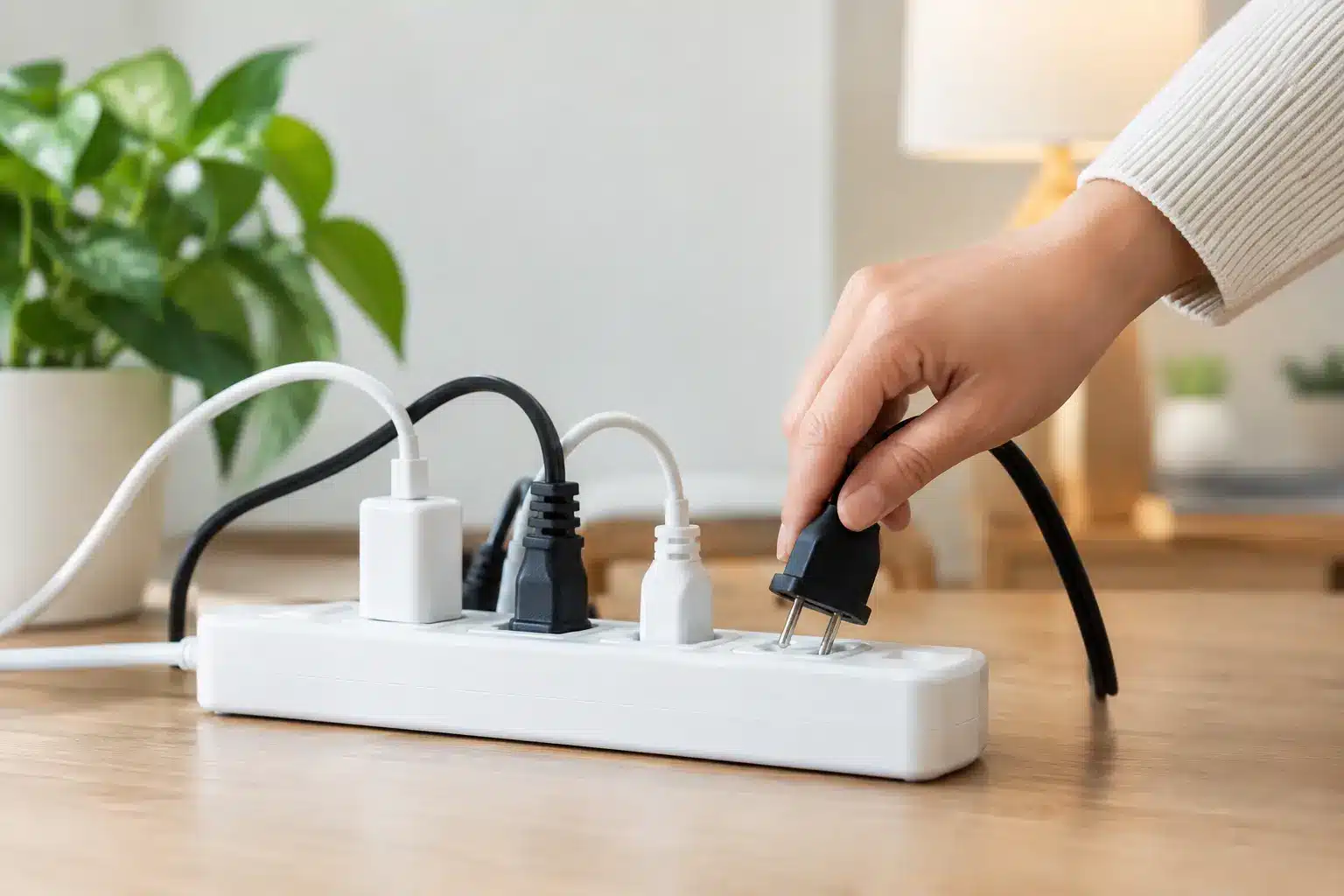
Pay attention to extension leads and multi-way adaptors. They can be useful for short-term, low-demand tasks, but they should not become a permanent solution for a lack of sockets. Daisy-chaining adaptors, running leads beneath carpets or loading one outlet with heaters, kettles and chargers can create avoidable risks.
If a circuit trips, do not keep resetting it without investigating why. One isolated trip may have a simple cause, but repeated tripping can indicate a fault in fixed wiring, an appliance, moisture ingress or an overloaded circuit. Isolate affected equipment where safe to do so and arrange a professional inspection.
Planned inspections and testing
A commercial EICR is the central formal check for a fixed electrical installation. During an EICR, an electrician assesses the condition of the installation, carries out appropriate testing and identifies defects or departures that require attention. The report helps the dutyholder understand whether the installation is satisfactory for continued use and what remedial work is needed.
The appropriate interval for an EICR depends on the property and its use. A competent electrician can advise based on the site, previous reports and the relevant guidance. Waiting until a report is overdue, or assuming every commercial property follows the same timetable, is not a sound maintenance strategy.
Portable appliance testing may also form part of your wider approach. There is no universal legal rule that every appliance must be tested at a fixed annual interval. However, appliances should be maintained in a safe condition, and formal testing can be a sensible control where equipment is heavily used, moved frequently or used in harsher environments. Visual checks, user reporting and risk-based testing work best when combined.
Do not overlook emergency systems
Emergency lighting is easy to forget because it is designed to operate when normal lighting fails. That is exactly why it needs routine attention. Test arrangements should confirm that fittings illuminate correctly, batteries support the required duration and escape routes remain adequately lit.
Exit signs, illuminated fire safety notices and emergency bulkheads can be affected by failed lamps, battery deterioration, accidental damage or building alterations. A newly partitioned office, relocated storage area or changed escape route can alter whether the existing emergency lighting remains suitable.
Fire alarms, electrical shut-offs and any critical power arrangements should also be considered as part of site planning. Electrical maintenance does not replace fire safety management, but the two are closely connected. A fault that affects an emergency route or safety system deserves prompt action.
Plan work to minimise disruption
Commercial electrical maintenance should protect operations as well as people. Before work begins, agree which circuits need isolating, how long the interruption may last and whether critical systems need temporary arrangements. For a retail premises, that could mean arranging work before opening. For an office, it may mean isolating sections of a floor in stages. For industrial sites, production equipment and safe shutdown procedures may need particular care.
The cheapest quote is not always the lowest-cost choice if it does not account for safe isolation, proper testing, certification and reinstatement. Equally, a full replacement is not always necessary when targeted remedial work can safely resolve the issue. A competent contractor should explain the condition found, the available options and the practical impact of each option.
For older premises, phased upgrades can be a realistic solution. Replacing a dated distribution board, adding surge protection, separating overloaded circuits or upgrading lighting in manageable stages may reduce risk without forcing a major shutdown all at once. The right route depends on the report findings, available budget and the operational importance of the affected areas.
Keep maintenance records useful, not just filed away
Certificates and reports should lead to action. Once an inspection identifies observations, make sure they are reviewed by the person responsible for the premises and that remedial works are prioritised according to the level of risk. Keep evidence of completed work with the original report so there is a clear record of how issues were addressed.
Good records are particularly valuable for landlords, managing agents and multi-site businesses. They support handovers, help demonstrate a responsible approach to safety and make it easier to track repeat issues. They can also save time after an incident, power fault or insurance query.
A simple maintenance log should record the date, area, fault or observation, action taken, contractor details and any follow-up required. It does not need to be complicated. It does need to be kept current.
When to call an electrician urgently
Some electrical issues should not wait for the next planned visit. Burning smells, visible smoke, sparking, electric shocks, flooding near electrical equipment, a hot consumer unit, widespread loss of power or repeated circuit tripping all need urgent assessment. If there is immediate danger, isolate power only if it is safe to do so, keep people away from the affected area and follow your emergency procedures.
For businesses in Stevenage and the surrounding Hertfordshire area, access to a qualified local electrician matters when a fault affects trading, staff safety or essential services. C.K Electrical Contractors provides planned maintenance, commercial EICRs, remedial works and 24-hour emergency support, with work carried out by experienced, NAPIT-registered electricians.
The most effective maintenance plan is the one your team can follow: check what staff see every day, act on faults promptly, schedule formal inspections at suitable intervals and keep clear records of every repair. That approach gives you a safer workplace and far fewer unwelcome surprises when the lights need to stay on.