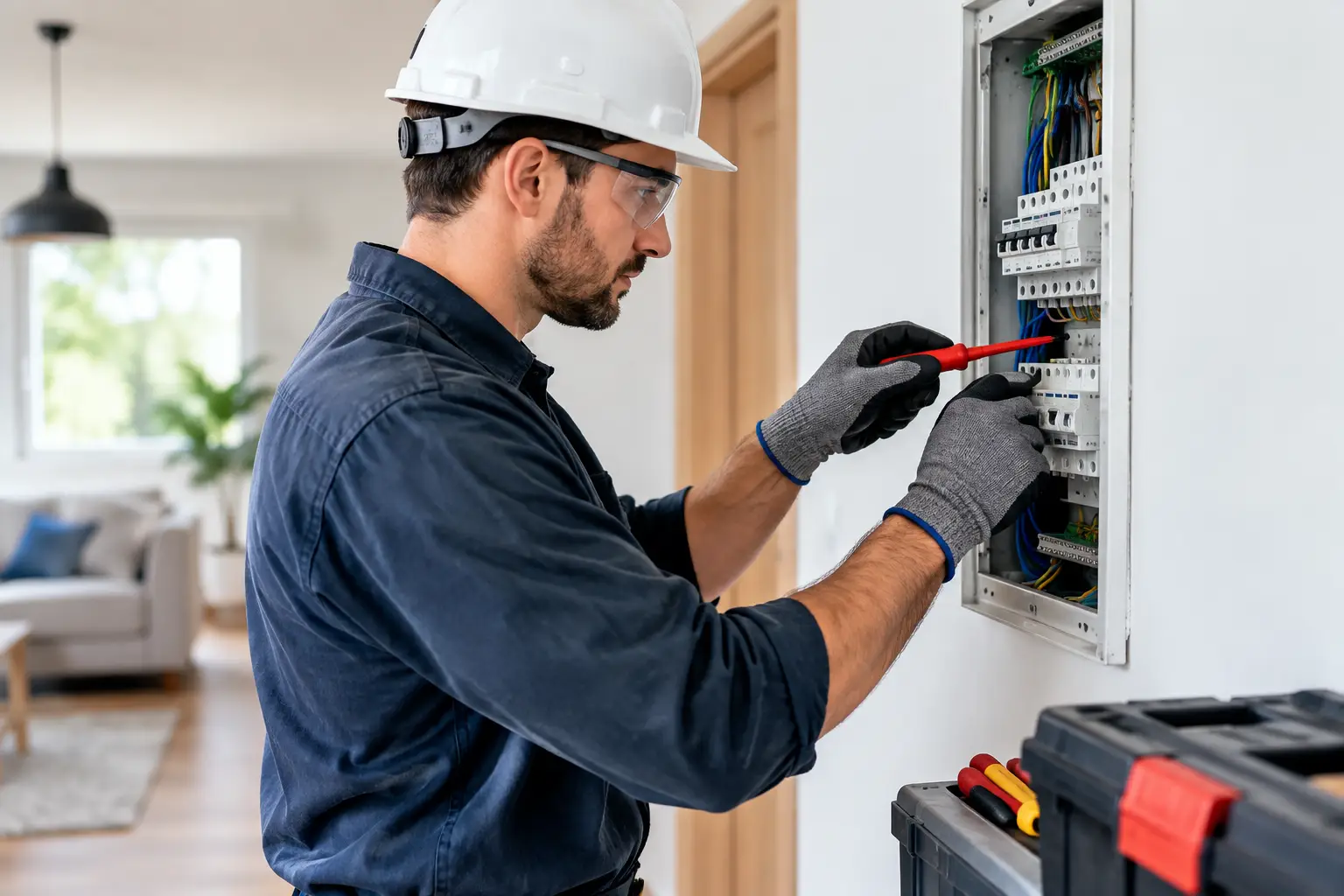
If your electrics trip without warning, your consumer unit still has rewireable fuses, or your EICR has highlighted issues, a fuse board upgrade guide is not just useful – it can save you time, money and a fair amount of stress. For homeowners, landlords and business owners, the fuse board is the control point for electrical safety. When it is outdated, everything connected to it is affected.
Why a fuse board upgrade matters
A fuse board, more accurately called a consumer unit, is designed to protect circuits and reduce the risk of electric shock and fire. Older boards were built to standards of their time, but electrical demand has changed. Most properties now run far more appliances, chargers, kitchen equipment and technology than they did twenty or thirty years ago.
That does not automatically mean every old fuse board is dangerous. It does mean older units are less likely to offer the level of protection expected in modern installations. In many cases, an upgrade brings in RCD protection, better circuit separation and improved fault detection. That can make a real difference if there is a wiring fault, damaged cable or overloaded circuit.
For landlords and businesses, there is also the compliance side. If an inspection identifies a consumer unit that no longer meets current safety expectations, leaving it in place can create unnecessary risk and expense later.
Signs you may need a fuse board upgrade
Some properties make the need obvious. Others only show small warning signs at first. If you still have a wooden backboard with an older style fuse box, rewireable fuses or no modern RCD protection, it is worth having it assessed.
Frequent tripping is another common sign. Tripping is not always the board itself at fault. It can be doing its job by detecting a problem elsewhere. But if nuisance tripping happens repeatedly, or circuits are poorly arranged, an upgrade may be part of the solution.
You should also take notice if lights flicker, sockets feel warm, there are signs of scorching near the consumer unit, or you have recently extended or altered the property electrics. A new kitchen, loft conversion or garden office often changes the electrical load enough to justify reviewing the existing board.
An EICR is often where these issues are formally picked up. If the report recommends consumer unit replacement or improvement, that should not be put on the long finger.
What changes with a modern consumer unit
A proper fuse board upgrade guide should explain that this is not just a box swap. A modern consumer unit is built to give faster, more reliable protection and to reflect current regulations.
Most upgrades involve replacing old fuse carriers with circuit breakers and adding RCDs or RCBOs. In simple terms, these devices are designed to disconnect power quickly if they detect a fault. That reduces the chance of electric shock and can limit fire risk.
Modern units are also usually metal-clad, which improves fire containment compared with some older plastic boards. Circuit labelling is clearer, testing is more straightforward and future maintenance tends to be easier.
That said, a new consumer unit does not fix poor wiring elsewhere in the property. If there are existing faults, damaged accessories or unsuitable earthing arrangements, these may also need attention during the work. That is why a proper inspection before replacement matters.
Fuse board upgrade guide: what to expect on the day
For most domestic properties, a fuse board upgrade can be completed in a day, provided the existing installation is in reasonable condition. Commercial settings vary more because the size of the system, trading hours and access needs all affect the programme.
The first stage is assessment. An electrician will check the existing arrangement, earthing and bonding, circuit identification and general condition of the installation. If there are concerns, these should be explained clearly before work starts. It is better to know upfront if extra remedial work is needed than to treat it as a surprise once the power is off.
On the day itself, the supply is isolated, the old board is removed and the new consumer unit is installed. Circuits are transferred carefully and tested as they go. Once fitted, the installation is tested thoroughly to confirm the protective devices operate correctly and the circuits are safe to energise.
You should then receive certification for the work. In domestic settings, notification under Part P may also apply where required. If you are a landlord or managing agent, keep the paperwork with your property records. It is evidence that the upgrade was carried out correctly and in line with current standards.
How much disruption should you expect?
Most people want to know two things: how long the power will be off and whether the house or premises will be left in a mess. In a standard replacement, power is usually off for part of the day. A good electrician will tell you this in advance so you can plan around fridges, broadband, alarms or business equipment.
There may be some short-term disruption, but it should be controlled. The consumer unit area needs clear access, and some circuits may need tracing if older labelling is unclear. In commercial environments, timing can often be arranged to reduce downtime.
What matters is not just speed, but doing the job properly. Rushing a consumer unit change without testing is poor practice. The board is only one part of the system, and it must be verified as part of the wider installation.
The cost question and what affects it
There is no single price for every fuse board upgrade because properties differ. A straightforward house with well-identified circuits and sound existing wiring is usually simpler than an older property with mixed alterations over the years.
The final cost is often affected by the number of circuits, the condition of the installation, whether earthing and bonding need upgrading, and whether faults are found during testing. Commercial premises can involve additional considerations such as phased work, out-of-hours attendance or more complex distribution arrangements.
The cheapest quote is not always the best value. With electrical work, the standard of testing, certification and compliance matters just as much as the box being installed on the wall. A properly completed upgrade should leave you with a safer installation and a clearer picture of the condition of your electrics overall.
When an upgrade becomes the sensible choice
Sometimes customers ask whether they should repair the current board and carry on. In some cases, that is possible. In others, it becomes false economy. If replacement parts are limited, protection is outdated or the board is no longer suitable for the circuits it serves, upgrading is usually the more sensible long-term option.
This is particularly true when major electrical work is planned. If you are adding new circuits for an extension, office fit-out, kitchen refurbishment or workshop equipment, keeping an undersized or outdated board often creates more limitations than it solves.
For landlords, an upgrade can also reduce repeat call-outs. If tenants are losing power because circuits trip easily or the board lacks proper discrimination, replacing the unit can improve both safety and day-to-day reliability.
Choosing the right electrician for the job
A consumer unit replacement is not a handyman task. It should be carried out by a qualified electrician who can inspect, test, certify and explain the condition of the installation clearly. Registration with a recognised competent person scheme matters because it shows the work is being completed to the required standard.
It also helps to choose someone who deals with both straightforward upgrades and the less straightforward follow-on issues. Older properties often reveal hidden faults once testing begins. Businesses may need careful planning to avoid unnecessary interruption. Experience counts because the board replacement itself is only one part of doing the job well.
For property owners in and around Stevenage, Hitchin or Letchworth, using a local contractor can make the process easier if follow-up work, certification queries or urgent attendance is needed later.
A final word on safety and timing
The best time to upgrade a fuse board is usually before it becomes urgent. Waiting until a fault causes power loss, a failed inspection or visible damage can turn a planned job into an emergency. If your property has an older unit, recurring electrical issues or inspection recommendations you have been putting off, getting it assessed now is the practical move. A safer, properly tested consumer unit gives you confidence in the rest of the installation – and that peace of mind is worth having before a problem forces the issue.