People often search for “how to reset trip switch” when the lights go out suddenly, the sockets stop working or an appliance has caused part of the property to lose power. In many cases, resetting a tripped switch is straightforward. However, the switch has tripped for a reason, and simply turning it back on without a few basic checks can leave an electrical fault unresolved.
A trip switch is a safety device. It cuts the supply when it detects a problem such as an overloaded circuit, a faulty appliance or a fault to earth. A careful reset can restore power safely, but repeated tripping needs proper investigation by a qualified electrician.
Before You Reset a Trip Switch
Start by checking whether the problem is limited to your property. If neighbouring homes, street lighting or the wider area are also affected, it may be a local power cut rather than an issue with your consumer unit. Check the electricity meter display if accessible, and contact your electricity network operator if you believe there is an external supply fault.
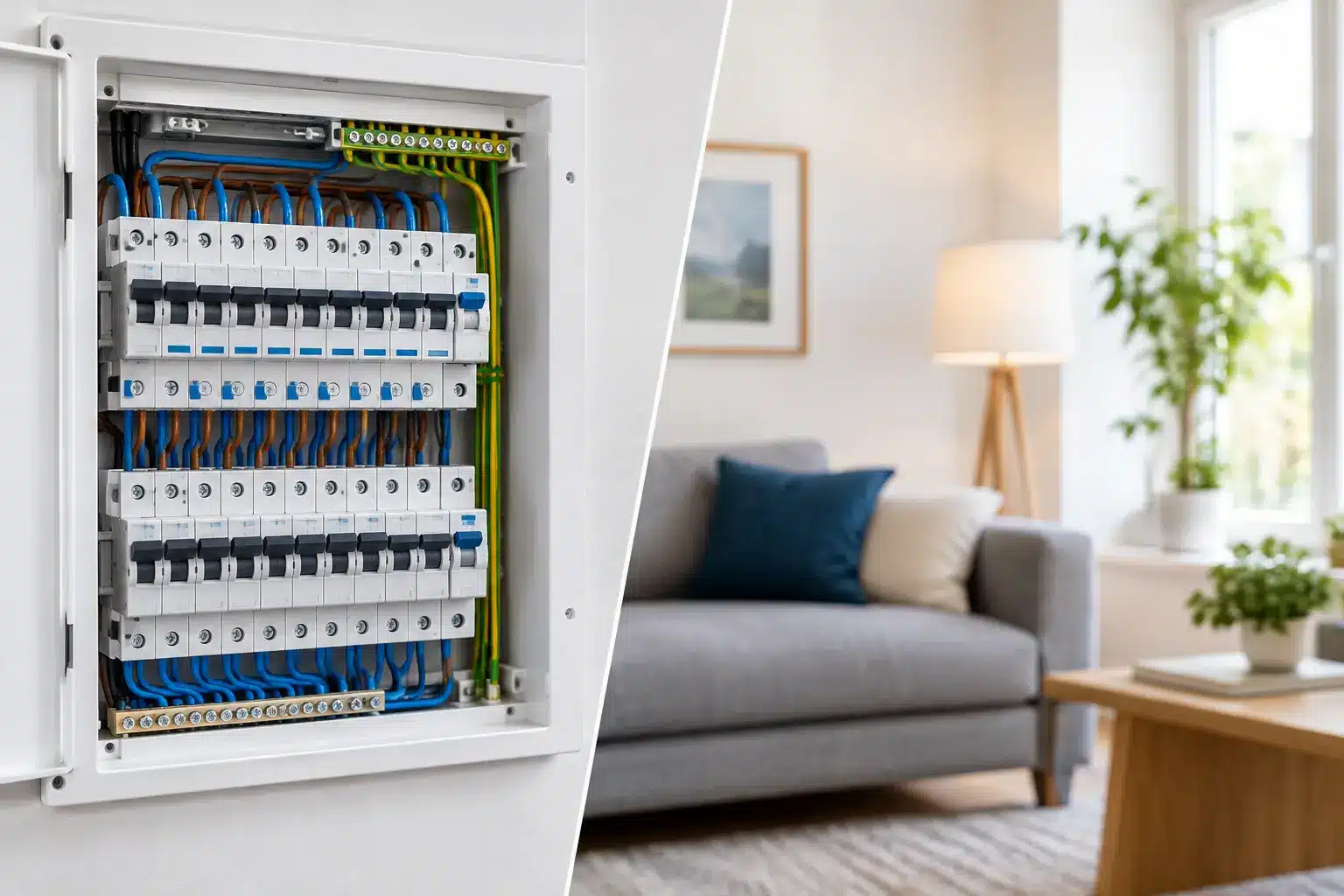
If the issue is only inside your property, locate the consumer unit, sometimes called a fuse board. It is commonly found in a hallway, cupboard, utility room, garage or under the stairs. Modern consumer units contain rows of circuit breakers and one or more RCDs. Older boards may use rewireable fuses, which should not be handled unless you understand the system and can do so safely.
Before touching the consumer unit, make sure your hands are dry and the area is well lit. Do not stand on a wet floor. Never remove the cover of the consumer unit or touch exposed wiring. The switches at the front are designed for normal operation, but anything behind the cover must be left to a competent electrician.
Do not attempt a reset if you can smell burning, see scorching around a socket or switch, hear buzzing, notice a hot consumer unit, or have had water enter the electrical installation. In these circumstances, leave the affected circuit off and arrange urgent professional help.
How to Reset a Trip Switch Step by Step
Look at the switches in the consumer unit. A tripped breaker may be sitting lower than the others or in a middle position, depending on its design. An RCD may have moved to the off position and could have taken several circuits out with it, including lights and sockets in different rooms.
First, turn off or unplug appliances on the circuit that has lost power. Pay particular attention to items that were running when the trip occurred, such as a kettle, toaster, washing machine, tumble dryer, dishwasher, heater, extension lead or outdoor equipment. If a circuit has tripped during wet weather, external sockets, garden lighting and garage supplies are also worth considering.
Move the tripped switch fully to the off position first. Then push it firmly back to the on position. If it stays on, restore appliances one at a time rather than plugging everything back in together. This makes it much easier to identify whether a particular appliance is causing the problem.
If the switch trips again as soon as a certain item is plugged in or turned on, stop using that item. Unplug it and leave it out of service until it has been repaired, replaced or tested. A damaged appliance can create a shock risk as well as causing nuisance tripping.
If the switch remains on with everything unplugged but trips as soon as you turn on a fixed item, such as a light fitting, extractor fan or electric shower, the fault may be in the electrical installation. Leave that circuit off and call an electrician.
Why Does a Trip Switch Keep Going Off?
A trip switch is not an inconvenience to work around. It is doing its job by disconnecting the supply before an electrical fault becomes more dangerous. The likely cause depends on which protective device has tripped and when it happens.
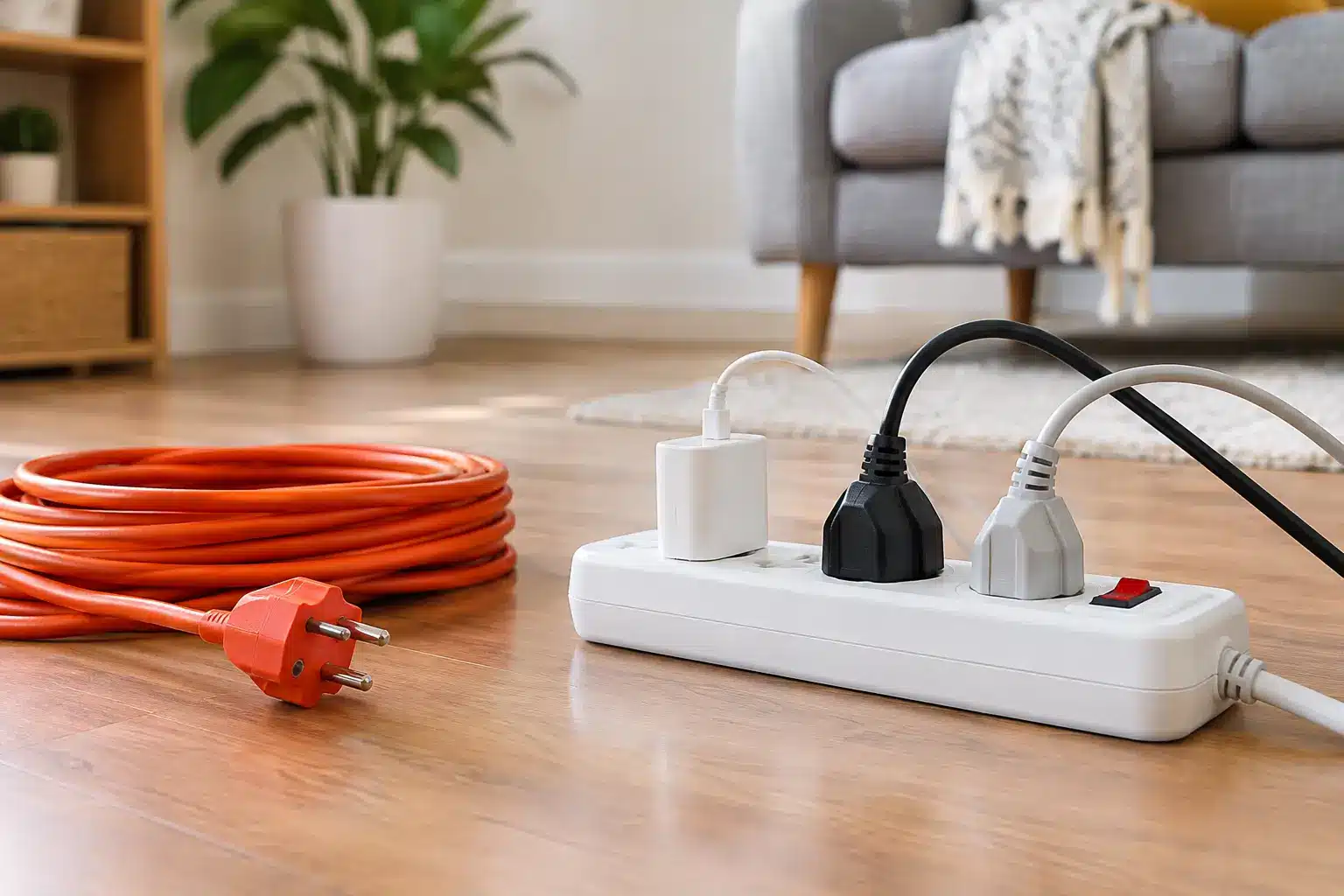
A circuit breaker may trip because too many high-demand appliances are operating on the same circuit. For example, a portable heater, air fryer, kettle and microwave can place a heavy load on kitchen sockets. This is especially common in older properties where circuits may not suit modern electrical use. Avoid relying on multi-way adaptors or overloaded extension leads as a permanent fix.
An RCD is designed to detect electricity leaking to earth, which may indicate damaged cable insulation, moisture ingress or a faulty appliance. It can trip even when the circuit is not overloaded. Washing machines, dishwashers, fridge freezers, outdoor equipment and bathroom extractor fans are common sources, although only proper testing can confirm the cause.
A one-off trip after plugging in a known faulty appliance may be resolved by removing that appliance from use. A trip that happens repeatedly, affects several circuits or occurs with nothing plugged in is different. It needs electrical fault-finding rather than repeated resetting.
When Not to Reset the Consumer Unit
There are occasions when restoring power yourself is not the right choice. Leave the circuit off and seek qualified help if any of the following applies:
- The switch will not stay in the on position after you have unplugged appliances.
- You have visible damage, a burning smell, smoke, crackling or signs of overheating.
- Water has reached sockets, wiring, light fittings or the consumer unit.
- The trip follows electrical work, drilling into a wall or damage to a cable.
- A circuit trips repeatedly, particularly overnight or at unpredictable times.
- Essential equipment, business systems or tenant safety are affected.
For landlords and property managers, recurring trips should be treated promptly. A tenant may only notice that power has gone off, but the underlying issue could be a deteriorating appliance, damaged wiring or a problem within the consumer unit. Recording when the fault occurs and what was in use at the time gives an electrician useful information and can reduce diagnosis time.
RCD Test Buttons and What They Are For
Many consumer units have an RCD with a small button marked “T” or “Test”. This button is there to confirm that the RCD disconnects the supply when required. Pressing it should switch the RCD off, and you can then reset it in the normal way.
Testing is usually recommended at intervals stated by the manufacturer or as advised during an electrical inspection. It is sensible to warn anyone in the property first because the test may cut power to lights, sockets, internet equipment, alarm systems or appliances. If the RCD does not trip when the test button is pressed, or cannot be reset afterwards, arrange for it to be checked by an electrician.
The test button is not a diagnostic tool for a recurring fault. If the RCD trips during normal use, there is a reason. Repeatedly pressing test and reset will not repair damaged wiring or a failing appliance.
Common Mistakes to Avoid
Do not hold a breaker in the on position or tape a switch in place. Never replace a circuit breaker with one of a higher rating to stop it tripping. Protective devices are selected to protect the cable they serve, and changing them incorrectly can create a serious fire risk.
It is also unwise to assume every trip is caused by the last appliance you used. An electrical fault can be intermittent, especially where moisture, heat or movement is involved. A washing machine may appear to trigger the issue simply because it is running when an underlying fault develops elsewhere on the same RCD-protected circuits.
If you use a generator, portable power supply or extension lead for temporary power, take extra care. These should never be connected into a property’s fixed wiring without the correct changeover arrangements installed by a qualified electrician.
Get the Fault Properly Checked
A qualified electrician can test appliances, inspect circuits and identify whether the issue is due to overload, insulation damage, loose connections, moisture or a faulty protective device. This is particularly worthwhile where a property has an older fuse board, recent alterations, signs of wear or a history of intermittent electrical problems.
For homeowners, landlords and businesses in Stevenage and the surrounding Hertfordshire area, C.K Electrical Contractors can investigate persistent tripping, carry out remedial work and advise where an EICR or consumer unit upgrade is appropriate. The right repair depends on the cause, not just the symptom.
A trip switch that resets once and stays on may have done exactly what it should. One that keeps tripping is your cue to stop resetting, keep the affected circuit isolated and have the fault checked before it develops into a bigger problem.