A socket that feels warm, a breaker that trips repeatedly or lights that flicker when an appliance starts are not small annoyances to ignore. The best electrical safety checks identify these warning signs early, before they become a shock risk, a loss of power or, in the worst cases, a fire.
For homeowners, landlords and business owners, electrical safety is not just about passing a test. It is about knowing what can be checked safely, when a qualified electrician is needed and how to keep an installation in good working order between professional inspections.
The best electrical safety checks start with a visual inspection
A regular visual check is the simplest way to spot developing problems. It does not involve removing covers, opening a consumer unit or touching any live parts. Instead, look carefully at the condition of visible electrical equipment and take note of changes.
Check sockets, switches and plugs for cracks, scorch marks, loose fittings or discolouration. A plug that is damaged, a socket that has moved in the wall or a switch that makes a buzzing sound should be taken out of use and assessed by an electrician. Do not try to tighten wiring connections yourself.
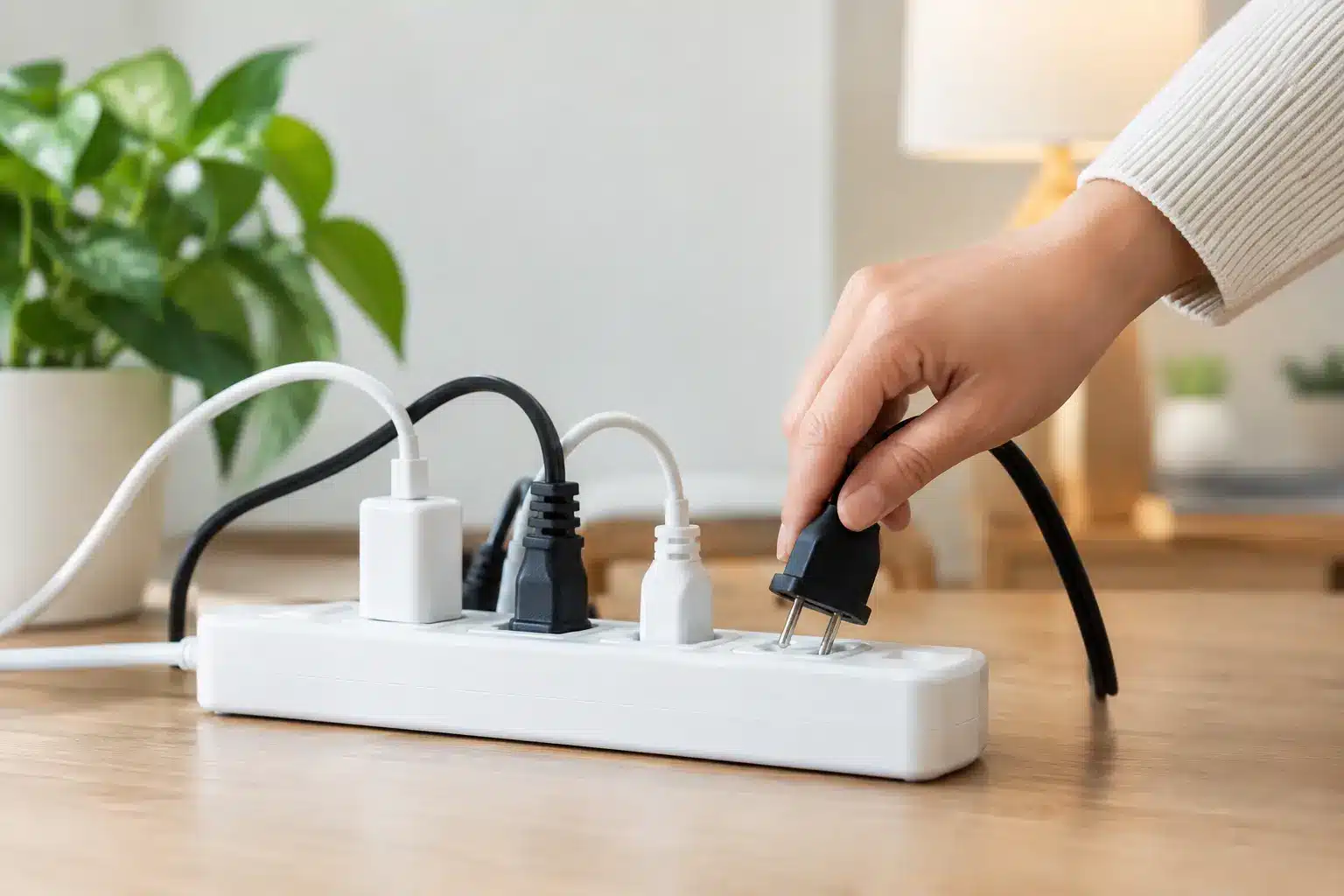
Pay attention to extension leads and multi-socket adaptors. They are useful for temporary needs, but they are not designed to solve a shortage of permanent sockets. Avoid daisy-chaining extension leads or running cables beneath rugs, where heat and damage can go unnoticed. If a room relies on several extension leads every day, additional sockets may be the safer long-term answer.
In workplaces, visual checks should also cover portable equipment, cable routes and signs that leads are being trapped in doors, crushed under furniture or exposed to moisture. A clean, organised work area reduces both electrical risk and trip hazards.
Test your RCD protection
Most modern consumer units contain Residual Current Devices, usually known as RCDs. These are designed to disconnect the supply quickly if they detect current flowing where it should not, such as through a person or to earth. They provide valuable added protection, but they do not make faulty equipment safe to use.
An RCD normally has a clearly marked test button. Pressing it should cause the protected circuits to switch off. Afterward, reset the device according to the instructions on the consumer unit. Before carrying out the test, save computer work, consider any equipment that must remain powered and make sure vulnerable appliances are not running.
If the RCD does not trip when tested, will not reset or trips frequently without an obvious reason, arrange for a qualified electrician to investigate. Repeated tripping is often a sign of a fault in an appliance, circuit or fixed wiring. Resetting it again and again without finding the cause is not a safe solution.
The test interval can vary by equipment and premises, so follow the manufacturer’s guidance and any advice provided following an Electrical Installation Condition Report. For commercial sites, a documented testing routine may be appropriate as part of wider health and safety procedures.
Look for changes in how your installation performs
Electrical faults often announce themselves through performance changes rather than obvious physical damage. Notice whether lights dim when the kettle, shower or heater is used, whether a circuit breaker trips when a particular appliance is connected, or whether one area of a property loses power intermittently.
A burning smell, crackling, buzzing, sparks or an electric shock from an appliance needs immediate attention. Switch off the power at the consumer unit if it is safe to do so, avoid touching damaged equipment and call a qualified electrician. In the event of smoke or fire, leave the building and contact the emergency services.
Older homes can need particular care. A property may have been altered over decades, with extra sockets, kitchens, outbuildings or loft conversions added at different times. An installation that once met the needs of a household may no longer be suitable for modern electrical demand. The same applies to growing businesses that have added workstations, machinery, refrigeration or EV charging without reviewing the existing supply.
Check appliances, but understand the limits
Portable appliance checks are useful, especially in rented properties, offices, workshops and other shared environments. Inspect appliance leads, plugs and casings before use. Look for frayed cable insulation, bent plug pins, taped repairs, loose cable entries and damaged housings.
There is no legal requirement for every appliance to carry a PAT sticker. What matters is that electrical equipment is maintained in a safe condition, with checks and testing appropriate to its type, use and environment. A rarely moved double-insulated lamp in a quiet office presents a different level of risk from a power tool used daily on a building site.
Never rely on a sticker alone. An appliance can be damaged after it has been tested. Equally, do not assume an appliance is at fault simply because a breaker has tripped. A competent electrician can test the appliance and the circuit properly, rather than replacing parts based on guesswork.
Keep bathrooms, kitchens and outdoor areas under closer review
Water and electricity are a serious combination. In kitchens, watch for damaged sockets near worktops, poorly positioned leads and appliances with cracked plugs or cables. In bathrooms, electrical work must meet strict zoning and protection requirements. If you are planning a new shower, extractor fan, mirror light or electric underfloor heating, use an electrician who understands the relevant requirements.
Outside, inspect garden lighting, external sockets and outbuilding supplies for cracked enclosures, water ingress, exposed cables and damaged fittings. Outdoor equipment should be suitable for its location and properly protected. Temporary leads across a garden or driveway can be especially vulnerable to weather, mowing equipment and vehicle damage.
When an EICR is the right safety check
A visual inspection and RCD test have their place, but neither can confirm the condition of hidden wiring, earthing arrangements, circuit protection or connections inside accessories and the consumer unit. That is where an Electrical Installation Condition Report, or EICR, is essential.
During an EICR, a qualified electrician inspects and tests the fixed installation. The report identifies defects, records observations and states whether the installation is satisfactory or unsatisfactory at the time of testing. It is not a guarantee that no future fault will occur, but it is the proper way to assess the safety and condition of the installation.
Landlords in England must meet electrical safety duties for rented homes, including having the installation inspected and tested at the required intervals, generally at least every five years. They must also act on remedial work identified in the report within the required timescales. Commercial properties have different responsibilities, but employers and duty holders still need to maintain electrical systems safely and manage risk properly.
For owner-occupied homes, an EICR is particularly sensible when buying a property, after major alterations, if the installation is old, or when there are recurring faults. The right testing frequency depends on the type, age and use of the premises. A busy workshop, rental property and modern family home should not automatically be treated in the same way.
Do not overlook your consumer unit
The consumer unit is the centre of the installation’s protection. It should be accessible, clearly labelled and free from stored items that prevent quick access. If you cannot identify which circuit controls key areas of the property, ask an electrician to review and label it correctly.
Old fuse boards, missing blanking plates, damaged covers and poor labelling are all reasons to seek professional advice. A replacement consumer unit is not always the first answer, but it may be appropriate where protection is inadequate, the existing board is in poor condition or alterations cannot be completed safely with the equipment in place.
Any work inside a consumer unit should be left to a competent, qualified electrician. There are live parts within it even when individual circuits appear to be switched off.
Make safety checks part of property maintenance
The most effective approach is consistent rather than reactive. Encourage occupants and staff to report loose sockets, damaged leads, tripping circuits and unusual smells promptly. Keep a record of professional reports, remedial works and test dates, particularly for managed or commercial properties.
For properties across Stevenage and the surrounding Hertfordshire area, C.K Electrical Contractors can carry out EICRs, fault finding, remedial work and electrical upgrades with clear advice on what needs attention and why. The safest next step is rarely to wait for a complete failure – it is to act when the first warning sign appears.