A consumer unit upgrade review is often prompted by a small warning sign: a fuse that keeps tripping, a board with no RCD protection, planned kitchen work, or an EICR that has highlighted defects. The consumer unit is the point from which your property’s electrical circuits are protected. When it is outdated, damaged or no longer suitable for the way the property is used, replacing it is a safety decision rather than a cosmetic upgrade.
For homeowners, landlords and business owners, the question is rarely whether a modern consumer unit looks better. It is whether the existing installation provides the protection required for the people and equipment relying on it every day.
What a consumer unit does
A consumer unit, commonly called a fuse board or fuse box, distributes electricity around the property through individual circuits. These may supply lighting, sockets, the cooker, shower, smoke alarms, outdoor power or commercial equipment. Each circuit needs suitable protection so that a fault can be isolated quickly and safely.
Older boards may use rewireable fuses or older circuit breakers. They can continue to operate, but age alone is not the only issue. The real concern is whether the board, its protective devices and the wiring connected to it meet the demands and safety expectations of the installation.
Modern consumer units typically include circuit breakers and RCD protection. An RCD is designed to disconnect the supply rapidly when it detects an imbalance that could indicate current flowing to earth, helping reduce the risk of serious electric shock. Many new installations also benefit from surge protection, which can help protect sensitive electronics and appliances from transient overvoltages.
Consumer unit upgrade review: signs replacement may be needed
A qualified electrician should assess the whole installation before recommending a replacement. A new board cannot correct damaged cables, poor connections or unsuitable circuits elsewhere in the property. That said, there are clear situations where an upgrade should be considered without delay.
If your consumer unit has old-style rewireable fuses, no RCD protection, exposed live parts, signs of overheating, loose covers or repeated tripping, it needs professional attention. A burning smell, buzzing, scorch marks or a board that feels unusually warm should be treated as urgent. Switch off power if it is safe to do so and call a qualified electrician.
Frequent tripping is another common trigger. It may be caused by a faulty appliance, moisture affecting an outdoor circuit, overloaded sockets or a fault in the fixed wiring. Resetting the breaker repeatedly is not a solution. The cause needs to be investigated, especially if the same circuit trips again soon afterwards.
An upgrade is also often sensible when you are adding high-demand equipment. Electric showers, induction hobs, heat pumps, EV chargers, garden rooms and loft conversions can all change the load and circuit requirements of a property. Sometimes the existing unit has suitable spare capacity; sometimes additional circuits or a replacement board are the safer, more practical option.
What happens during an upgrade?
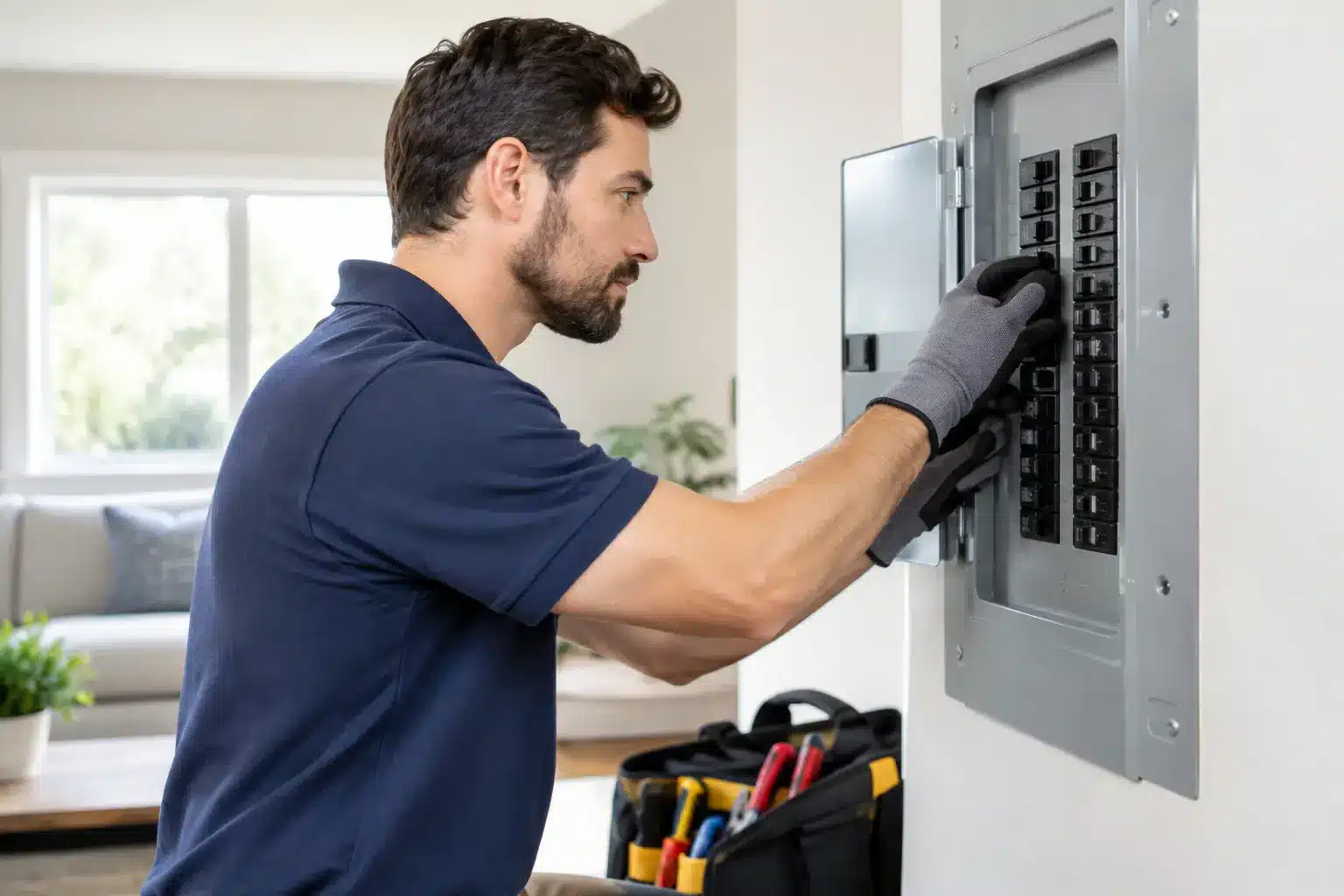
A proper fuse board replacement begins with inspection and testing. The electrician will examine the existing consumer unit, assess the condition of accessible wiring, identify the circuits present and check the earthing and bonding arrangements. These checks matter because the new protective devices must be selected to suit the installation.
The power will normally need to be isolated while the work is carried out. For a straightforward domestic replacement, this is commonly completed within a day, although the timescale depends on the number of circuits, the condition of the existing installation and whether remedial work is required. Properties with older wiring can reveal issues once testing begins, so it is wise to allow for that possibility rather than assume every changeover will be simple.
The new unit is installed, circuits are clearly labelled and comprehensive tests are completed before the supply is restored. The electrician should then provide the appropriate certification for the work. Consumer unit replacement is not a job for DIY work or a quick swap by an unqualified person. It involves high-risk electrical work and must comply with current requirements.
Why testing before replacement matters
There is a misconception that fitting a modern board automatically makes an old installation safe. It does not. A new consumer unit may reveal faults that older protective devices did not identify, including low insulation resistance, borrowed neutrals, damaged accessories or circuits that need updating.
This is not a reason to avoid an upgrade. It is exactly why a professional assessment is valuable. Finding a fault before it becomes an electric shock, fire or major loss of power is a positive outcome. The best approach is clear communication: you should understand what has been found, why it matters, what is required before the board can be replaced and what work is recommended for the future.
For landlords, an Electrical Installation Condition Report can be particularly useful where the condition of the installation is uncertain. For homeowners planning significant alterations, an inspection can prevent a new kitchen, extension or EV charger project being delayed by electrical issues that should have been addressed first.
Choosing the right protection for your property
The right consumer unit is not simply the largest one available. It should be designed around the property’s circuits, current use and foreseeable additions. A growing family home, a rental property and a small workshop may all need a different arrangement.
RCD protection is central to modern electrical safety, but how circuits are divided is equally important. A well-planned board limits the disruption caused by a fault. For example, a problem on an outdoor socket circuit should not unnecessarily leave the whole property in darkness. Individual RCBO protection can provide greater separation between circuits, although it may cost more than a split-load arrangement. The most suitable option depends on the installation and budget.
Surge protection is worth discussing where a property contains valuable electronic equipment, smart controls, home-working equipment or systems that could be costly to replace. It is not a substitute for good earthing, suitable circuit design or careful testing, but it can be a sensible added layer of protection.
Metal consumer unit enclosures are now standard for many domestic installations because they offer improved fire containment compared with older plastic boards. Correct installation remains vital, including secure cable entry, proper blanking of unused ways and clear labelling that allows future electricians to work safely.
Costs, disruption and realistic expectations
The cost of a consumer unit upgrade depends on the board specification, number of circuits, access, testing time and any repairs needed to bring the installation into a safe condition. A like-for-like replacement in a newer property is usually more straightforward than upgrading a board in a house with ageing wiring, inadequate earthing or undocumented alterations.
Be wary of quotes that focus only on the price of the consumer unit itself. The testing, certification, protective devices, containment, labour and time needed to resolve faults are all part of doing the job properly. A low initial figure can become misleading if it excludes necessary remedial work.
There will be temporary disruption because electricity must be isolated. Plan around fridges and freezers, home-working arrangements, alarm systems and any medical equipment that depends on mains power. A competent contractor will explain the expected downtime and keep the work area tidy, but it is sensible to prepare before the appointment.
When replacement is not the immediate answer
Not every older consumer unit needs to be changed immediately. If it is in sound condition, has suitable protective measures and testing confirms the installation is satisfactory, replacement may not be urgent. Equally, replacing a board may not be the first priority if an inspection identifies more significant defects in the wiring or earthing arrangements.
The right decision comes from evidence, not assumptions. An EICR or targeted inspection provides a clearer picture than judging a board purely by its age or appearance. This is especially relevant in older Hertfordshire properties, where electrical alterations may have been completed at different times and to different standards.
C.K Electrical Contractors carries out consumer unit upgrades with the inspection, testing and certification needed to make the work safe and accountable. For properties in Stevenage and nearby areas, a clear assessment gives you the information needed to decide whether replacement, remedial work or continued monitoring is the most sensible next step.
If your board is tripping, shows signs of damage or is due to support major electrical changes, arrange an assessment before the problem becomes more disruptive. A well-specified, professionally installed consumer unit gives you practical protection every time you switch on a light, charge a device or rely on power at home or work.