A circuit breaker that trips once may be an annoyance. One that repeatedly cuts the power is a warning that should not be ignored. Understanding what causes circuit breaker tripping can help you respond safely, protect your property and know when it is time to call a qualified electrician rather than repeatedly resetting the switch.
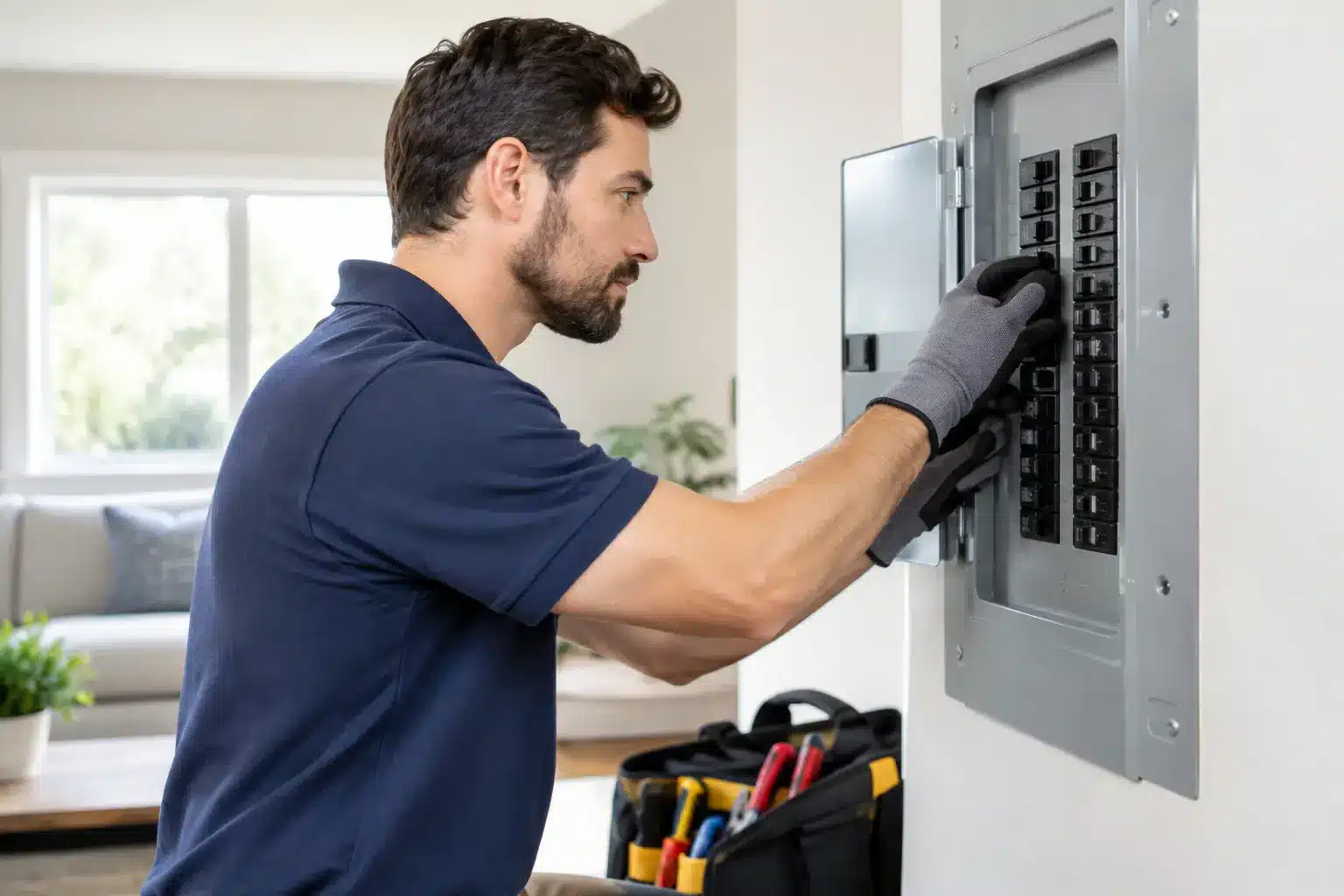
In many UK homes and business premises, the circuit breakers sit inside the consumer unit, often called a fuse board. Their job is straightforward: to disconnect the supply when they detect a condition that could cause overheating, electric shock or fire. The inconvenience of a dark room or lost power is far preferable to damaged wiring hidden behind a wall.
What causes circuit breaker tripping?
A breaker usually trips because of an overload, a short circuit or an earth fault. However, the switch that has moved in your consumer unit matters. A standard miniature circuit breaker, or MCB, is generally protecting a circuit against overcurrent. An RCD or RCBO is designed to detect current leaking to earth, which can indicate a potentially dangerous fault.
The cause is not always obvious. A kettle that trips a circuit can be faulty, but it could also be revealing an issue with the socket, the circuit wiring or another appliance connected elsewhere on that same circuit. That is why a repeated trip deserves a proper, methodical approach.
An overloaded circuit
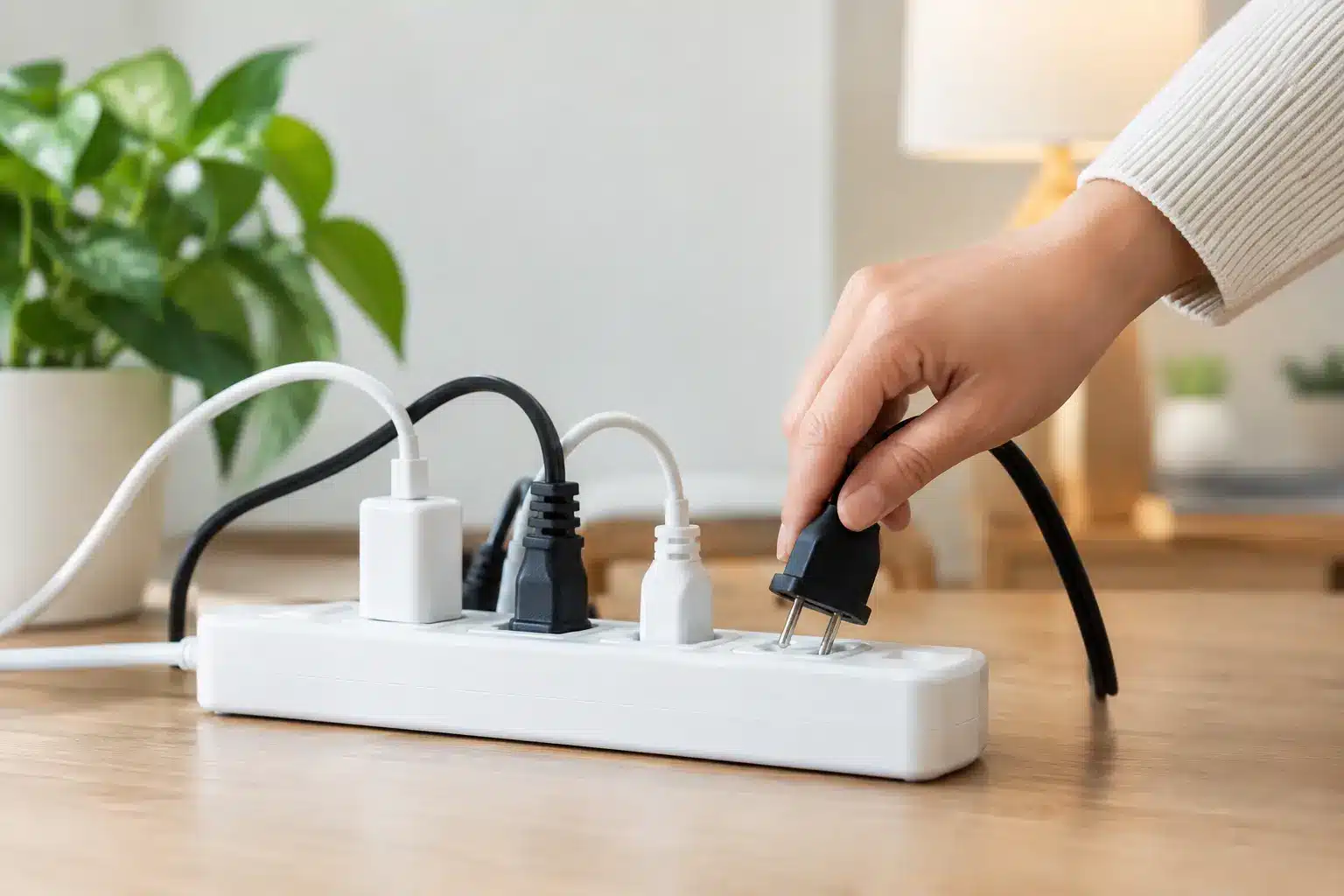
Overloading happens when a circuit is asked to supply more current than it was designed to carry. This is common in kitchens, utility rooms, garages and older properties where the number of appliances has grown over time.
For example, a washing machine, tumble dryer, kettle and microwave running from sockets on the same circuit may exceed its capacity. Portable heaters are another frequent cause. They draw a high load for long periods and can quickly expose a circuit that is already heavily used.
An overload may not trip immediately. The breaker can operate after appliances have been running for a while, particularly where cables are warming up. Turning off or unplugging some equipment may stop the tripping temporarily, but it is worth considering whether the circuit needs altering, additional outlets or a dedicated supply for high-load equipment.
A short circuit
A short circuit occurs when live conductors come into contact with neutral, or when damaged wiring creates a very low-resistance path for electricity. The resulting surge of current causes an MCB to trip quickly.
Damaged appliance cables, loose connections, crushed extension leads, worn sockets and DIY alterations can all be responsible. You may notice a sharp trip as soon as a particular appliance is plugged in or switched on. Sometimes there may be a burning smell, discolouration around an accessory, crackling or heat at a plug or socket.
Do not continue using an appliance or outlet that shows these signs. Switch off the circuit if safe to do so and arrange an inspection. Heat and electrical arcing can cause serious damage before a fault becomes visible.
An earth fault or moisture problem
Earth faults are a common reason for an RCD or RCBO to trip. They happen when some current escapes from the normal route through the circuit and finds a path to earth. The protective device disconnects the power rapidly to reduce the risk of electric shock.
Faulty washing machines, dishwashers, ovens, outdoor equipment and ageing heating elements are typical culprits. Moisture can also cause trouble. A bathroom extractor fan, an outside socket, garden lighting connection or garage circuit may trip after heavy rain, condensation or a leak.
If power trips whenever you use a particular appliance, unplug it and see whether the circuit remains on. This is a useful observation for an electrician, but it is not proof that the appliance is the only problem. Do not dismantle the appliance or remove socket covers to investigate.
A faulty appliance
Appliances often cause intermittent tripping because their internal fault only appears during a particular part of the cycle. A washing machine may trip while heating water, a fridge may trip as its compressor starts, or an oven may trip once it reaches temperature.
Start by unplugging all appliances from the affected circuit. Reset the breaker once. If it stays on, reconnect and use items one at a time, beginning with lower-load equipment. When the breaker trips again, leave the last appliance unplugged and seek advice before using it.
This basic isolation process is only suitable where there are no signs of damage, heat, smoke or burning. If the breaker will not reset with everything unplugged, the fault is more likely to be within the fixed installation and needs professional testing.
Damaged or deteriorating wiring
Electrical wiring does not last forever. Loose terminals, rodent damage, accidental drilling, ageing insulation and poor-quality previous work can all lead to faults. Older fuse boards may also lack the level of protection expected in modern installations.
A trip that started after putting up shelves, fitting new flooring, landscaping a garden or carrying out building work should be taken seriously. A cable may have been disturbed or penetrated, even if there is no visible evidence at the surface.
In rental properties and workplaces, repeated tripping can also point to issues that should be identified during an Electrical Installation Condition Report. Testing can reveal faults that are not possible to diagnose safely by looking at the consumer unit alone.
Which switch has tripped in the consumer unit?
Before doing anything else, look carefully at the consumer unit without removing its cover. The labels may tell you whether the affected circuit serves sockets, lighting, cooker, shower, garage or another area. This helps narrow down what was in use when the power went off.
An MCB usually protects an individual circuit. If only the downstairs socket circuit has lost power, for instance, an overload or short circuit on that circuit is possible. An RCD can protect several circuits at once, so one earth fault may switch off sockets, lighting or other circuits in a wider area.
Modern consumer units often use RCBOs, which combine both forms of protection for each individual circuit. They make fault-finding more straightforward, but a qualified electrician should still investigate persistent operation rather than simply resetting the device.
What you can safely do after a trip
First, switch off and unplug appliances on the affected circuit. Move the tripped switch fully to the off position, then reset it once. If it stays on, reconnect appliances gradually and monitor what happens.
If it trips immediately, will not reset, or trips again without anything plugged in, leave it off. Avoid using multiway adaptors or extension leads to run equipment from another circuit as a long-term workaround. This can overload a different circuit and masks the original problem.
Never hold a breaker in the on position, replace it with a larger-rated device, or repeatedly reset an RCD. Protective devices are selected to suit the circuit design. Altering them without proper assessment can leave cables inadequately protected.
When to call an electrician urgently
Some situations need prompt professional attention. Switch off the affected circuit where safe and seek urgent help if you notice any of the following:
- A burning smell, smoke, sparking, buzzing or scorching at a socket, plug or consumer unit.
- A breaker that trips repeatedly or cannot be reset after appliances have been unplugged.
- Water ingress near electrical accessories, lighting or the consumer unit.
- A shock, tingling sensation or unusually warm socket, switch or cable.
- Loss of power to essential equipment, security systems, refrigeration or critical business operations.
For homeowners, landlords and businesses in Stevenage and the surrounding Hertfordshire area, C.K Electrical Contractors can trace faults, carry out remedial work and assess whether the consumer unit or circuit requires an upgrade. Proper testing identifies the cause rather than relying on guesswork.
Preventing future tripping
Some trips are impossible to predict, especially when an appliance develops an internal fault. Even so, sensible use and maintenance reduce the chance of disruption. Avoid overloading extension leads, use outdoor-rated equipment outside, keep electrical accessories dry and replace damaged leads promptly.
If your property has too few sockets for the way you now live or work, adding correctly designed circuits is safer than relying on adaptors. A kitchen renovation, home office, electric vehicle charger, workshop or commercial equipment upgrade can all change the demands placed on an installation.
A circuit breaker is doing its job when it trips. Treat it as a safety message, not a nuisance to override. A single reset after a clear, isolated cause may be reasonable, but recurring tripping is the point to stop, make the area safe and have the fault properly checked.