You usually notice electrical problems at the worst possible moment – when the lights flicker during dinner, a socket feels warm, or the fuse board keeps tripping for no clear reason. Those are often early signs your house needs rewiring, and they should never be brushed off as minor inconvenience. In many properties, especially older homes, the wiring may simply no longer be suitable for modern demand.
A full or partial rewire is not something most property owners think about until there is an obvious fault. But worn insulation, outdated components and overloaded circuits can all create real safety risks long before complete failure happens. The key is knowing what to look for and getting the installation assessed before a small issue becomes a dangerous one.
Signs your house needs rewiring
Some warning signs are obvious. Others are easy to miss because they seem like normal quirks of an older property. The age of the building matters, but age alone does not tell the whole story. A house that has been well maintained may be in better condition than a newer one with poor-quality alterations or years of neglected repairs.
Your fuse board trips regularly
If your electrics trip every now and then after a clear overload, that is one thing. If the fuse board is cutting out often without an obvious cause, that points to a deeper issue. It could be a faulty appliance, but it can also mean circuits are overloaded, damaged, or no longer coping with current demand.
Modern homes rely on far more electrical equipment than they did 20 or 30 years ago. Extra kitchen appliances, home office setups, chargers, entertainment systems and garden power all add pressure to older wiring. Frequent tripping is your system telling you something is not right.
Lights flicker or dim for no clear reason
A flickering light is not always down to a loose bulb. If you notice lights dimming when appliances switch on, or flickering in several rooms, the issue may be within the fixed wiring. Poor connections, ageing cables or overloaded circuits can all cause unstable performance.
This is one of those faults people often live with for years. That is risky. Loose or deteriorating connections can generate heat, and heat is where electrical fires begin.
Sockets or switches are warm, damaged or discoloured
Sockets and switches should not feel hot in normal use. Slight warmth from a charger plug can happen, but the faceplate itself should not heat up. If you see brown marks, cracking, buzzing, or smell a faint burning odour, stop using that point and get it checked.
Discolouration often means overheating has already taken place. Sometimes the problem is localised to one accessory. In other cases, it is a symptom of older wiring behind it.
You rely on extension leads in several rooms
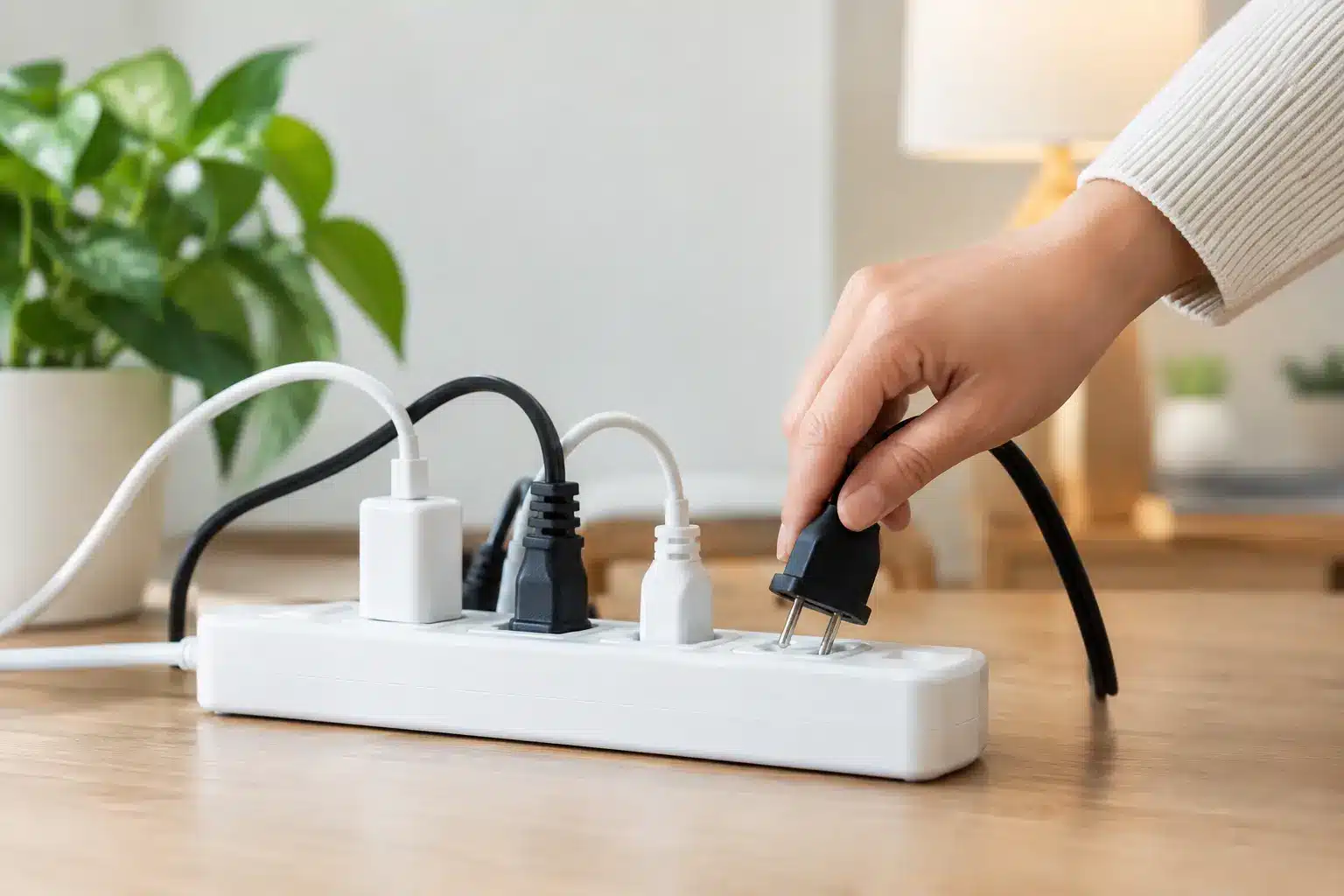
One extension lead behind the television is common enough. Several extension leads spread across the house is a sign the electrical layout no longer suits how the property is being used. That does not always mean a full rewire is needed, but it often means the installation needs upgrading.
Older homes were not designed for the number of sockets most households now need. Overloaded extension blocks and adaptors increase the chance of overheating, especially in kitchens, bedrooms and home offices. In some cases, a partial rewire or additional circuits may be the right answer rather than starting from scratch. It depends on the condition of the existing installation.
You have old-style wiring or outdated fittings
If a property still has very old cabling, dated fuse boxes, or fittings that have clearly been in place for decades, it is worth treating that as a warning sign. Rubber, lead or fabric-insulated wiring can deteriorate badly over time. Even if it still works, that does not mean it meets current safety expectations.
Likewise, an older consumer unit with rewireable fuses is not automatically unsafe, but it is outdated compared with a modern fuse board with proper circuit protection. If you have recently moved into an older property and are unsure what is installed, an inspection is a sensible first step.
You notice buzzing noises or burning smells
Electricity should be quiet. Aside from the soft click of a switch or breaker, buzzing from sockets, switches, light fittings or the fuse board is not normal. A persistent burning smell is even more urgent, especially if you cannot identify a specific appliance causing it.
These signs suggest overheating, arcing or loose connections. That is not a wait-and-see situation. The affected circuit should be isolated if possible, and a qualified electrician should inspect it promptly.
When old wiring becomes a real safety issue
Rewiring is often discussed as an upgrade, but in many cases it is fundamentally about safety. Old or damaged wiring can lead to electric shock, nuisance tripping, damaged appliances and fire risk. Landlords also need to consider their legal duties, particularly where EICRs identify deterioration or non-compliance.
One difficulty is that wiring problems are often hidden behind walls, under floors and above ceilings. You cannot assess the condition of a system by looking at a few sockets and light switches alone. A house may look modern on the surface while the cabling underneath tells a different story.
Your property is over 25 to 30 years old and has never been rewired
There is no single expiry date for electrical wiring. Some installations remain serviceable for many years if they have been well installed and properly maintained. But if a property is more than 25 or 30 years old and there is no record of a rewire or major upgrade, caution is sensible.
This matters even more if the house has had multiple owners, DIY alterations or extensions added over time. Mixed standards, poor joins and piecemeal modifications can leave an installation inconsistent and harder to trust.
You are renovating, extending or changing how the building is used
Major renovation often reveals electrical issues that were not obvious before. If walls are coming back to brick, ceilings are down, or a kitchen is being replaced, that is the right time to assess whether rewiring makes sense. Carrying out work while the property is already disrupted is usually more practical and more cost-effective than patching things up now and reopening everything later.
The same applies if a spare room becomes an office, a loft becomes living space, or a commercial area takes on new equipment. Increased demand may mean the existing circuits are no longer suitable.
What to do if you spot signs your house needs rewiring
The first step is not to guess. Electrical faults can have several causes, and the right solution depends on the age, condition and layout of the installation. Sometimes the issue is limited to a damaged circuit or an outdated fuse board. Sometimes a full rewire is the safest long-term option.
A proper inspection gives you a clear picture. An electrician can test the circuits, identify defects, assess the condition of the consumer unit and advise whether remedial work, partial rewiring or full rewiring is the best route. That is especially useful if you are buying an older property, managing a rental, or planning refurbishment work.
For homeowners and landlords in areas such as Stevenage, Hitchin and Welwyn Garden City, getting a local qualified electrician to inspect concerns early can prevent far bigger disruption later. Fast action is particularly important where there are burning smells, repeated tripping or signs of overheating.
Rewiring is disruptive, but delaying it can cost more
No one starts the week hoping to book a rewire. It can involve lifting floors, chasing walls and planning around furniture, decorating and day-to-day routines. That is why many people put it off.
But delaying necessary electrical work can lead to repeated callouts, unreliable power, damaged appliances and avoidable safety risks. There is also the wider cost of doing things twice – first a temporary repair, then the larger job that should have been addressed earlier.
A good electrician will be honest about whether a full rewire is truly needed. In some properties, a partial rewire and consumer unit upgrade is enough. In others, especially where the installation is old throughout, a full rewire is the sensible long-term investment.
If your electrics have been showing warning signs, trust what the property is telling you. Safe wiring is not about convenience or appearance. It is about making sure the building can support modern use without putting people, tenants or staff at risk. A proper inspection now is far better than finding out the hard way later.