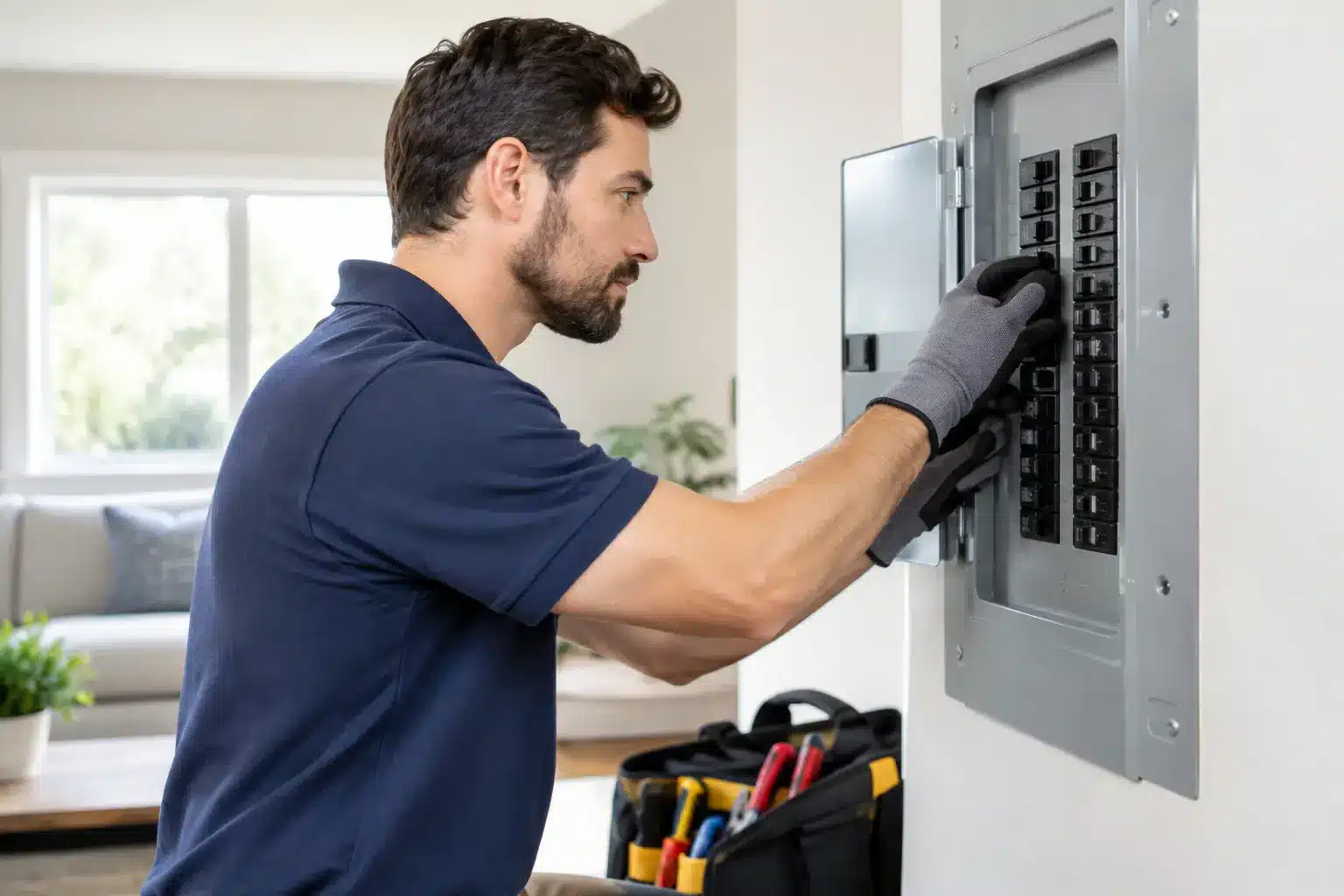
A fuse board is easy to ignore until a circuit starts tripping, a property report flags concerns, or an electrician finds ageing equipment behind the cover. This fuse board replacement review sets out what a proper consumer unit upgrade should involve, what it can solve, and the checks worth making before work begins.
For homeowners, landlords and business owners, the aim is not simply to fit a newer-looking board. It is to improve protection, bring the installation up to an appropriate standard, and leave clear evidence that the work has been tested and certified.
When a fuse board replacement is the right decision
Older fuse boards can continue working for years, but working is not the same as meeting current safety expectations. Rewirable fuses, wooden-backed units, damaged enclosures, missing circuit identification and repeated tripping all deserve professional attention. So do consumer units that have no modern residual current device protection, often known as RCD protection.
A replacement is commonly recommended following an Electrical Installation Condition Report, particularly where the report identifies defects at the consumer unit or shortcomings in circuit protection. It may also be sensible during a renovation, extension, kitchen refit or full rewire, when the existing board does not have enough capacity or suitable protection for new circuits.
There is a trade-off to consider. Replacing the board will not repair poor wiring concealed elsewhere in the property. A competent electrician should assess the condition of the existing installation before agreeing that a new consumer unit is appropriate. If cables, earthing or bonding need remedial work, those items should be identified clearly rather than hidden behind a new board.
Signs that should not be put off
Frequent tripping is not automatically a reason to replace a fuse board. Sometimes the fault lies with an appliance, outdoor accessory or individual circuit. However, a board that feels hot, has visible scorch marks, smells of burning, has loose or broken covers, or contains obsolete equipment should be inspected promptly.
If there is any sign of overheating or damage, avoid resetting breakers repeatedly. Switch off power where safe to do so and arrange for a qualified electrician to investigate. In an urgent situation, a 24-hour emergency electrician can make the installation safe before advising on permanent repairs or replacement.
What a good fuse board replacement review should cover
A useful quote should explain more than the price of the unit. It should set out the condition checks, the protection being installed, any extra work required and the certification you will receive. This is where comparing quotes on a like-for-like basis matters.
Modern consumer units normally use circuit breakers and RCDs, or RCBOs. An RCBO protects an individual circuit against overload, short circuit and earth leakage. They can offer better continuity than a board where several circuits share one RCD, because a fault on one circuit is less likely to take out others. The right arrangement depends on the property, its circuits and budget, but the choice should be explained in plain terms.
Surge protection may also be considered. It can help protect sensitive electronic equipment from transient voltage surges, although its suitability should be assessed for the particular installation. Similarly, the electrician should confirm that the main earthing arrangement and bonding to services are adequate before the new board is energised.
Inspection and testing are part of the job
A consumer unit cannot be safely selected and fitted on appearance alone. Before replacement, the electrician should carry out checks on the installation, including earthing, bonding, insulation resistance, polarity and the condition of circuits. Testing after installation confirms that protective devices operate as intended and that circuits are correctly labelled.
This testing may reveal faults that were not visible at the start. That can be frustrating if it affects the scope or cost, but it is far better to identify a damaged cable or inadequate earth path before the board is put into service. A professional contractor will explain the finding, provide options where possible and gain agreement before undertaking additional remedial work.
Expect a planned power outage while the board is changed and tested. In most homes, sensible preparation makes this manageable: charge essential devices, plan around working hours where possible, and consider refrigeration, alarms, electric heating and medical equipment. Commercial premises may need a more detailed shutdown plan to minimise disruption to staff, customers or production.
Compliance, certification and notification
Fuse board replacement work must comply with the relevant requirements of BS 7671, the UK Wiring Regulations. In England, replacing a consumer unit is generally notifiable work under Part P of the Building Regulations. Using a competent, registered electrician helps ensure the work is properly notified where required.
Once the work is complete, you should receive an Electrical Installation Certificate, along with schedules showing the circuits and test results. Building Regulations compliance documentation should follow when notification applies. Keep these documents with property records. They are useful for future inspections, insurance queries, selling a property and demonstrating compliance to tenants or managing agents.
For rental properties, a new board does not remove the need for periodic electrical safety checks. Landlords still need a valid EICR at the required interval and must address observations appropriately. A well-installed consumer unit can make an installation safer and easier to manage, but the rest of the fixed wiring still needs ongoing attention.
Choosing the right electrician and quote
The cheapest quote can become expensive if it excludes testing, certificates, notification or essential remedial work. Equally, the highest price is not automatically proof of better workmanship. Ask what is included, what assumptions have been made about the existing wiring and what happens if faults are found during testing.
A reliable contractor should be able to confirm their registration, explain the proposed consumer unit configuration and give a realistic timescale. They should also be willing to discuss practical details, such as whether the board will be moved, whether the meter tails or main switch need upgrading, and how circuits will be identified afterwards.
For occupied homes, communication is a genuine part of quality. You should know when the supply will be isolated, what rooms or appliances may be affected, and whether follow-on work is likely. For businesses, the contractor should understand the operational consequences of downtime and organise the work around them where it is safe and practical to do so.
C.K Electrical Contractors provides fuse board replacements, inspection and testing work for properties in Stevenage and nearby Hertfordshire communities. As a family-run, NAPIT-registered contractor, the focus is on clear advice, compliant work and leaving customers with the paperwork that proves the job has been completed correctly.
Is replacement always better than repair?
Not necessarily. A damaged breaker, failed RCD or loose connection may sometimes be repaired without changing the entire board, provided the consumer unit is otherwise in sound condition and the installation can be tested safely. A targeted repair can be the right, cost-effective answer.
Replacement becomes the stronger option when the board is obsolete, unsafe, overcrowded, lacks suitable protection or cannot accommodate the circuits a property now needs. It is also worth considering the age and condition of the whole installation. Installing a premium new board onto wiring that needs substantial remedial work may not represent the best value until those underlying issues are addressed.
The best outcome is not a consumer unit chosen from a catalogue. It is an installation that has been properly assessed, protected, tested and documented, giving you confidence every time you switch on a light, plug in equipment or hand keys to a new tenant.