The smell usually comes first. A sharp burning odour near the fuse board, a socket that feels hot to the touch, or lights that suddenly fail in part of the property without warning. When that happens, you do not need guesswork. You need an emergency electrician Hitchin property owners can call quickly, and you need to know what to do in the first few minutes to keep people safe.
Electrical faults rarely improve if left alone. Some are inconvenient, such as a circuit tripping repeatedly and leaving you without power in one room. Others can become dangerous very quickly, especially where heat, exposed wiring, water or signs of burning are involved. The right response is calm, practical and safety-led.
When to call an emergency electrician in Hitchin
Not every electrical problem needs a middle-of-the-night callout, but some faults should never wait until morning. If your consumer unit keeps tripping and will not reset, that points to an underlying fault rather than a one-off nuisance. If sockets are sparking, switches are crackling, lights are flickering across multiple circuits, or part of the installation has suddenly failed, the safest step is to stop using the affected circuit and get it checked properly.
Power loss can be more serious in some properties than others. In a home, it may mean no lighting on stairs, no heating controls, or no safe way to use key appliances. In a business, it can stop trading, affect alarms, damage stock, or create a risk for staff and customers. The urgency depends on the fault and the setting.
Water is another clear warning sign. If there has been a leak near electrics, flooding in a utility area, or moisture getting into fittings, do not assume everything is fine because the lights still work. Water and electricity are a dangerous combination, and hidden damage is common.
What you should do before help arrives
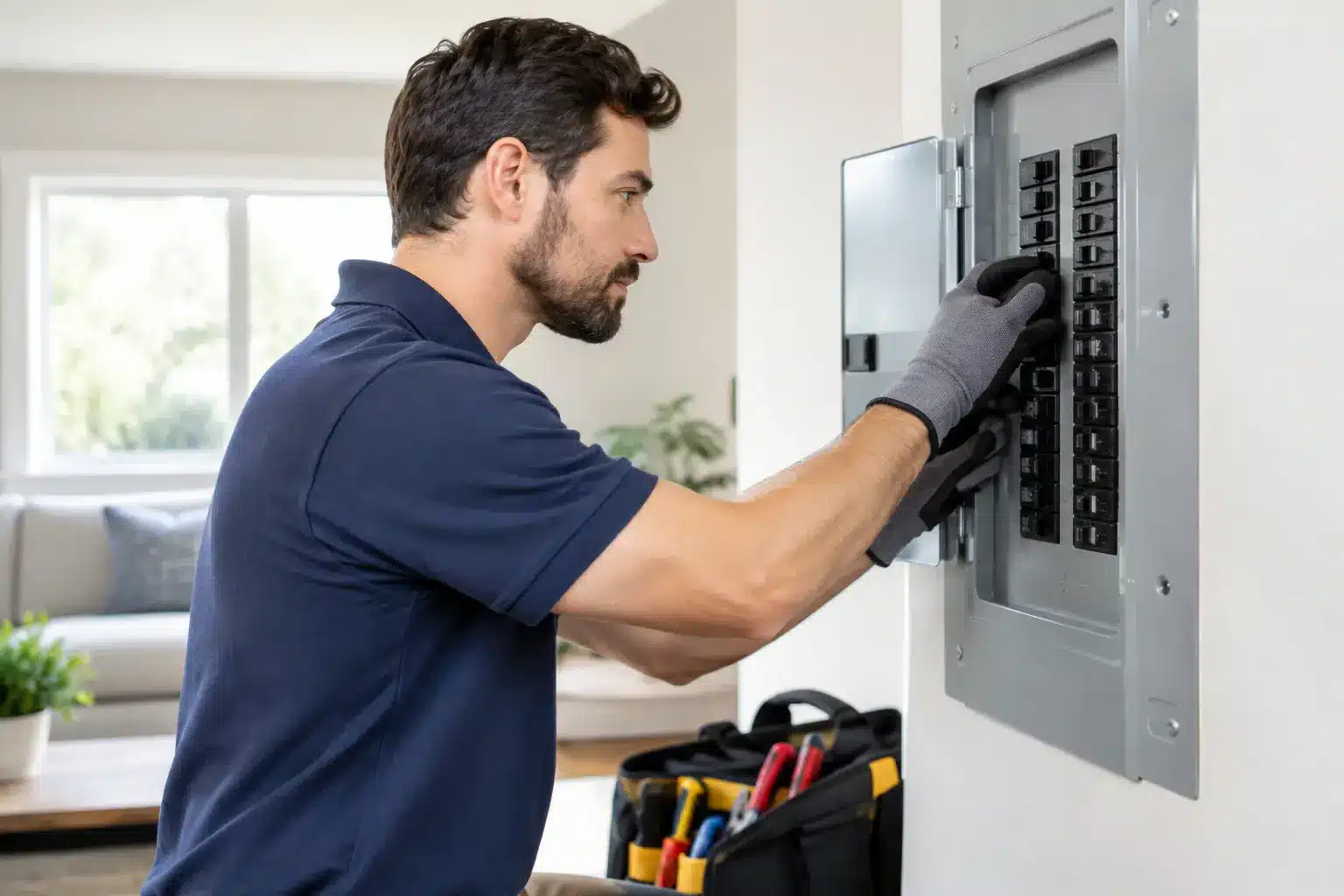
The first priority is safety, not fault-finding. If you suspect an electrical emergency, keep people away from the affected area. Do not touch exposed cables, damaged fittings or anything that smells as though it is overheating. If it is safe to do so, switch off the affected circuit at the consumer unit. If you are not certain which circuit is involved, or the board itself appears damaged, leave it alone and wait for a qualified electrician.
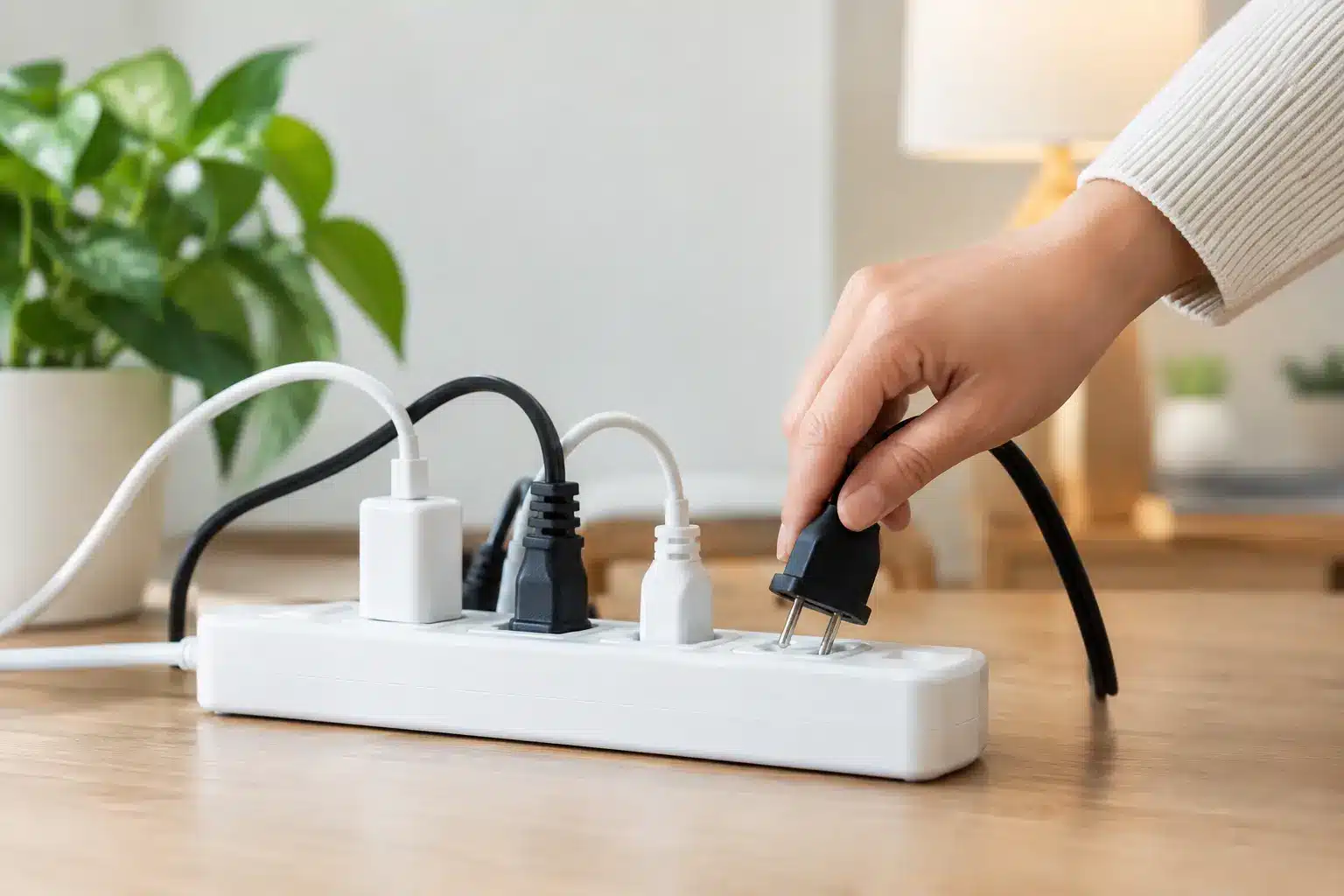
If a socket or appliance is smoking, unplugging it may not be safe if heat or arcing is present. In that case, isolate power only if you can do so without getting close to the fault. If there is an active fire, call the fire service immediately. An electrician can deal with the electrical side once the immediate danger is under control.
It also helps to note what happened just before the problem started. Did a new appliance trip the power? Has rainwater been getting into an outside fitting? Did the issue begin after other building work? These details can speed up diagnosis and reduce time spent tracing the fault.
Common faults an emergency electrician Hitchin customers face
Emergency callouts often involve the same core issues, although the cause is not always obvious at first glance. Faulty consumer units, overloaded circuits, damaged sockets, failed accessories, loose connections and ageing wiring are all common in domestic properties. In rented homes, repeated trips can also reveal underlying deterioration that should have been picked up during routine inspection and testing.
Commercial premises tend to add another layer of pressure. A failed lighting circuit in an office may be manageable for a short time, but a fault affecting shutter doors, refrigeration, extraction systems or emergency lighting can bring real disruption. In schools, shops, hospitality venues and workspaces, the right response is not just about restoring power. It is about making the installation safe, identifying the defect properly and deciding whether a temporary fix is appropriate or whether a more permanent repair is needed straight away.
Older properties in and around Hitchin can present their own challenges. Previous alterations, mixed wiring standards and additions made over time often mean the visible symptom is only part of the story. A socket may fail because the accessory itself is worn out, or because there is a deeper issue elsewhere on the circuit. That is why emergency electrical work needs experience as well as speed.
Why a quick fix is not always the right fix
When the power is off or a circuit has failed, it is understandable to want the fastest possible solution. Sometimes the quickest route is also the right one, such as replacing a clearly damaged fitting or isolating a dangerous section of the installation. But there are cases where restoring power without a full diagnosis can store up bigger problems.
For example, if an RCD or RCBO keeps tripping, simply resetting it again and again does not solve the cause. It may be reacting correctly to earth leakage, moisture ingress or a fault in an appliance or fixed wiring. Likewise, replacing a fuse board component without checking the condition of the connected circuits can miss deterioration elsewhere.
A competent electrician will make the installation safe first, then work through the likely causes methodically. That may mean carrying out testing, isolating circuits one by one, or advising that further remedial works are needed once the immediate emergency has been dealt with. It depends on the age of the installation, the severity of the fault and whether the property can be occupied safely in the meantime.
What to expect from a professional emergency response
A proper emergency service is not just about arriving quickly. It is about arriving prepared, assessing the risk clearly and communicating in plain terms. You should expect the electrician to ask sensible questions before attending, especially if there are signs of burning, complete loss of power, flooding, or vulnerable occupants in the property.
Once on site, the first job is to isolate danger and confirm whether the fault affects one circuit, several circuits or the whole installation. From there, the electrician should explain what has failed, what can be done immediately, and whether any follow-on work is needed. In many cases, the emergency visit is about making the system safe and restoring essential power where possible. If parts need replacing or a larger repair is required, that should be set out clearly.
For landlords and business owners, documentation matters as well. If the fault affects a tenanted property or commercial premises, you may need records of the issue, any temporary isolation carried out, and recommendations for further repairs or testing. A professional contractor understands that speed and compliance often go hand in hand.
Choosing the right emergency electrician in Hitchin
In an urgent situation, it is tempting to call the first name you find. That is understandable, but there are still a few things worth checking. You want an electrician who is properly qualified, experienced in fault finding, and used to working across domestic and commercial settings. Registration with a recognised competent person scheme matters because it gives you confidence that work is being carried out to current standards.
Local knowledge also helps. A contractor covering Hitchin and the wider Hertfordshire area can usually respond more efficiently than someone travelling from much farther afield. More importantly, a local firm tends to rely on reputation, repeat work and word of mouth. That usually leads to clearer communication and better aftercare.
Family-run businesses often bring an extra level of accountability as well. The service tends to be more direct and personal, especially when the company is built on long-term trust rather than volume alone. That matters when you are dealing with something as disruptive as an electrical emergency in your home or workplace.
After the emergency is dealt with
Once power is restored or the immediate risk has been removed, it is worth asking why the fault happened in the first place. Electrical emergencies are sometimes genuinely sudden, but often they are the result of wear, previous poor workmanship, overloading or a lack of testing over time.
That is where follow-up work can make a real difference. An Electrical Installation Condition Report may be the sensible next step if the property has older wiring, recurring faults or no recent inspection history. In other cases, the answer may be more targeted, such as replacing a damaged circuit, upgrading a consumer unit or carrying out remedial works identified during the emergency visit.
For landlords, staying ahead of faults is usually cheaper and less disruptive than dealing with repeated callouts. For homeowners, it gives peace of mind that the issue has been resolved properly rather than patched up. For businesses, it reduces the risk of downtime returning at the worst possible moment.
C.K Electrical Contractors works with homeowners, landlords and businesses across Hertfordshire who need safe, prompt electrical support without the runaround. In an emergency, that combination of fast response, technical competence and clear advice matters more than anything.
If you are faced with a burning smell, repeated tripping, loss of power or damage around sockets, switches or the consumer unit, trust your instincts and act early. Electrical problems have a habit of announcing themselves before they become serious. Listening to those warning signs is often the safest decision you can make.