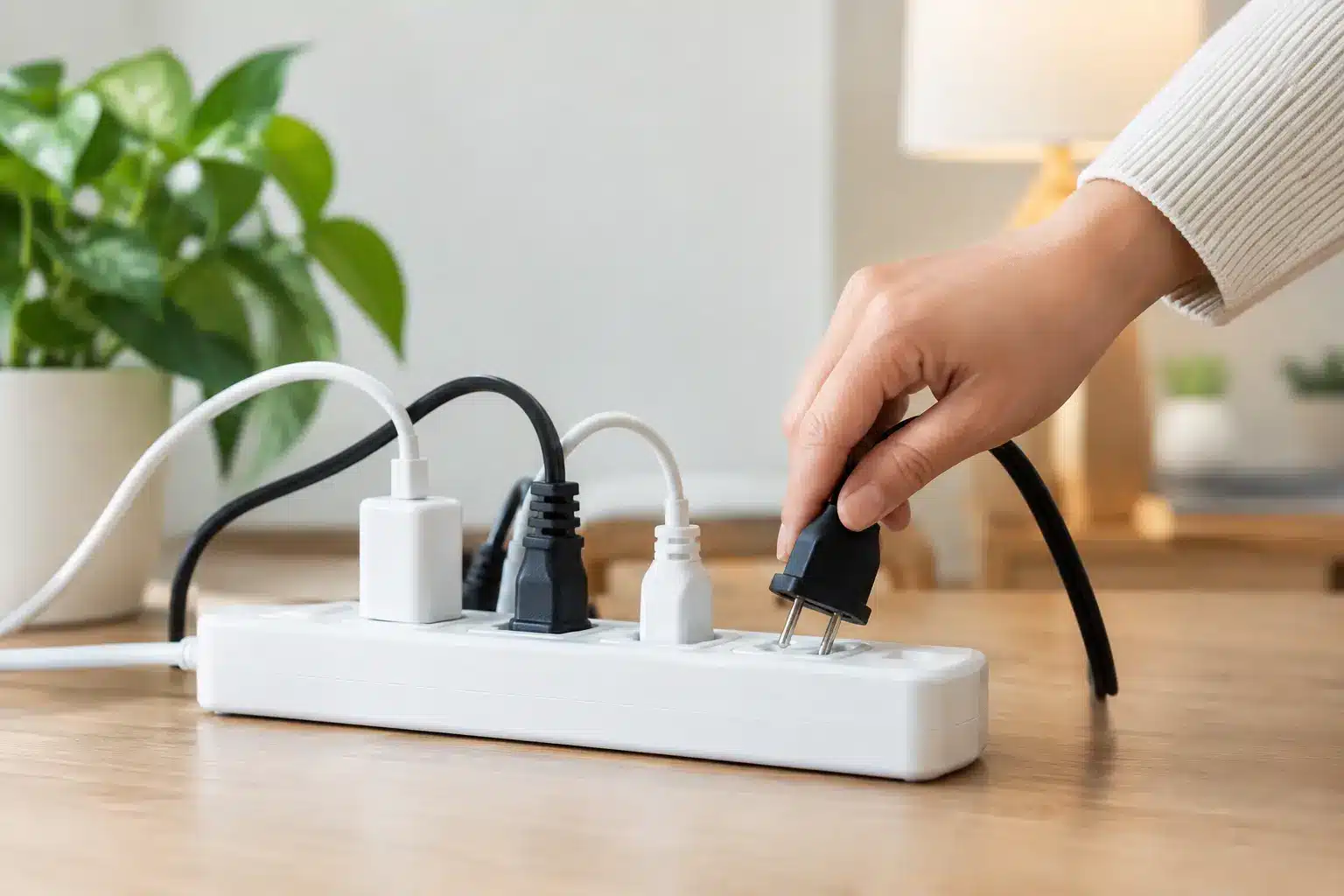
A socket stops working just as you plug in the kettle, the lights begin to flicker in one room, or the fuse board trips for no obvious reason. Most homeowners do not need a long lecture at that point. They need a clear domestic electrical repairs guide that explains what they can safely check, what the warning signs mean, and when the right move is to call a qualified electrician.
Electrical faults at home are rarely just inconvenient. They can point to overloaded circuits, ageing wiring, loose connections or damaged accessories. Some issues are minor. Others carry a genuine fire or shock risk. The key is knowing the difference and acting early, before a small fault turns into a larger repair.
What this domestic electrical repairs guide covers
This guide is written for homeowners, landlords and property managers who want practical advice without guesswork. It focuses on the kinds of electrical problems seen most often in houses and flats, and on the safe first steps you can take before arranging professional help.
It is not a DIY manual for live electrical work. In the UK, many electrical repairs and alterations should only be carried out by a competent person. If there is any doubt, safety comes first.
The first question – is it an emergency?
Some faults can wait for a booked appointment. Others need urgent attention. If you smell burning, see scorch marks around a socket or switch, hear buzzing from the consumer unit, or lose power after signs of overheating, turn off the power if it is safe to do so and seek immediate help. The same applies if wiring has been exposed, if water has affected electrics, or if a circuit will not stay on after repeated tripping.
A power cut affecting the whole street is different from a fault inside your property. If neighbours are also without power, the issue may be external. If only your home or one area of it is affected, the problem is more likely within your own installation.
Common domestic faults and what they usually mean
Tripping electrics
A circuit breaker or RCD that keeps tripping is one of the most common household issues. Sometimes the cause is straightforward, such as a faulty kettle or toaster. Unplugging recent appliances and resetting the circuit may help identify whether the fault is with an appliance or the fixed wiring.
If the breaker trips immediately with nothing plugged in, that points more strongly to a wiring fault, damaged accessory or issue within the circuit itself. That needs proper testing rather than repeated resets. Resetting a tripping device over and over is not a fix.
Dead sockets
One dead socket may be a local fault within the accessory, a loose connection, or a problem elsewhere on the ring circuit. If several sockets in the same area have stopped working, the issue may be broader. Sometimes a tripped breaker is all it is. Sometimes the fault sits behind the faceplate or in a junction point and is not visible without inspection.
Warm sockets, crackling sounds or discolouration are a different category altogether. Those signs suggest overheating and should be dealt with promptly.
Flickering or failing lights
A flickering light can be as simple as a failing lamp or incompatible LED. It can also be caused by a loose connection at the fitting, switch or circuit terminations. If flickering affects more than one fitting, or if lights dim when appliances are used, it is worth having the circuit checked.
Older properties can be more prone to this, especially where previous alterations have been made over the years. One poor connection hidden in the circuit can create intermittent faults that are difficult to trace without testing equipment.
Faulty switches
Light switches and fused spurs take regular wear. A switch that feels loose, stops working properly or becomes warm to the touch should not be ignored. While a replacement may be simple for a qualified electrician, the real issue is making sure the fault is only with the switch and not part of a wider wiring problem.
Fuse board problems
If your consumer unit is old, lacks modern RCD protection, or still uses rewirable fuses, repairs should be viewed in a wider safety context. Sometimes the immediate fault can be repaired, but the board itself may no longer offer the level of protection expected in a modern home. In that case, a repair might solve the symptom while leaving the bigger issue in place.
What you can safely check before calling an electrician
A calm first check can save time and help explain the fault clearly. Start with the consumer unit and see whether a breaker has tripped. If it has, switch off and unplug appliances on that circuit before attempting a reset once. If the circuit holds, plug items back in one at a time. If one appliance causes the trip, that appliance may be at fault.
Check whether the issue affects one room, one circuit or the whole property. Look for obvious signs such as a blown lamp, a switched spur that has been turned off, or outdoor sockets affected by rain or moisture.
Beyond that, stop. Removing socket fronts, opening fittings or testing live parts is not a safe job for an unqualified person. Even a simple-looking accessory can hide damaged insulation, loose conductors or poor previous workmanship.
When a repair is not just a repair
This is where experience matters. Not every domestic fault should be treated as a one-off. If a home has repeated tripping, ageing accessories, poor earthing arrangements or signs of previous DIY electrical work, the right answer may be a broader inspection rather than a quick fix.
For landlords, this is especially relevant. A tenant may report a single fault, but compliance duties mean it is sensible to look at the condition of the installation as a whole. An Electrical Installation Condition Report can highlight whether the problem is isolated or part of wider wear, damage or non-compliance.
For homeowners, the same principle applies during renovations, kitchen upgrades and property purchases. A failed socket may be the visible symptom of older wiring that is ready for replacement.
Why professional testing matters
Electrical faults are not always visible. A cable can be damaged inside a wall. A loose connection can sit behind a fitting with no obvious external sign. An RCD can appear to work normally while another safety issue exists elsewhere in the installation.
That is why proper fault finding relies on testing, not assumptions. Continuity tests, insulation resistance testing, polarity checks and circuit verification help pinpoint the real cause. It is faster, safer and often more cost-effective than replacing parts one by one and hoping for the best.
A qualified contractor will also check that any repair leaves the installation safe and compliant. That matters in every home, but especially in rental properties and houses with older wiring systems.
Choosing the right electrician for domestic repairs
A good domestic repair service should be responsive, clear and properly qualified. Ask whether the electrician is registered with a recognised competent person scheme, whether they carry out fault finding and testing, and whether they explain the issue before starting remedial work.
It also helps to choose a contractor who deals with both routine repairs and urgent callouts. Electrical faults do not always happen during office hours. For households in Stevenage and the surrounding area, using a local electrician can make a real difference when the issue is urgent and you need a fast response.
C.K Electrical Contractors works with homeowners, landlords and businesses across Hertfordshire, combining day-to-day repairs with emergency support, inspections and larger remedial works. That matters because the best repair advice is often shaped by what the electrician sees on site, not by guesswork over the phone.
Repair, replace or rewire?
There is no single answer here. If the issue is one damaged socket or a failed switch in an otherwise sound installation, a straightforward repair is often all that is needed. If faults keep returning, circuits are overloaded, or the wiring is outdated, replacement work may be the more sensible long-term option.
Partial rewires can suit some properties where one area has been modernised and another has not. In other homes, especially where wiring is very old or has been altered repeatedly, a full rewire may be the safer investment. The right recommendation depends on the age of the installation, test results and how the property is used.
The cheapest option upfront is not always the most economical over time. Repeated callouts for recurring faults can quickly overtake the cost of putting the underlying issue right.
A few signs not to ignore
If sockets are hot, lights flicker regularly, the consumer unit trips without clear reason, or there is any smell of burning from electrical accessories, do not leave it to see if it settles down. The same applies to shocks from switches or sockets, however mild they seem. These are warning signs, not inconveniences.
Older homes in places such as Hitchin, Letchworth and Welwyn Garden City can present particular challenges because installations may have been extended or patched over many years. That does not mean every older property needs major work, but it does mean faults deserve careful assessment.
Electrical repairs are best dealt with early, clearly and safely. If something in your home does not seem right, trust that instinct and get it checked before a simple repair becomes a larger problem.