A fuse board that keeps tripping, a socket that feels warm or lights that flicker without explanation are not jobs to put off until the weekend. Reliable home electrical services protect the people in your property, reduce the risk of damage and make sure everyday systems work as they should.
Electrical faults are not always obvious. A circuit may appear to work normally while hidden damage, ageing wiring or a poor connection creates a developing safety issue behind a wall or under a floor. The right response is not guesswork or a quick temporary fix. It is a qualified electrician finding the cause, explaining the options clearly and carrying out work to the correct standard.
What Home Electrical Services Should Cover
Domestic electrical work ranges from small repairs to major upgrades, but every job should begin with a proper assessment. A professional electrician will consider the age and condition of the installation, how the property is used and whether the existing circuits can safely support modern demand.
Typical work includes fault finding, replacement sockets and switches, lighting installations, extractor fans, electric showers, outdoor power, smoke alarms and appliance connections. Larger projects may involve a new fuse board, partial or full rewire, additional circuits for an extension or kitchen refurbishment, and Electrical Installation Condition Reports, commonly known as EICRs.
The right service depends on the problem. Replacing a damaged socket may be straightforward, for example, but repeated tripping on the same circuit needs investigation. Simply resetting the breaker can restore power temporarily, yet it does not remove the fault that caused it to operate.
Everyday repairs that deserve attention
Small electrical issues can quickly become disruptive. A loose faceplate, a broken light fitting or a failed extractor fan may seem minor, but each should be inspected and repaired correctly. Bathrooms, kitchens and outdoor areas need particular care because moisture raises the risk where electrical equipment is involved.
If you notice buzzing, burning smells, discolouration around sockets, exposed cable, electric shocks or repeated loss of power, switch off the affected circuit where it is safe to do so. Do not continue using the equipment or attempt a repair yourself. These are signs that need prompt professional attention.
When a Fuse Board Upgrade Makes Sense
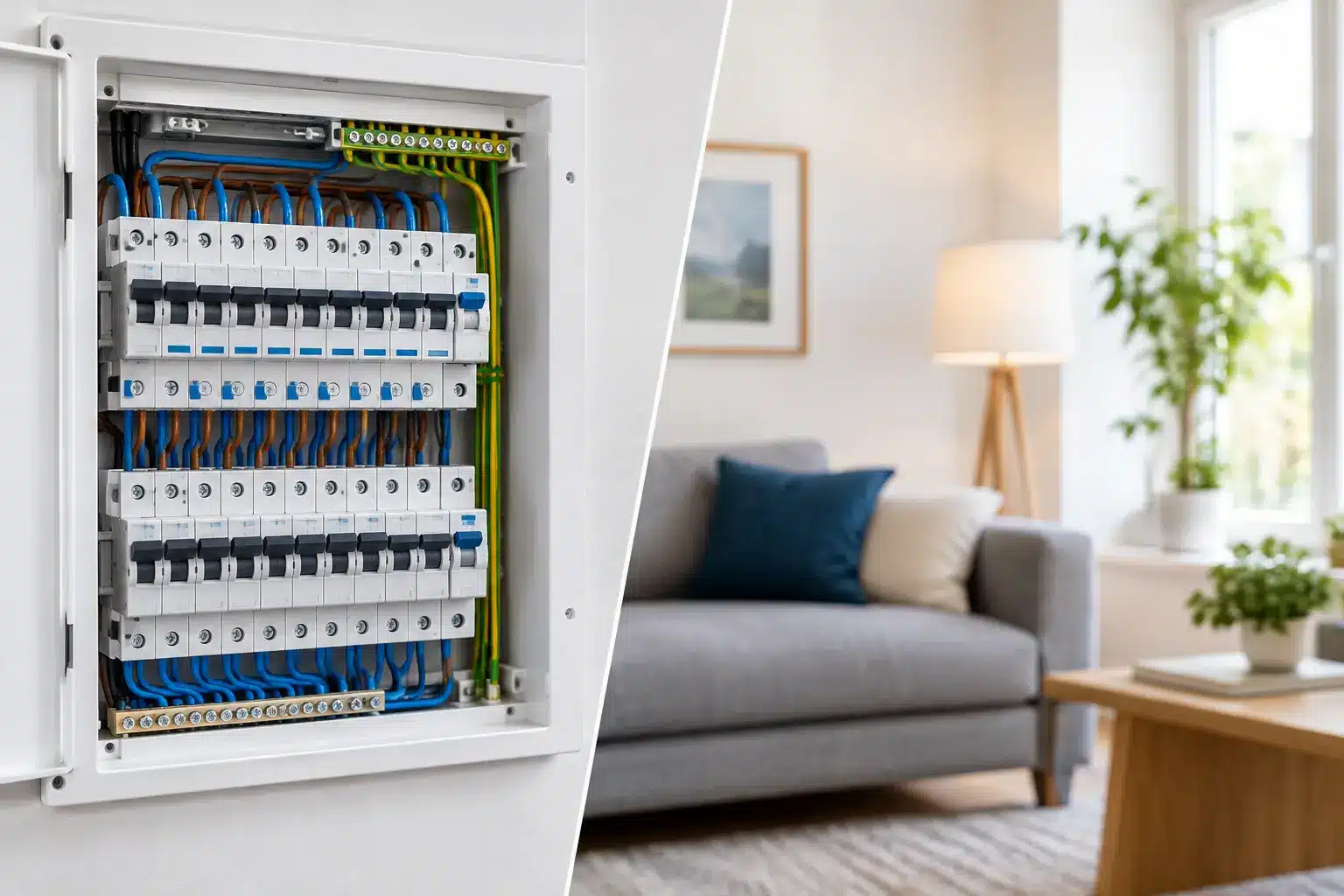
Many older properties still have fuse boards that were designed for a much lower electrical load. Modern households often run induction hobs, electric showers, home offices, charging points, washing machines, tumble dryers and numerous connected devices. An older consumer unit is not automatically unsafe, but its condition and protective devices must be assessed in context.
A modern fuse board can provide improved protection through devices designed to disconnect the supply quickly when a fault is detected. It may also make circuits easier to identify and manage. However, changing a fuse board is not a cosmetic upgrade. The electrician must test the installation before and after the work, because new protective devices can reveal faults elsewhere in the wiring.
This is why the cheapest quote is not always the best value. A proper installation includes assessment, suitable equipment, testing, certification and clear labelling. If existing wiring is in poor condition, remedial work may be necessary before a new board can be fitted safely.
Rewiring: Knowing When Repairs Are No Longer Enough
A rewire is one of the most significant improvements you can make to an older home. It may be needed where cables, accessories or connections have deteriorated, where the installation lacks appropriate earthing, or where alterations over many years have left the system unsuitable for current use.
Warning signs can include old-style fittings, frequent blown fuses or tripping circuits, insufficient sockets, damaged cable insulation and wiring that has not been inspected for a long time. A full rewire is not always required. In some properties, a partial rewire or targeted remedial work is the sensible option after testing has identified the condition of each circuit.
There is a practical trade-off to consider. Rewiring can involve lifting floorboards, accessing walls and making good after cables are installed. It is usually easier and more cost-effective to plan it alongside refurbishment, an extension or a major kitchen project. That said, if the installation is unsafe, delaying essential work creates a far greater cost than planned disruption.
Why an EICR Matters for Homeowners and Landlords
An EICR is a detailed inspection and test of an electrical installation. It does not simply confirm that lights and sockets turn on. It assesses whether circuits, protective devices, earthing and accessible parts of the installation are in a satisfactory condition for continued use.
For homeowners, an EICR is particularly useful before buying a property, after major alterations or where the age and history of the wiring are unclear. It provides a factual picture of what needs attention, helping you budget for repairs rather than relying on assumptions.
For landlords, electrical safety duties are more specific. Rental properties require regular electrical inspection and testing, with reports and any necessary remedial work managed within the required timescales. A landlord EICR helps protect tenants, supports compliance and provides evidence that the installation has been professionally assessed.
Not every observation on a report means the same thing. Some findings require urgent action, while others are recommendations for improvement. A good electrician will explain the report in plain English, prioritise safety-critical repairs and give a clear scope for any remedial works.
Choosing the Right Electrician for Your Home
Electrical work should be carried out by a competent, properly registered contractor with the experience to diagnose faults rather than just replace visible parts. Ask what testing will be completed, whether certification is included and how any unexpected issues will be communicated before additional work begins.
Local knowledge also matters. A contractor serving Stevenage, Hitchin, Letchworth and nearby Hertfordshire communities can respond efficiently, particularly when a fault needs urgent attention. C.K Electrical Contractors combines a family-run approach with more than 20 years of experience, NAPIT registration and domestic electrical support that ranges from routine repairs to emergency callouts.
Clear communication should be part of the service. You should know what has been found, what work is recommended, what alternatives are available and what the likely cost involves. In some cases, a targeted repair is entirely appropriate. In others, repeated faults or outdated equipment make an upgrade the safer long-term decision.
What Counts as an Electrical Emergency?
An electrical emergency is any situation where there is an immediate risk to people or property, or where loss of power creates a serious problem. Burning smells, smoke, sparking, water reaching electrical equipment, a damaged cable, repeated tripping that will not reset and a complete loss of power affecting only your property may all require urgent assessment.
If there is fire, smoke or a danger to life, call the emergency services first. For an electrical issue that can be isolated safely, switch off the supply at the fuse board if you can do so without risk and keep people away from the affected area. Never touch damaged electrical equipment with wet hands or use water to tackle an electrical fire.
A 24-hour electrician can make the situation safe, identify the source of the fault and advise on the next steps. Sometimes a permanent repair can be completed immediately; sometimes the safest outcome is to isolate a circuit and return with the right parts. What matters is restoring safety, not rushing a repair that has not been properly tested.
Plan Electrical Work Before It Becomes Urgent
The best time to review your electrics is before a fault forces the issue. If you are renovating, buying a home, preparing a rental property or simply noticing that your electrical system is struggling to keep up, arrange a professional assessment. Safe, well-planned electrical work gives you more than working sockets and lights – it gives you confidence that your home is protected day and night.