When the power goes off and a switch in the consumer unit has moved to the OFF position, it is tempting to reset it and carry on. However, RCD tripping reasons should never be ignored. An RCD is designed to disconnect the supply when it detects an electrical fault that could present a risk of electric shock or fire.
A single trip is not always a sign of a major problem, particularly during a storm or after plugging in a faulty appliance. Repeated tripping, however, needs proper investigation. Resetting an RCD again and again can leave the underlying fault unresolved and may put people, property or business operations at risk.
What an RCD does – and why it trips
An RCD, short for Residual Current Device, monitors the electricity flowing through a circuit. In normal operation, the current leaving through the live conductor should match the current returning through the neutral conductor. If some electricity is leaking elsewhere, perhaps through damaged insulation, moisture or a person touching a live part, the RCD detects the imbalance and switches off very quickly.
That is why an RCD may trip even where a fuse or circuit breaker has not. A circuit breaker mainly protects wiring from overload and short circuit conditions. An RCD is there to provide additional protection against earth leakage. Modern consumer units usually contain RCDs, RCBOs or a combination of both, and they are an essential part of electrical safety in homes, rented properties and workplaces.
The switch itself has done its job if it trips. The key question is what caused it to operate.
The most common RCD tripping reasons
A faulty appliance or lead
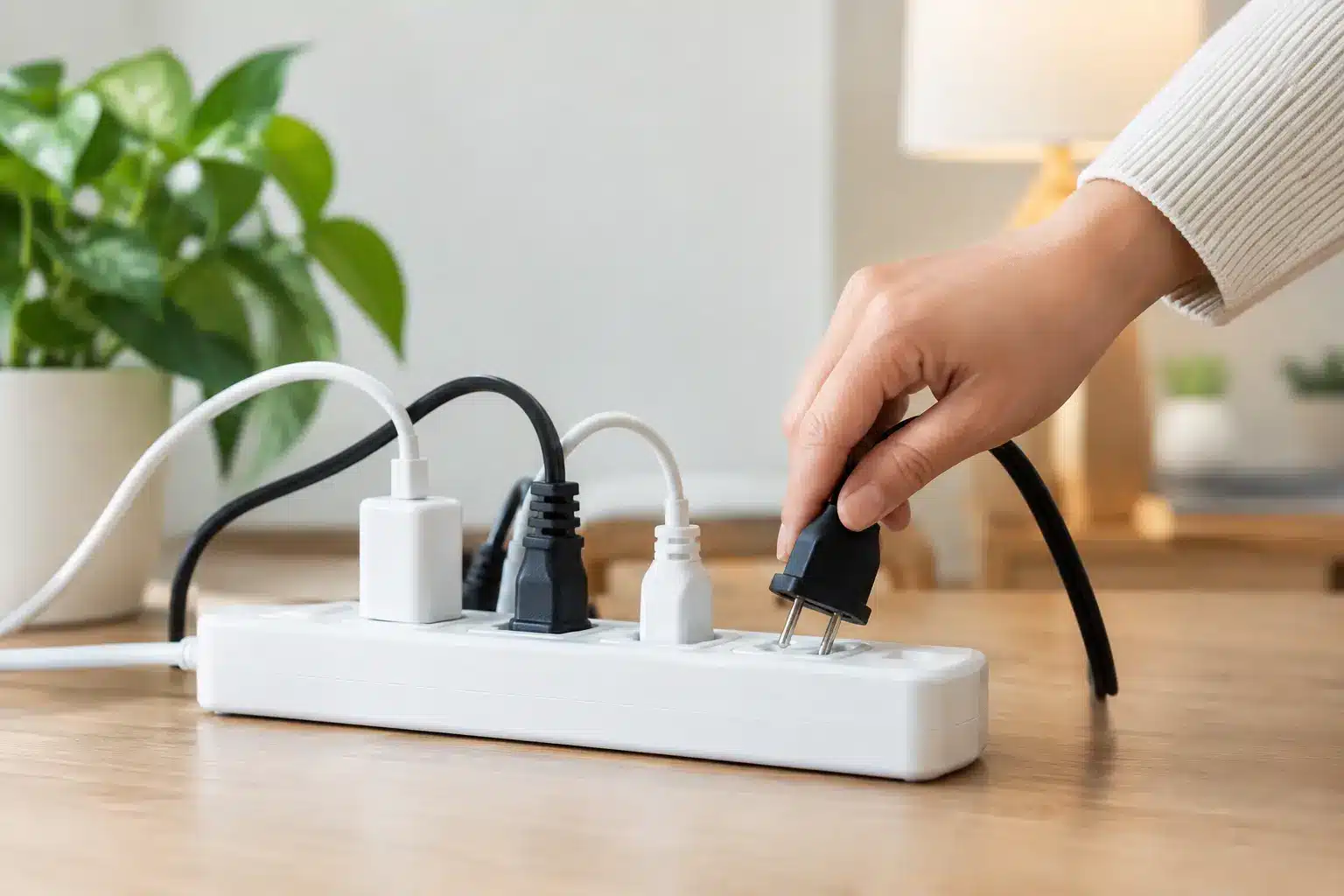
Portable appliances are a frequent cause of RCD trips. Kettles, washing machines, tumble dryers, dishwashers, irons, lawnmowers and older chargers can all develop insulation faults over time. Flexes can be crushed behind furniture, damaged by pets or split near the plug, allowing current to leak to earth.
If the RCD stays on until a particular appliance is connected or switched on, that appliance is a strong suspect. Do not continue using it until it has been checked, repaired or replaced. This is especially relevant for appliances involving water, heat or outdoor use.
Moisture and water ingress
Water and electricity are a dangerous combination. Condensation in an outdoor socket, water entering an external light fitting, a leak beneath a kitchen unit or damp around a bathroom extractor fan can all create enough leakage to trip an RCD.
Trips that occur after heavy rain, pressure washing, flooding, or using outdoor equipment often point towards moisture. The fault may not be visible from the outside. For example, an outside light can look intact while water has entered through a failed seal or cable entry point.
Never attempt to dry out or dismantle electrical equipment while it is live. If water has affected sockets, wiring or the consumer unit, switch off the supply where safe to do so and arrange for a qualified electrician to inspect it.
Damaged cables or wiring
A screw or nail through a cable, deteriorated insulation, rodent damage and DIY alterations can all cause intermittent or permanent earth leakage. The RCD may trip immediately, only when a circuit is loaded, or when a cable is moved.
This type of fault is not always obvious. It may sit behind a wall, under a floor or above a ceiling. Tripping after pictures have been hung, shelves fitted or building work completed should be taken seriously, even if the work seemed well away from a socket.
A problem on a lighting circuit
Lighting faults are easy to overlook because LED lamps use very little power. Yet loose connections, faulty transformers, damaged downlights and unsuitable bathroom fittings can cause an RCD to trip. Loft and garage lights are common culprits, particularly where fittings are older or exposed to temperature changes and damp.
If the RCD trips when you turn on a specific light or lighting circuit, leave that circuit off. Replacing a lamp may resolve a simple issue, but repeated trips should be tested rather than guessed at.
Too much combined leakage
Not every RCD trip comes from one clearly faulty item. Modern properties can have many appliances with small, normal levels of earth leakage: computers, induction hobs, EV chargers, white goods, LED drivers and electronic controls. Individually, they may be fine. Together, they can approach the operating threshold of an RCD.
This is more likely in busy commercial premises or homes with upgraded equipment on an older consumer unit. The solution may involve identifying an appliance with higher leakage, redistributing circuits or upgrading protection arrangements. It depends on the installation design, so this needs testing by an electrician rather than a trial-and-error reset.
Neutral-to-earth faults and wiring errors
A neutral touching earth somewhere after the RCD can cause difficult, intermittent tripping. So can incorrectly connected cables following alterations, extensions or replacement accessories. These faults may only show themselves when another circuit is in use, making them particularly frustrating for property owners.
Electrical test equipment is needed to locate this accurately. Removing socket fronts or opening the consumer unit without the right competence can make the situation more hazardous and can introduce further faults.
What to do when your RCD trips
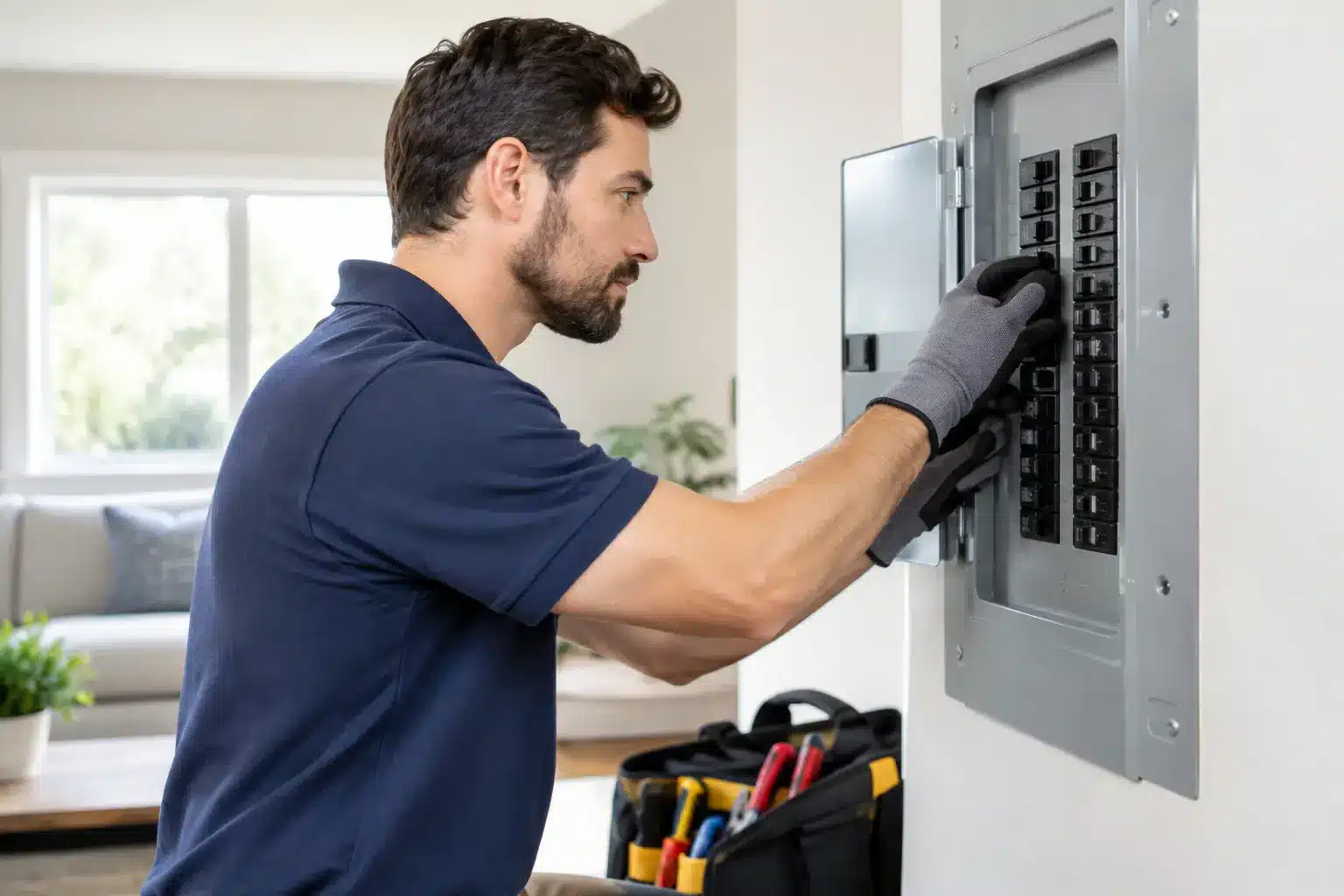
Start by checking whether the issue affects the whole property or just one part of it. At the consumer unit, identify the switch that has tripped. It may be labelled RCD, RCBO, sockets, lights, kitchen or another circuit name. If there is any sign of burning, heat, water damage or a burning smell, do not reset anything. Turn off the main switch if it is safe and seek urgent professional help.
Where there are no visible signs of damage, unplug appliances on the affected circuit, including items that may be hidden behind cupboards or furniture. Move the tripped switch fully to OFF before returning it to ON. If it stays on, reconnect appliances one at a time, allowing a short pause between each. If the RCD trips when a particular item is connected, leave that item unplugged.
If it will not reset with appliances disconnected, or trips again without an obvious trigger, keep the affected circuit off. Avoid using extension leads from another circuit as a permanent workaround. Overloaded leads, trailing cables and improvised supplies create different safety problems.
When to call an electrician
An electrician should investigate if an RCD repeatedly trips, the cause cannot be identified, or the trip is connected with water, damaged wiring, recent building work or a consumer unit fault. Landlords should also act promptly, as an unresolved fault can affect the safety and compliance of a rented property.
For businesses, repeated RCD tripping can mean lost trading time, spoiled stock, failed IT equipment or interrupted production. A planned fault-finding visit is usually less disruptive than waiting for a complete outage. Testing can identify insulation resistance issues, earth leakage, circuit errors and faults in fixed equipment without relying on guesswork.
C.K Electrical Contractors provides fault finding, repairs, consumer unit work and emergency electrical support for homes and businesses across Stevenage and nearby Hertfordshire areas. A qualified electrician can isolate the fault, explain the findings clearly and advise whether repair, replacement or further testing is the right next step.
Can you prevent future RCD trips?
Some faults cannot be predicted, but good maintenance reduces the chance of disruption. Check appliance leads regularly, keep outdoor accessories weatherproof, avoid overloading circuits and have older installations assessed through an Electrical Installation Condition Report. Businesses should also maintain portable appliances and fixed electrical systems in line with how the premises are used.
Use the test button on your RCD periodically, following the manufacturer’s guidance. It should trip the device and confirm that the mechanism operates, but it does not prove every part of the installation is fault-free. If the test button does not work, or the device will not reset afterwards, arrange an inspection.
An RCD trip is an early warning, not an inconvenience to defeat. Treat it as the safety feature it is, isolate anything suspicious and get the fault checked before normal use resumes.