A flickering light, a tripping fuse board or a socket that feels warm can quickly turn a normal day into a concern. If you have ever asked what is domestic electrical wiring, the simple answer is that it is the complete system of cables, circuits, accessories and protective devices that safely distributes electricity around your home.
That answer is straightforward, but the system itself is not something to take lightly. Domestic wiring sits behind walls, under floors and above ceilings, quietly powering everything from your cooker and shower to your lighting and charging points. When it is designed and installed properly, it works safely in the background. When it is outdated, damaged or poorly altered, it can become a serious risk.
What is domestic electrical wiring in a home?
Domestic electrical wiring refers to the fixed electrical installation within a property. In most homes, that includes the incoming supply, meter position, consumer unit, circuit breakers, cabling, sockets, switches, light fittings, earthing and bonding.
In practical terms, it is the network that takes electricity from the supply and routes it to the places you need it. Different parts of the home are usually served by different circuits. Upstairs lights, downstairs lights, ring or radial socket circuits, cooker supplies, shower circuits and outdoor power may all be separated so they can be controlled and protected correctly.
This matters because each part of a home uses electricity differently. A lighting circuit does not need the same cable size or protection as an electric shower. Good domestic wiring is not just about getting power from one point to another. It is about making sure the installation matches the load, meets current regulations and protects the people using it.
What domestic electrical wiring includes
The easiest way to understand a home electrical system is to look at the main components and what they do together.
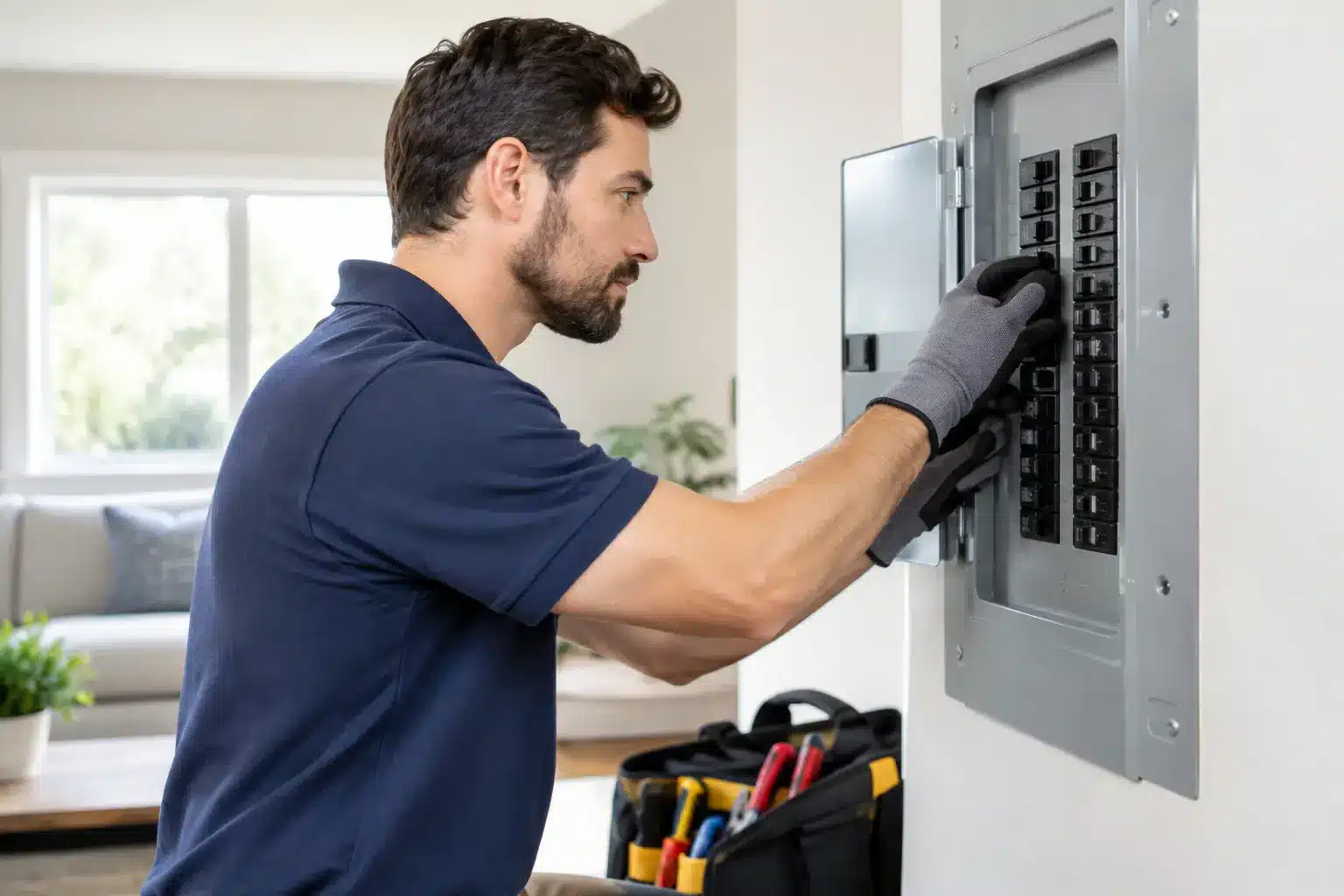
The consumer unit, sometimes still called a fuse board, is the control centre. It contains protective devices such as circuit breakers and RCDs, which are designed to cut the power quickly if a fault occurs. In modern properties, this is one of the most important safety features in the installation.
Cables run from the consumer unit to different points around the house. These cables are hidden within the structure of the building and connect to sockets, switches, ceiling roses, extractor fans, cookers and fixed appliances. You will also have earthing and bonding, which help carry fault current safely away and reduce the risk of electric shock.
Then there are the accessories people see every day – light switches, socket outlets, cooker isolators, fused spurs and connection units. These may look simple, but they rely on correct wiring behind the faceplate. A neatly fitted socket does not tell you whether the circuit behind it has been installed properly.
How domestic wiring is arranged
Most homes are split into circuits so that faults can be isolated and loads can be managed safely. That is why one problem in the kitchen should not usually knock out every light and socket in the property.
Lighting circuits are commonly separate from socket circuits. High-demand equipment such as electric showers, ovens or immersion heaters often have their own dedicated supply. Outdoor power, garages, extensions and garden buildings may also be placed on separate circuits depending on how the installation has been designed.
There is no one-size-fits-all arrangement. A small flat and a large family house will have different needs. An older property in Hertfordshire may also have wiring that reflects standards from decades ago, while a newer home is more likely to include modern protection. That is why inspections are so valuable – what is suitable in one property may not be right in another.
Why safe wiring matters
Electricity is useful, but it leaves very little room for poor workmanship. Faulty domestic wiring can lead to electric shock, overheating, nuisance tripping, damaged appliances and in the worst cases, electrical fires.
One of the common misunderstandings is that if the lights come on and the sockets work, the wiring must be fine. That is not always true. Some issues remain hidden until a protective device trips, a circuit is overloaded or a fault develops over time. Loose connections, ageing insulation, poor previous alterations and missing earthing do not always show obvious signs straight away.
For homeowners and landlords, that is where compliance and testing become important. The wiring in a property should not only function. It should also be safe, suitable for continued use and in line with current standards as far as reasonably required for the work carried out.
Signs your domestic electrical wiring may need attention
A home does not need to be very old to develop electrical issues, but age is often a factor. If a property has not been updated for many years, there is a greater chance that parts of the installation are no longer suitable for modern demand.
Warning signs include circuit breakers tripping repeatedly, lights flickering, buzzing sockets or switches, scorch marks, frequent blown lamps, tingling sensations from metal fittings or outlets that feel hot to the touch. A dated consumer unit with no RCD protection can also be a sign that the system needs upgrading.
Sometimes the signs are less obvious. You may have added a new kitchen, converted a loft, built an extension or started using more high-load appliances than the original installation was designed for. Homes now carry far more electrical demand than they did years ago, and older wiring systems are not always equipped to cope with that safely.
When a rewire is needed and when it is not
Not every electrical issue means a full rewire is required. In some cases, the problem may be local to a damaged circuit, a defective accessory or an outdated consumer unit. Remedial works or partial rewiring can often resolve specific concerns without replacing the entire installation.
That said, some properties do need a full rewire. This is more likely if the wiring is very old, has deteriorated insulation, lacks proper earthing, includes obsolete components or has been altered so many times that the system is no longer reliable. A rewire is also worth considering during major renovation works, when access is easier and disruption can be managed more efficiently.
The right answer depends on the condition of the installation, not guesswork. A proper inspection gives you a clear picture of what is safe, what needs improvement and what can remain in service.
What is domestic electrical wiring and who should work on it?
Domestic electrical wiring should only be installed, altered or tested by someone with the right competence, qualifications and understanding of current regulations. In the UK, electrical work in homes must meet the requirements of BS 7671, and certain work may also fall under Building Regulations.
This is where professional standards matter. A qualified electrician is not just fitting cables and accessories. They are selecting the correct cable sizes, checking load demands, verifying earthing arrangements, testing continuity, insulation resistance and fault protection, and making sure the installation is safe before it is energised.
DIY work is one of the reasons unsafe wiring is still found in homes. It may look tidy on the surface, but hidden errors can cause real danger. For landlords, there is also the added responsibility of ensuring a rental property is electrically safe and properly inspected.
The value of testing and inspection
If you are unsure about the condition of your home wiring, an Electrical Installation Condition Report can provide answers. An EICR assesses the fixed wiring and identifies whether there are dangerous defects, potentially unsafe conditions or areas that do not meet current standards.
This is especially useful if you have recently bought a property, are preparing to let one out, or have concerns about ageing electrics. Testing can also pick up issues before they become costly emergencies. In many cases, small remedial works identified early are far easier to deal with than major faults discovered later.
For local homeowners and landlords, working with an experienced contractor makes the process more straightforward. A family-run firm such as C.K Electrical Contractors can assess the installation clearly, explain what the findings actually mean and carry out any necessary work safely and efficiently.
Domestic electrical wiring is not something most people think about until there is a problem. But understanding the basics helps you spot risks early, make better decisions about upgrades and keep your property safe for everyone who uses it. If your wiring has not been checked for some time, getting professional advice now is often the simplest way to avoid bigger issues later.