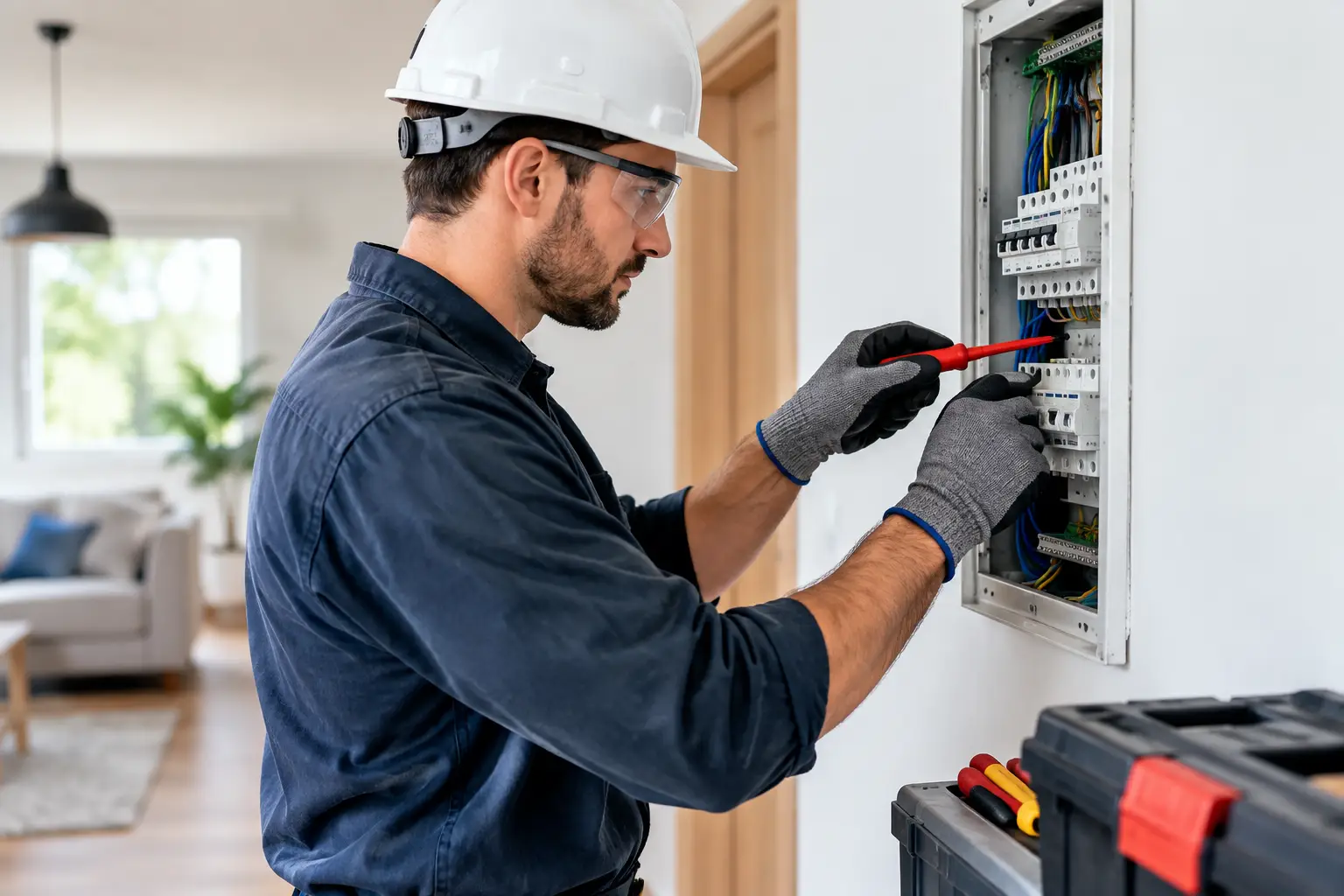
An old fuseboard can look harmless until a fuse blows, a circuit trips repeatedly or you need to add an extension, electric vehicle charger or new kitchen circuit. So, who can replace fuseboards? In practice, this is work for a competent, qualified electrician who can design, install, test and certify the replacement properly. It is not a straightforward like-for-like swap, and getting it wrong can leave a property with serious shock, fire and compliance risks.
A modern consumer unit is the control centre of your electrical installation. It has to protect the people using the building as well as the cables, appliances and circuits connected to it. That means the condition of the existing wiring matters just as much as the new board itself.
Who can replace fuseboards legally?
In England, replacing a fuseboard, now more commonly called a consumer unit, is notifiable electrical work under Part P of the Building Regulations. The work must meet the relevant safety requirements and be notified to building control through the proper route.
The most practical option is to use an electrician registered with a competent person scheme, such as NAPIT. A registered electrician can carry out the work, inspect and test the installation, issue the relevant electrical certification and notify the work on your behalf. You should then receive a Building Regulations compliance certificate after the notification has been processed.
A homeowner is not automatically prohibited from doing electrical work in their own property, but replacing a consumer unit is not a sensible DIY project. If work is carried out by someone who is not registered with a competent person scheme, building control normally needs to be involved before work starts. The installation may require inspection and testing, and fees can apply. More significantly, the person doing the work must still be genuinely competent to assess the existing installation and prove the finished work is safe.
For landlords, businesses and managing agents, the same principle applies. The person replacing the fuseboard needs the technical capability to work safely, minimise disruption and provide clear certification for your records. A general handyman, kitchen fitter or builder should not be asked to take on the electrical side of a consumer unit replacement unless they hold the appropriate electrical competence and can arrange compliance correctly.
Why changing a fuseboard is more than fitting a new box
An older board may contain rewireable fuses, cartridge fuses or ageing miniature circuit breakers. Replacing it with a modern metal consumer unit sounds simple, but the board is connected to every circuit in the property. Before a new unit can be installed, those circuits need to be assessed.
A qualified electrician will check whether the existing wiring is suitable for continued use. They will look for issues such as damaged cable insulation, poor earthing and bonding, incorrect circuit connections, overloaded circuits, signs of overheating and missing protective measures. Older installations can contain faults that were not obvious while the previous fuseboard was in place.
This testing matters because modern protective devices can reveal existing problems. For example, an RCD may trip when it detects earth leakage on a circuit. That is not necessarily a fault with the new consumer unit. It can be evidence that an older cable, accessory or appliance needs attention.
There is also no one-size-fits-all replacement. A small flat with a few circuits has different requirements from a family home with a shower, outbuilding, induction hob and garden electrics. Commercial premises require further consideration, particularly where business continuity, machinery, emergency lighting or three-phase supplies are involved.
What a professional fuseboard replacement should include
A proper replacement begins with a survey and discussion about how you use the property. The electrician should establish what circuits are present, whether future additions are likely and whether the existing installation is in a condition that makes an upgrade sensible.
Before work starts, the supply is isolated safely and the existing circuits are identified. The electrician will test the installation, replace the old board with a suitable modern consumer unit, label the circuits clearly and then carry out full verification testing. This proves that protective devices operate as intended and that the installation is safe to energise.
Most modern domestic consumer units use RCD protection, RCBO protection or a combination of both. An RCBO protects an individual circuit, which can reduce the chance that one fault cuts power to large areas of the house. This may cost more initially, but it can be a worthwhile choice where avoiding nuisance tripping is a priority.
Depending on the property and design assessment, the electrician may also recommend surge protection devices. These can help protect sensitive electronic equipment from transient overvoltages. Arc fault detection devices may be considered in certain higher-risk situations. The right arrangement depends on the installation, budget and current requirements, not on adding every available device without purpose.
At the end of the job, ask for the Electrical Installation Certificate and confirmation that Building Regulations notification has been completed where required. These documents are valuable for landlords, future buyers, insurers and anyone arranging later electrical work.
When a fuseboard replacement may uncover extra work
A reputable electrician will be clear if the existing wiring needs remedial work before, during or after the consumer unit upgrade. This is not upselling when faults are supported by test results and explained plainly. A new board cannot make unsafe circuits safe merely by adding newer switches and protective devices.
Common examples include inadequate main earthing or bonding, a circuit with poor insulation resistance, unsuitable cable sizes, old accessories showing heat damage, or concealed connections that need to be corrected. In some older homes, a full or partial rewire may be a better long-term investment than fitting a new consumer unit onto wiring that is already at the end of its serviceable life.
That said, extra work is not inevitable. Many properties have sound existing wiring and can be upgraded successfully following inspection and testing. The key is receiving an honest assessment before committing to the job.
Choosing the right electrician for a consumer unit upgrade
Do not choose solely on the lowest quote. A very low price can exclude the testing, certification, notification or remedial work needed to complete the job properly. Ask what the quote covers and whether it allows for an inspection of the existing installation.
Look for a contractor with recognised scheme registration, suitable insurance, experience of similar properties and a clear approach to certification. They should be willing to explain what type of consumer unit they are proposing, why it suits your property and what may happen if testing identifies faults.
For a rental property, make sure the paperwork will support your electrical safety responsibilities. For shops, offices, warehouses and other commercial premises, agree how the shutdown will be managed and whether the work can be scheduled to reduce disruption. A consumer unit replacement often means a planned power outage, so preparation protects both the installation and day-to-day operations.
C.K Electrical Contractors provides fuseboard replacements, testing and remedial work for homeowners, landlords and businesses across Stevenage and the surrounding area. As a NAPIT-registered local contractor, the focus is on completing the work safely, clearly and with the certification you need.
Signs you should arrange a fuseboard assessment
A fuseboard does not need to fail completely before it deserves attention. Frequent tripping, blown fuses, buzzing sounds, burning smells, visible scorching, loose covers and circuits that no longer meet the demands of the property all warrant a professional inspection. The same applies if you are planning significant electrical additions, purchasing an older property or have received unsatisfactory findings on an EICR.
If there is smoke, heat, sparking or a burning smell from the board, treat it as urgent. Keep clear of the equipment, avoid resetting circuits repeatedly and contact an emergency electrician. Do not remove covers or attempt repairs yourself.
A consumer unit upgrade is one of the most safety-critical improvements you can make to a property. Choose an electrician who will test what is already there, explain the options without jargon and leave you with a properly protected installation and the paperwork to prove it.